Going out for the evening increasingly includes some form of entertainment or gaming. Particularly in London and major Asian cities, entertainment venues and game halls have become an established part of the hospitality landscape. The segment is also growing. There are opportunities in F&B, because guests may come for the games, but they stay for the food and drinks.
For many young people, spending an entire evening sitting around a table talking is no longer the ultimate way to go out. The way Millennials and Gen Z spend their evenings is changing. They drink less alcohol, and spending hours simply chatting can feel boring to them. During the day, they are used to playing games on their phones, so why not do the same thing with friends at night—only in a game hall?
Dirk van den Wijngaard, partner and creative director at concept development agency Conceptional, sees opportunities for this type of game hall in the Netherlands. He calls this way of going out “social competitive.”
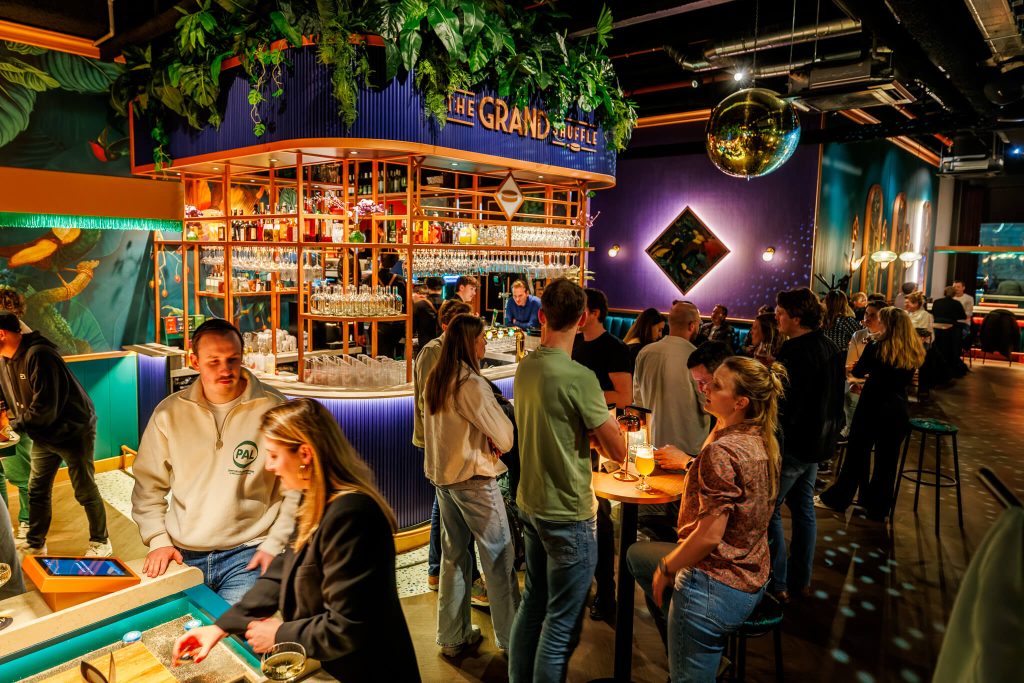
Social competitive
Van den Wijngaard: “London in particular is home to many pioneers in this space. There are around 30 entertainment venues where young people go to play games while enjoying food and drinks. It stems from pub culture, where people would go to the pub to play a game of darts or cards and have a drink. The game of darts has now gone from playing a supporting role to taking center stage.”
There are two versions of this hospitality format:
-
Single games: One game is the main attraction, such as shuffleboard, darts, pétanque, or karaoke.
-
Multi-games: An entertainment venue where guests can play several different games.
F&B offer at an entertainment venue
The F&B offering at a game hall is secondary, but there is still plenty of money to be made from it, according to Van den Wijngaard. “At these types of hospitality venues, you often see the bar positioned at the center of the space. In most cases, the first thing you encounter when you walk in is the bar. You order your first drink there and then head to your game area. Once you are playing, you order food and drinks using a QR code or through the venue’s app. The app knows where you are playing. You simply select what you want to eat and drink, and the order is delivered to your table. You pay at the end, when you leave the venue.”
“Almost all of the dishes on the menu at an entertainment venue are designed for sharing. From the kitchen’s perspective, they are easy to prep and easy to serve. You are not going to sit down for an elaborate meal while playing a game. Instead, you grab a few bites between rounds. The menu is designed accordingly. Think dishes such as flatbreads, dumplings, loaded nachos, and gyoza.”
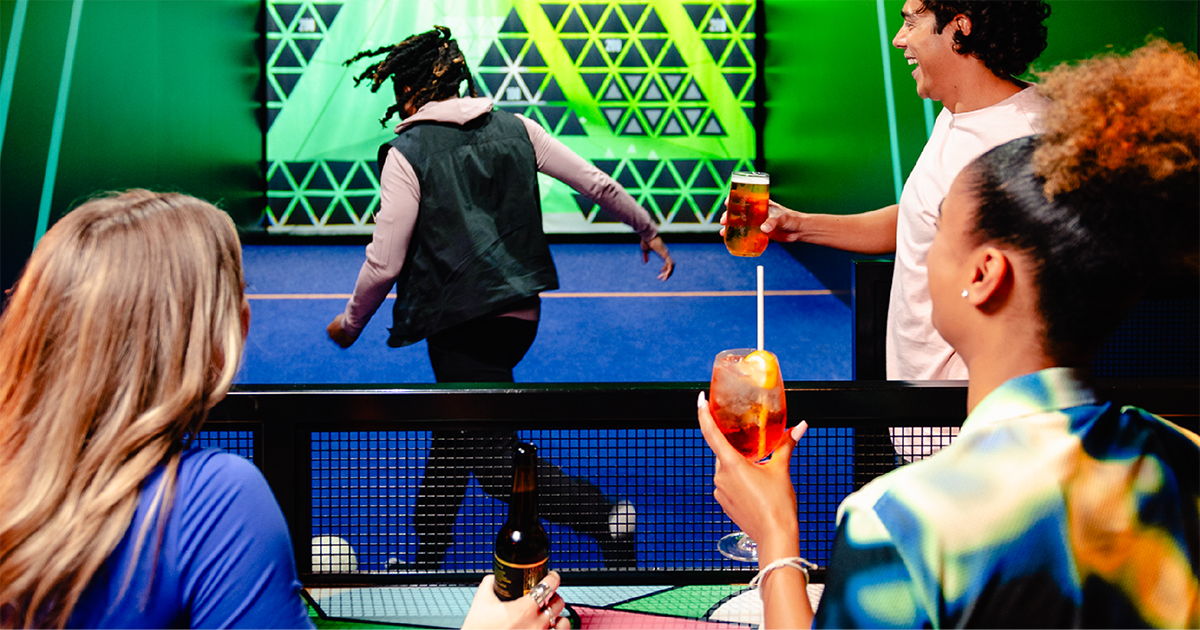
Multiple audiences, large groups
What makes this hospitality format particularly interesting is that it attracts multiple audiences—and often larger groups: from children’s birthday parties to corporate outings, and from groups of friends to soccer teams. “In London, visiting a game hall is already considered a popular corporate outing. Friend groups also go there frequently. As a result, this segment has become one of the biggest competitors to restaurants, particularly among younger generations. I therefore don’t believe this is a fad. It is a new way of going out and, as such, also a direct competitor to festivals and bars. It is an interesting growth segment within the hospitality industry.”

Examples:
-
Ton Ton Club — 2 locations in Amsterdam: an Asian-inspired arcade bar with board games available on the outdoor terrace.
-
Sparkx — 3 locations in Belgium (Antwerp, Hasselt, and Ghent). The concept features more than 150 sports games under one roof.
-
The Cube — 3 locations in London, Manchester, and Chicago: an interactive game venue based on the television show The Cube.
-
Fairgame — 2 locations in London: guests can play a variety of games arranged around a large food court in the center of the venue.
-
Toca Social — 6 locations across the United States, Paris, and London: the venue features game booths where guests can play sports-based.
-
Flight Club — 37 locations across the United Kingdom, Australia, and the United States. Guests play darts while their scores are tracked digitally on a screen above the dartboard.
.png)