Every year We’re Smart announces the Top 100 best 'vegetable restaurants' in the world. The guide givesspecial recognition for the efforts of new, newly discovered or re-opened plant-forward restaurants, by awarding the Discovery of the Year award per country. These are the discoveries of 2025 for Then Netherlands, Germany and Belgium.
Chef Sebastian Sandor of Restaurant Louis in Saarlouis, Germany
Rank 2025: #59 | 5 radishes
Saarlouis in Saarland is a small fortress town built for French king Louis XIV, which is still visible in its star shaped fortifications and military heritage. Bordering a parklike garden sits an old courthouse, turned into a design hotel and fine dining restaurant Louis. Having worked in Belgium and France, chef Sebastian Sandor insists that he is ‘a cook who nourishes people’. This quote from Thomas Keller marks his career: “At the end of the day I want to serve tasty food ánd give people a great experience, a good evening and a good time.”
Bread course shows the essence
Sebastian Sandor explains: “In Germany ‘Brot und Butter’ is a big thing. I love baking so we make a little theme of our bread and butter course. In peak mushroom season, we serve a whole ‘forest’ with warm welcoming broth, takoyaki with mushroom and truffle, butter seasoned with champignons de Paris and herbs. The same herbs as you find in the homemade bread. It has to be a rounded experience. There is also a small terrine with mushrooms, lots of little nibbles. Served on a big wooden tableau with forest scenery, in the middle of the table. We don’t mind in which order people eat this, they need to be free in their own experience. And this is what the guests remember most."
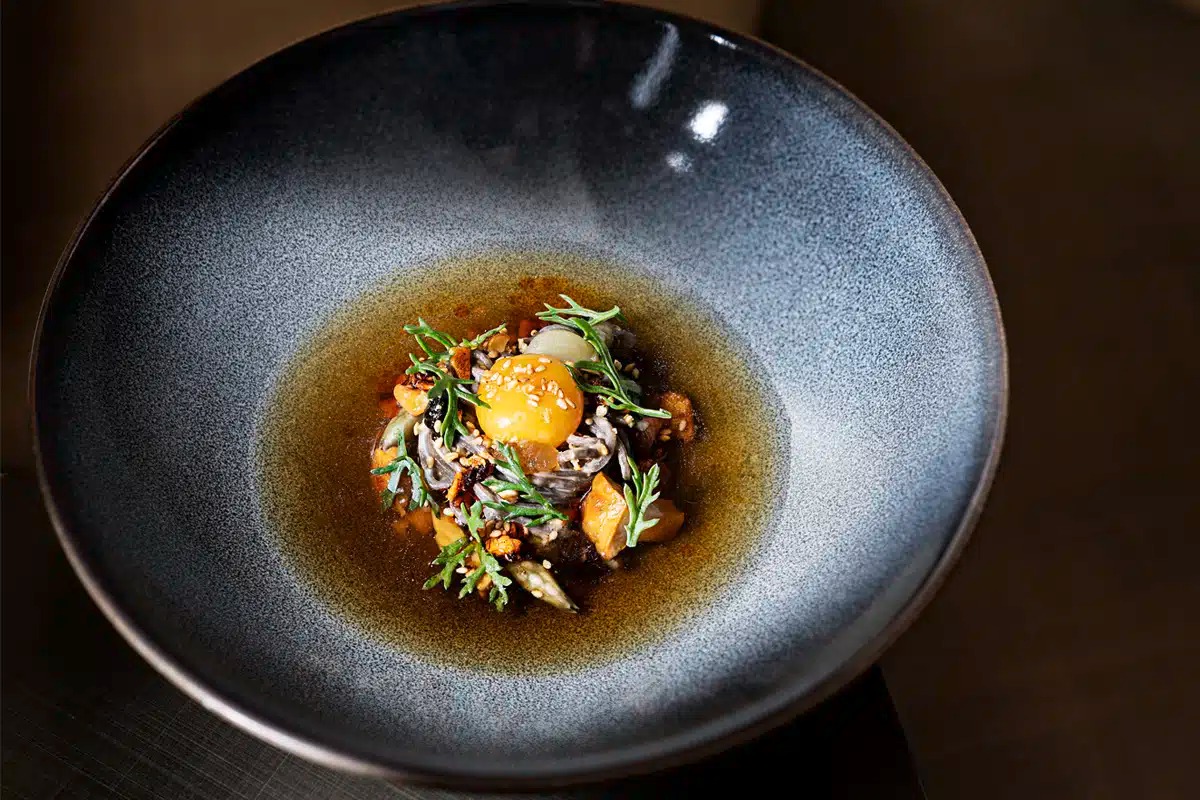
"I am still thinking about the theme for next season, herbs for spring is a bit too obvious, I want to surprise people and not make life too easy. Probably fermenting, to showcase the cabbages or beetroot from last year, that have been laying in our cellar for months. We should acknowledge the effort that goes into harvesting and preserving.”
“I want to serve tasty food and give people a good time.”
An incredible experience with attention for health
“Vegetables have always been a great part of my cooking,” Sandor says. “But in fine dining people seem to be quite (animal) protein concious. We have both a pure plant menu and an omnivore menu, to be financially healthy, and I quite like fish and meat sometimes myself too. The plan is to put the dishes beside each other on the menu and people can simply pick the course that sounds best to them. We will not communicate that it is plant based or vegan. Just write them next to each other and let people choose."
"There is so much good food out there; to differentiate ourselves we must create an incredible experience. I am working on a multiroom experience, using some of our hotel rooms. Start in an intimate place to experience the bites and then move next door to a box with ingredients where we can explain a bit more. With the normal complexities of a hotel with two restaurants, we need a bit of time to work out all the logistics.”
“As a chef you need to pay attention to the health aspects of food. We make everything from scratch, no processed food and very little dairy. We eat our whole life, everything we eat will someday come back to you, like too much fast-food.”
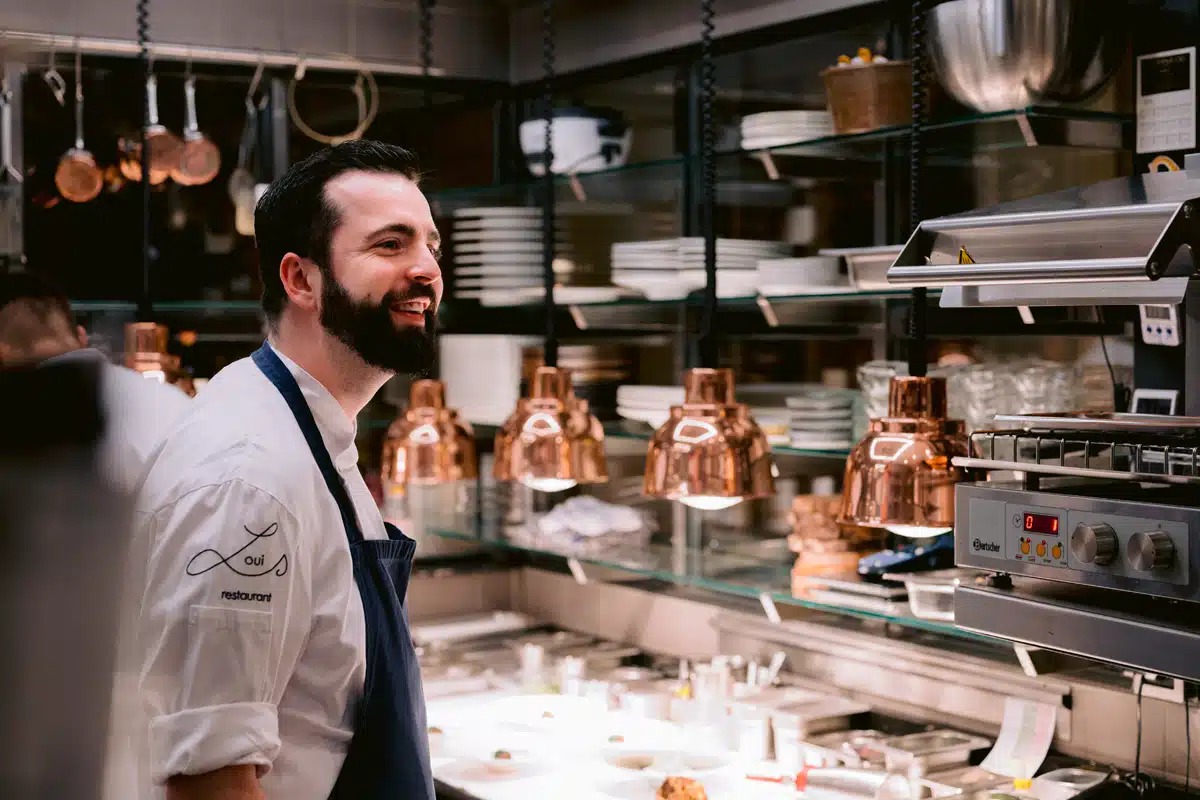
Chef Steven Klein Nijenhuis of Herberg onder de Linden in Aduard, The Netherlands
Rank 2025: #72 | 5 radishes
In the most Northern tip of The Netherlands, between lively Groningen and the Wadden Sea World heritage, Steven Klein Nijenhuis transformed a ‘classical’ restaurant into a boutique hotel and restaurant that excels with a pure plant menu besides a ‘normal’ menu. He explains: “I was nervous to stop serving meat and even more to stop using dairy since creams and butters are the essence of the style of cooking I was taught. We had to learn how to create sauces and cremes without. With trial and error, we now serve a lighter and more modern cuisine than I ever imagined. Last week, more than half of our guests chose the pure plant menu.”
“I was hesitant to serve a carrot as the main character. Now I am unstoppable.”
Modern, sustainable and local
The chef describes his style with three words: modern, sustainable and local. “The change was gradual, rooted in a firm belief that we need to change our eating habits. Not just the guests, also my own family and our staff. The staff meal is consciously healthy and follows the 80/20 principles. One day meat, one day chicken and the other two pure plant. Of course it was a change, but now it is an extra reason to work here for young people. Our clientele also became younger."
"The next big decision was to stop so-called luxury products, often imported from far away. What convinced me was that guests were more impressed with the koji fermented carrot dish with seaweed than my dessert with caviar. Stopping these expensive ingredients allows for better economics too.”
Ancient fishing methods
The omnivore menu uses limited amounts of crustaceans and fish. Neijenhuis explains: “We only use crab, mussels, oysters, mullet or seabream from de Wadddenzee – when in season of course. My supplier – Goede Vissers – uses ‘standing nets’ – an ancient and sustainable way of fishing. So, imagine the crab, with a ‘milk’ of locally grown hazelnuts, a garum of mushroom and citrus from the flowering quince. It reminds you of a Tom Ka Khai, yet with all ingredients locally sourced in season.”
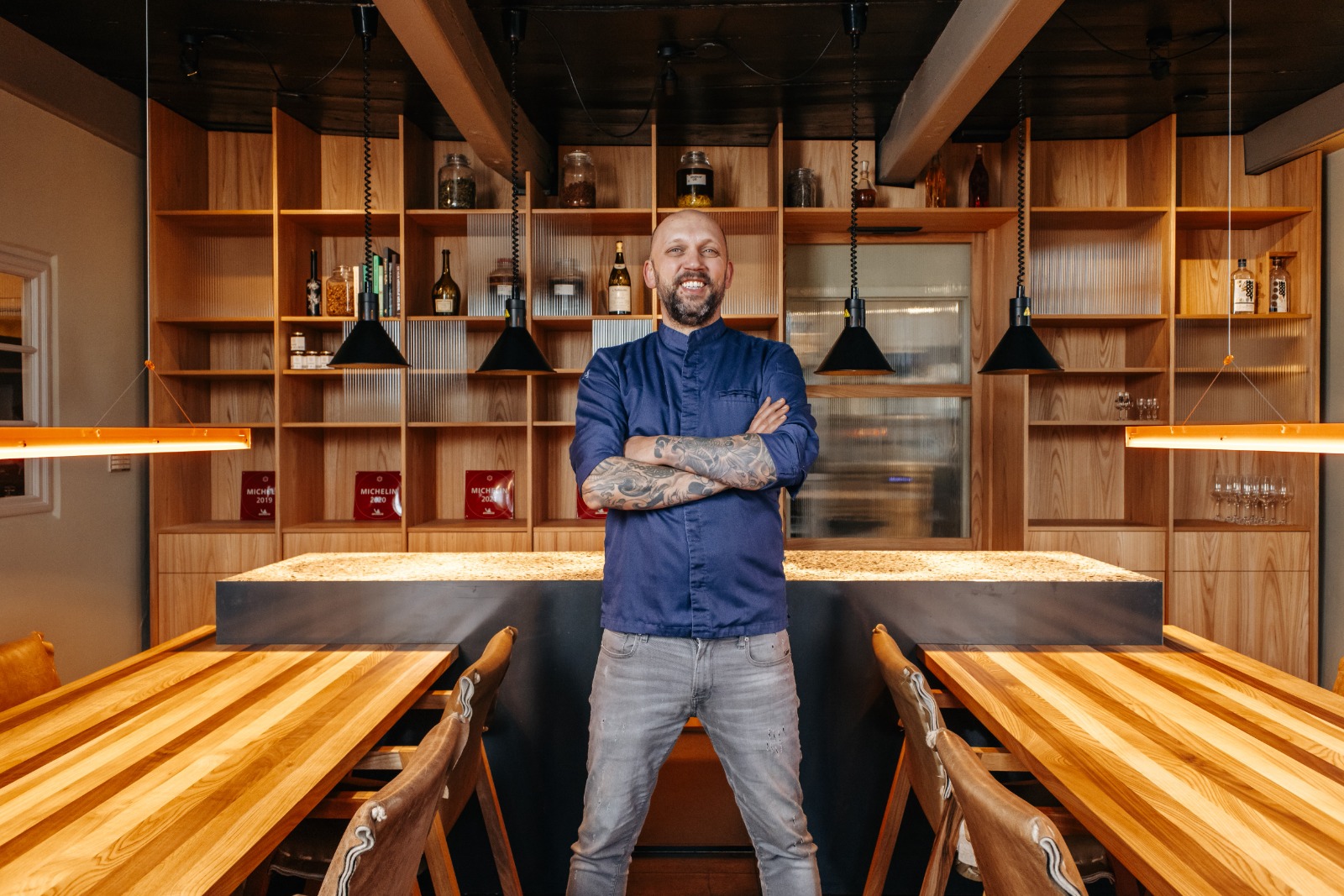
Chef Elliott van de Velde of Entropy in Brussels, Belgium
Rank 2025: #74 | 5 radishes
In the old city centre of Brussels, you find Entropy. The intimate restaurant is housed in a century-old historic hall on Place Saint-Géry, one of the first food market areas in Brussels. Self-taught chef Elliott van de Velde serves ‘conscious’ and ‘militant’ gastronomy: profits go to the social non-profit Hearth Project. “I want to deconstruct the idea of a restaurant into the new world of taking care, a place of ‘bien-être’, well-being."
"Seasonality is a clear guide. In the winter, our body needs to rest, so we eat cabbage. On a hot summer day, cucumber hydrates us. The soil and the farmers give us beautiful food. My first thought is not what can I do with that, obviously, we will cook with it. The big question is how I can offer all the nutrition to my guest. Almost like a gift,” van de Velde explains.
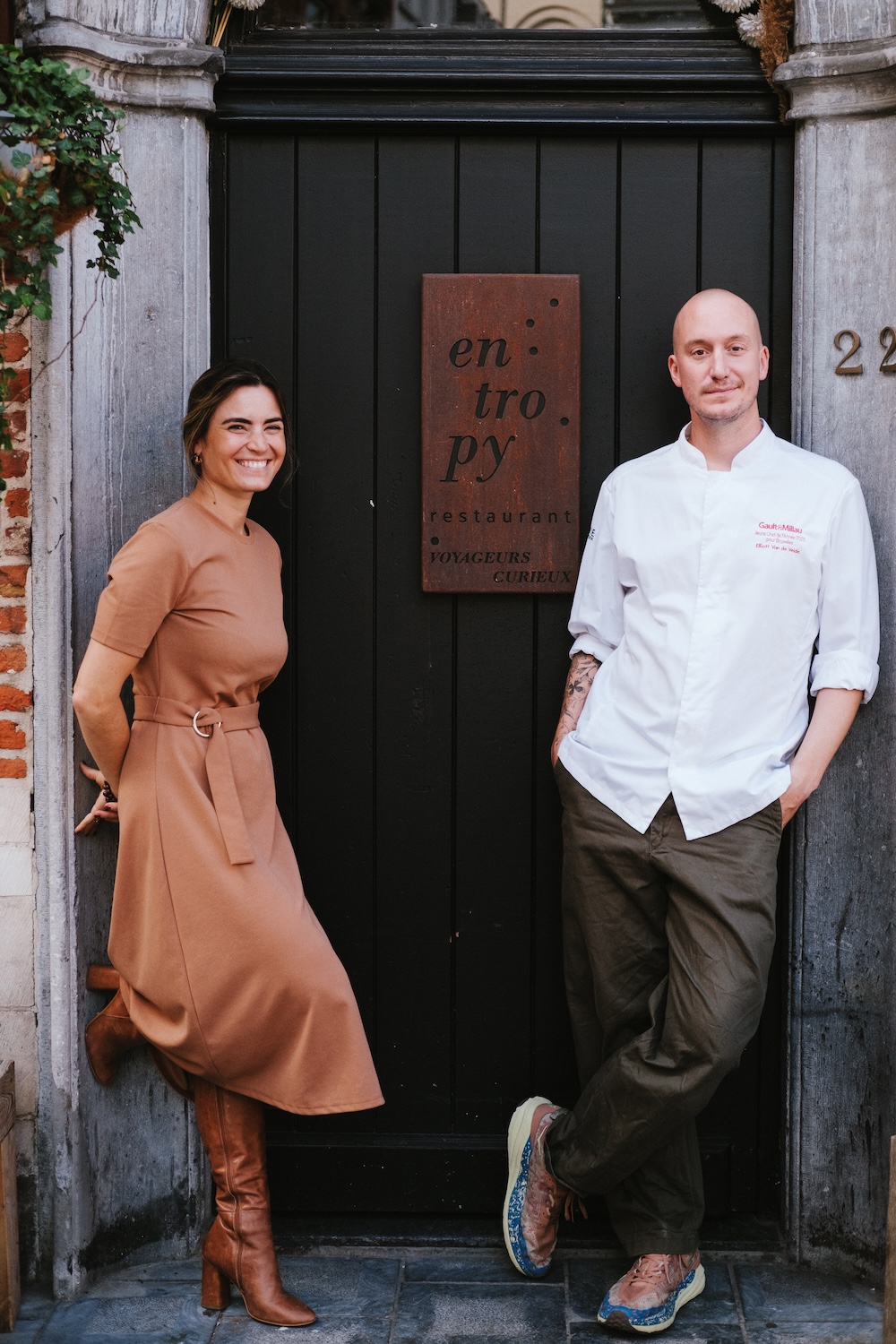
Working more in the present
“As a self-educated chef my brain works differently and is eternally evolving. In 2024 we switched to 100% pure plant, because I saw that I can manage without the animal protein. The idea is always ‘why not?’. I want to prove in my kitchen to those guys who say it is not possible that it can be done."
"I am not pushing pure plant as a food regime but I am very proud that we can serve all guests, even those with severe allergies. Guests that get turned down in other fine dining establishments. The next phase is to work even more in the present. Doing all preparation by ourselves, I want to use less fermentation and preservation, and work more with the flavours of the moment.”
“We are feeding the brain as well as the body. Our restaurant will transform into a space for well-being.”
Van de Velde mentions the risotto of green lentils. “After eating this dish, guests tell me they (re)discovered lentils. We cook them in our own broth on the grill, with lots of herbs and aromatics. They just need a light cook to hold their shape; the product itself is already so beautiful, grown in Belgium and sourced from Graines de Curieux. Beautiful as a shape and mouthfeel and good for the body. We just add texture and taste; torrefied walnut oil, herbs like lovage, vadouvan or black cardamom. There are so many ways to work with legumes and grains. Like our quinoa au lait, a core childhood memory.”
Natural food is a reboot for the body
“When you eat all natural, it is a crazy boost for your body: it is reboot. My main influence is to my team. To all the people that work here for a short or a long time. They get a totally different perspective, inspiration for their imagination to see what is possible and change the way they eat at home. This is where my focus is. Some of my customers understand this, the rest will not change. But they all can try.”
Lees ook
"Bij Apricity in Londen zijn boeren en leveranciers onze grootste bondgenoten.”
This article was created in collaboration with We’re Smart