Today’s diners still want to eat out – but without the hours-long, multi-course experience and the hefty bill. The trend in the Dutch restaurant industry is shifting away from luxury and sophistication toward affordability and simplicity. What remains essential, however, is a warm, lively, informal atmosphere. Linen tablecloths are giving way to board games, and langoustines are making room for more affordable French classics. What are the new recipes for success?
With persistent inflation and rising costs, diners are less inclined to opt for elaborate evenings with a high price tag. Nevertheless, the desire for good food in a pleasant setting remains. As a result, more and more entrepreneurs are opening establishments where the average spend is deliberately kept low.
A budget revolution in the restaurant industry
Renowned food journalist Mara Grimm describes the shift as a “budget revolution in the restaurant industry.” “After years of rising prices, exorbitantly expensive lattes, and overpriced side dishes, there’s a growing appetite for restaurants where you can eat well without breaking the bank.”
Recently, Grimm launched a new column in Amsterdam-based newspaper Het Parool, titled “Under 50,” in which she reviews restaurants where you can eat and drink for under €50 per person. “The number of enthusiastic responses was telling – the demand for affordable dining is greater than ever,” she says.
“For a growing number of diners, restaurant prices have simply become too high,” Grimm adds. “But even those who can afford it are increasingly choosing simplicity. At the same time, something more fundamental is happening: a quiet reckoning with the endless fine-dining menus that have dominated gastronomy for years. In response, a new generation of affordable restaurants is emerging – often with food that exceeds expectations. As a result, the idea that good restaurants must be expensive is starting to fade. And with that, the taboo around budget dining is disappearing. In fact, cheap is the new chic.”
Creating new opportunities for the hospitality industry
The shift toward simplicity is proving to be a significant opportunity for operators. A more accessible concept requires less highly trained staff, a simpler mise en place, and lower procurement costs. Affordability is becoming a viable revenue model in times of rising costs and shifting consumer behavior. Casual dining restaurants with an average spend of around €60 per guest – rather than €100+ – are emerging as winning formulas. Still, affordability alone is not enough.
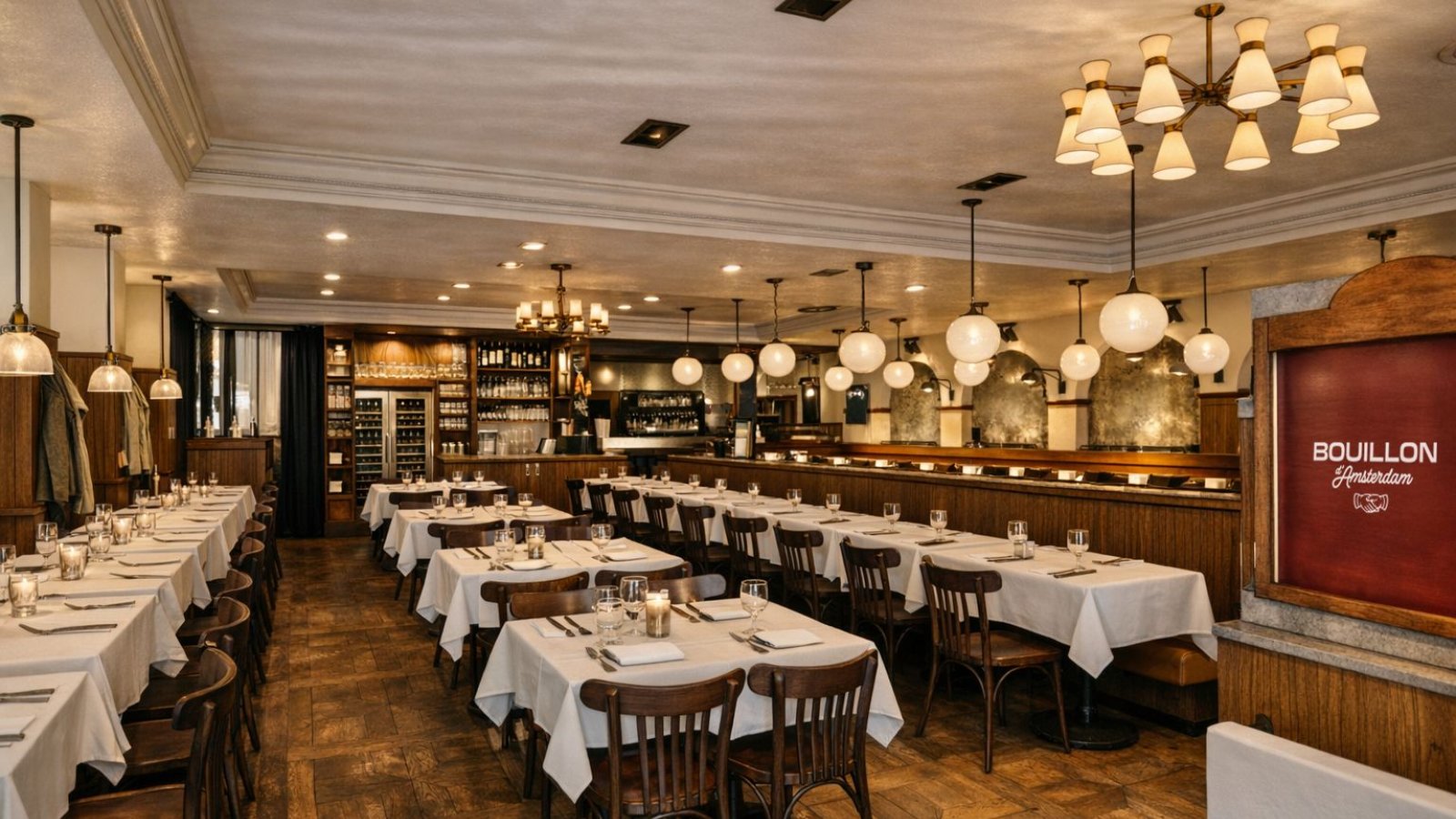
Restaurants that combine an accessible price point with a warm, lively atmosphere and simple yet high-quality dishes are proving to resonate most. Equally important is a concept that is consistent from end to end – across interior design, menu, and brand story – and executed down to the smallest detail. These venues may accommodate large numbers of guests, without ever feeling impersonal.
Table settings are often more relaxed: guests pour their own water, share dishes, and help themselves to cutlery at the table. The atmosphere is informal and social, and the kitchen doesn’t rely on tweezers for plating. At the same time, guests may elevate the experience by adding small luxuries, such as oysters or a glass of sparkling wine as an aperitif.
Key characteristics of successful restaurant concepts:
-
An accessible menu with fair pricing
-
A warm, inviting atmosphere
-
Solid quality rather than fine-dining complexity
-
Familiar, recognizable dishes, often designed for sharing
-
An average spend of around €60 per guest
-
Informal service elements, such as table-set cutlery
Comfort, familiarity, and affordability
“Whereas just a few years ago even casual dining establishments were experimenting with fine-dining-style dishes, plant-forward concepts, and complex preparations, guest preferences are now much more focused on comfort, familiarity, and affordability,” says entrepreneur Xander Waller, owner of Amsterdam-based fine-dining restaurant Entrepot and eatery De Reiger. “Guests have become more discerning, and the range of options has expanded. People want to know what they’re getting, want generous portions, and look for places where they feel comfortable.”
Best practices
-
Paloma in Utrecht is responding effectively to these trends. This Spanish-inspired eatery in the city center seats over 300 guests and combines shared dining with live music. Each evening, between 500 and 600 guests are served across two shifts. Dishes are served continuously, minimizing wait times. Staff circulate with pintxos – Basque-style small bites.
-
From the same restaurant group comes wine and dining bar Ruby Rose in Utrecht, known for its flamboyant, Instagram-worthy interior. Since opening in 2019, the venue has consistently attracted large crowds. Despite high volume, nearly everything is prepared fresh. The shared dining concept includes 165 seats. The most expensive dish – pata negra (premium Iberian ham) – is priced at €16. Top sellers include truffle fries (€6) and pizzas (€9). On average, pairs of guests order around seven dishes, with an average spend of €60 per person, including drinks.
-
In Amsterdam, four restaurateurs identified a gap in the market. In March 2026, they opened Bouillon d’Amsterdam, inspired by the Parisian bouillons – high-volume, low-price brasseries offering classic French dishes. Think 150 grams of North Sea sole for €12.80 or steak frites for €16.90. Main courses start at €15. “At those prices, dining out in Amsterdam becomes fun again – and guests will return,” says Van der Eerde. That has already proven true: within a month of opening, a second location was announced.
-
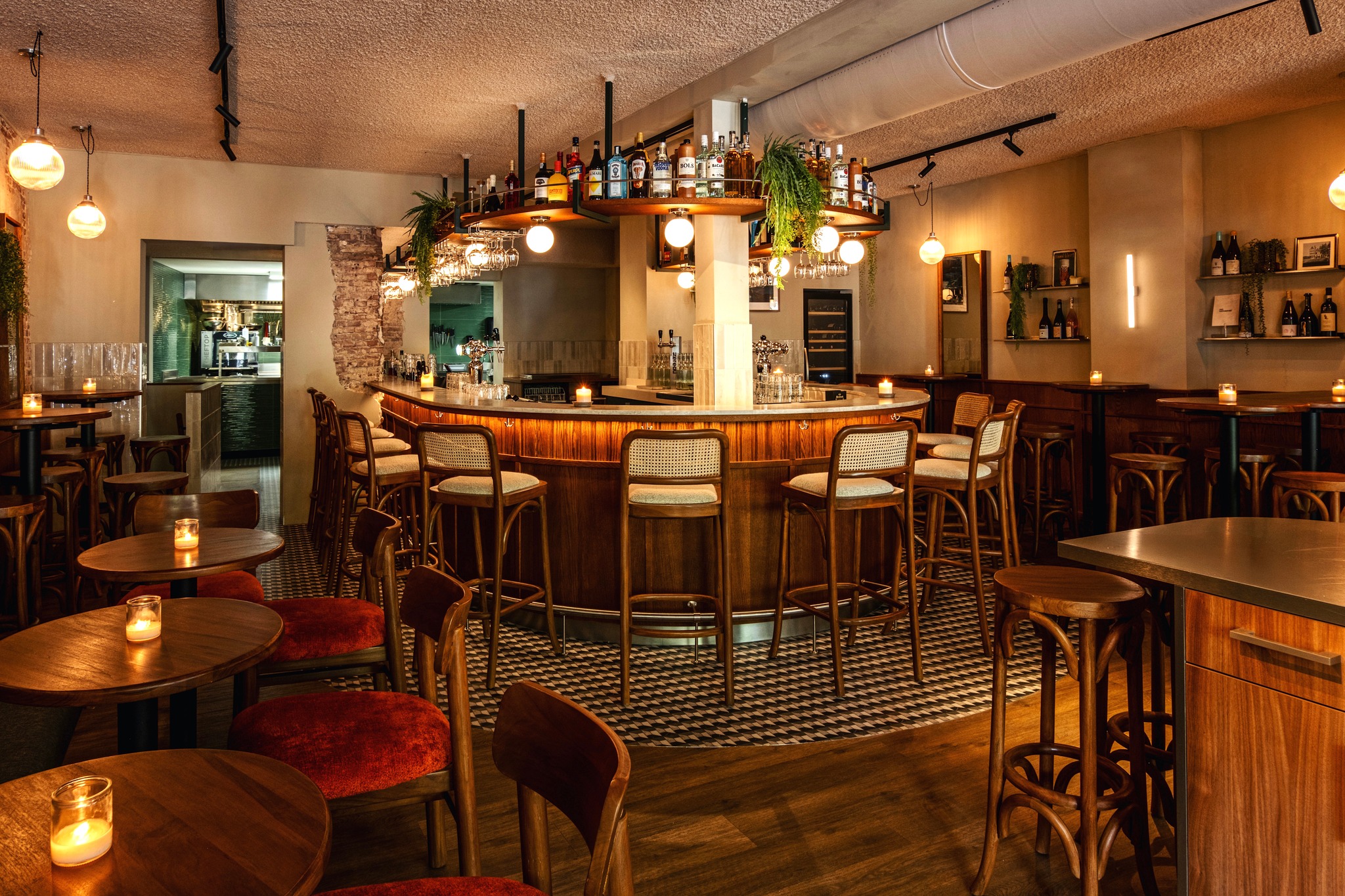
A five-minute walk from Amsterdam Central Station, café-restaurant No Nonsense opened in late 2025. Beer costs under €3, a bowl of soup €6, and a main course €15. The interior feels upscale, but the atmosphere remains that of a neighborhood café. “That’s exactly what we aim to convey,” says co-owner Jockem Becker. “A chic look, without the fuss. Service is our top priority, and the food must be high quality – no frills, and affordable. That’s still possible, even in Amsterdam.”
Economic headwinds in high-end gastronomy
Many haute cuisine establishments in the Netherlands are facing economic pressure. It is no coincidence that an increasing number of Michelin-starred chefs are closing their restaurants and reopening with more accessible concepts. Werner Loens, former Michelin inspector, explains: “Three or four years ago, you paid an average of €125 to €150 per person at a Michelin-starred restaurant. Today, that’s easily €225 to €250. Those increases have happened extremely quickly, and guests haven’t fully adjusted yet. At the same time, the prices are understandable – quality comes at a cost.” According to Loens, that is the core issue: the widening gap between what top-tier gastronomy costs and what guests are willing to pay.
The shift toward affordability is also visible within fine dining. A six-course menu priced at €150? “My guests wouldn’t come back,” says Michelin-starred chef Bram Stoverink of Olde Marckt in Aalten. “Our five-course menu is €80, and for most guests, that works. I don’t need to charge more to cook well – though I don’t compromise on ingredients.” Since the pandemic, Stoverink has observed a clear change in consumer behavior. “Before COVID, nothing was too extravagant – people were eager to spend. Now, they are more conscious of their choices. As a restaurateur, you have to stay honest about what you offer.”
“The fine-dining sector is searching for a new balance between quality, price, and evolving guest expectations,” Loens concludes. “The current situation is forcing restaurateurs to rethink what guests really want. Do they still want eight-course tasting menus? Or would they prefer à la carte? Do they want to sit for five hours, or enjoy a relaxed two-hour meal? We are in a transitional phase – and as always in challenging times, that is when the best chefs rise to the occasion. Within a few years, a new equilibrium will emerge.”