For centuries, tea in China didn’t need any marketing. But now that coffee is winning over the hearts of young city dwellers, the tea industry is responding with design, technology, and new flavors. Food Inspiration encountered the tradition of tea in the hills of Hangzhou and discovered the future of tea in a designer carafe at tea’stone in Shanghai.
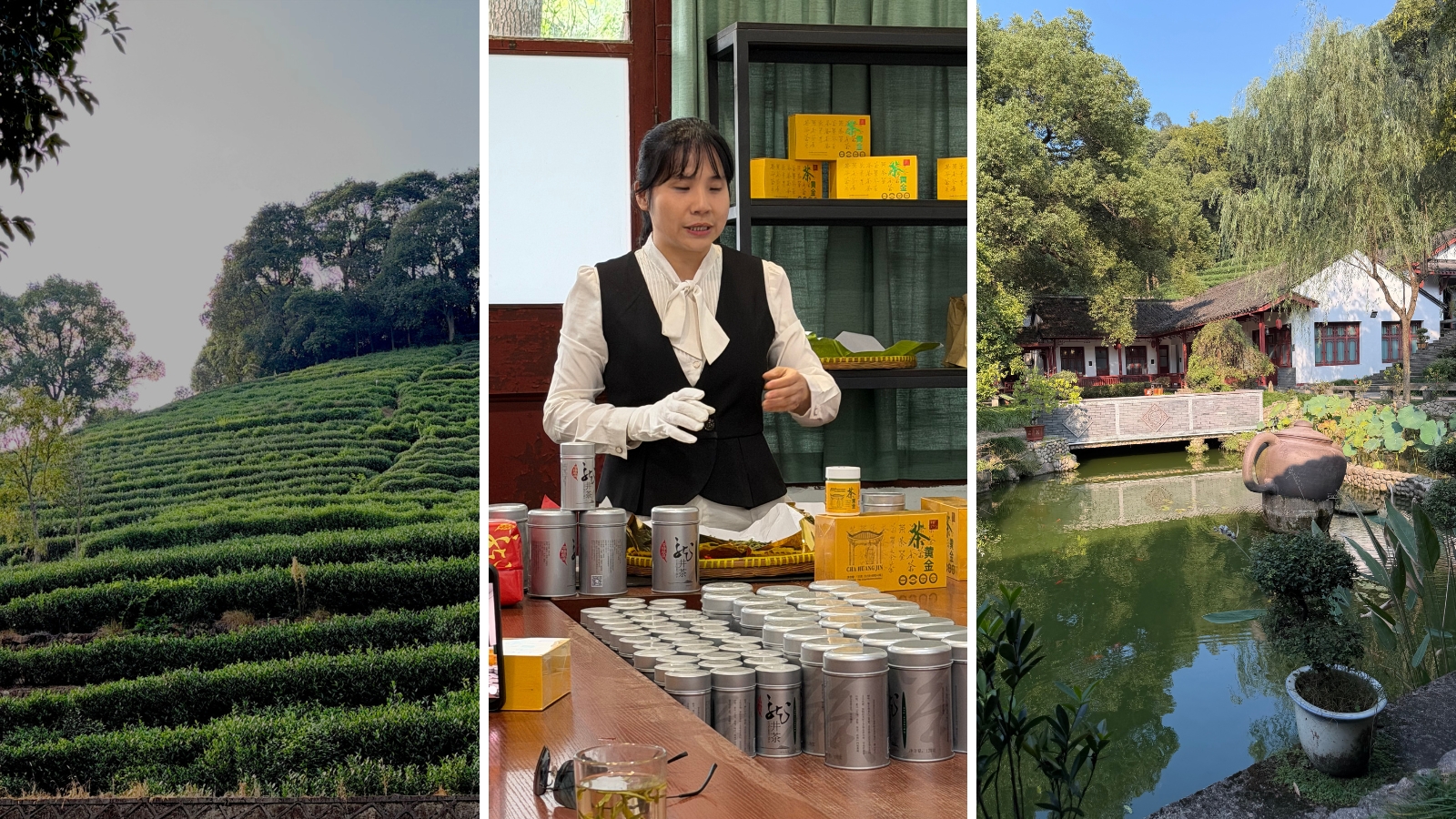
The tea bushes of Meijiawu glisten green on the slopes south of Hangzhou. Tall trees stand among the fields, casting shade over the young leaves. Down below, the visitor center resembles a classic walled Chinese garden: white walls, dark tiled roofs, red wooden galleries, and a pond in which a large stone teapot serves as a fountain.
Meijiawu is a historic tea village south of Hangzhou, located in the heart of one of the most important Longjing tea-producing regions. The village combines tea cultivation with tourism, tea tastings, and the sale of local tea. It is considered one of the best-known places in China to experience the Longjing tradition.
“A deep love of tradition does not preclude commerce“
Inside the visitor center, we are taught about a history that stretches back centuries. Our tour group gathers around a long wooden table. We are handed dried tea leaves and gently rub them between our palms. The heat releases the aroma: fresh and green, with a hint of something soft and toasty. The leaves are placed in glasses into which hot water – around 85 degrees – is poured. We bring our noses close to the glasses as the scents unfold.
A tea tradition as cultural heritage
We are treated to a polished presentation in excellent English by a young Chinese tea expert. Dressed in a white shirt and black vest, she tells us about Longjing, China’s national tea treasure; the traditional method of processing Longjing tea has even been recognized by UNESCO as intangible cultural heritage.
Longjing literally means ‘Dragon spring’. This green tea has been cultivated in this region since the 11th century and served at social and religious gatherings. Longjing’s reputation is based on its specific region of origin, the early harvest, and the traditional method used to heat the leaves. The result is a clear tea with a gentle sweetness and a green, earthy, sometimes chestnut-like aroma.
We taste the tea and immerse ourselves in its centuries-old history. A love of tradition doesn’t preclude commerce. The “ten health benefits of tea” are posted on the wall, and we’re told several times that the Chinese motto for good health is “prevention is better than cure.” Our tea expert, with her ever-present smile, also tells us that no other beverage contains as many antioxidants as the tea we’re drinking – a claim we’ll have to take her word for.
On the table are dozens of silver-colored tins, gift boxes, and products under the name ‘Tea Gold.’ The tasting that follows is a lesson, a ritual, and a sales presentation all at once. Here, tea is not only offered as a beverage but also marketed as a regional product, a token of cultural heritage, and source of health. And yes, the infectious presentation works: everyone stocks up on tea to take home.
tea’stone: tea as a design experience
At tea’stone in Shanghai, the tea ceremony isn’t disappearing – it’s being reimagined. The venue looks like a combination of a design shop, restaurant, and cocktail bar. Dozens of varieties of tea are meticulously displayed in tin cans like books in a bookstore. The presentation is stylish and sleek, the lighting enhances the warm ambiance, and the tableware seems to have been designed specifically for each beverage. Here, the perfect serving of tea is put into practice.
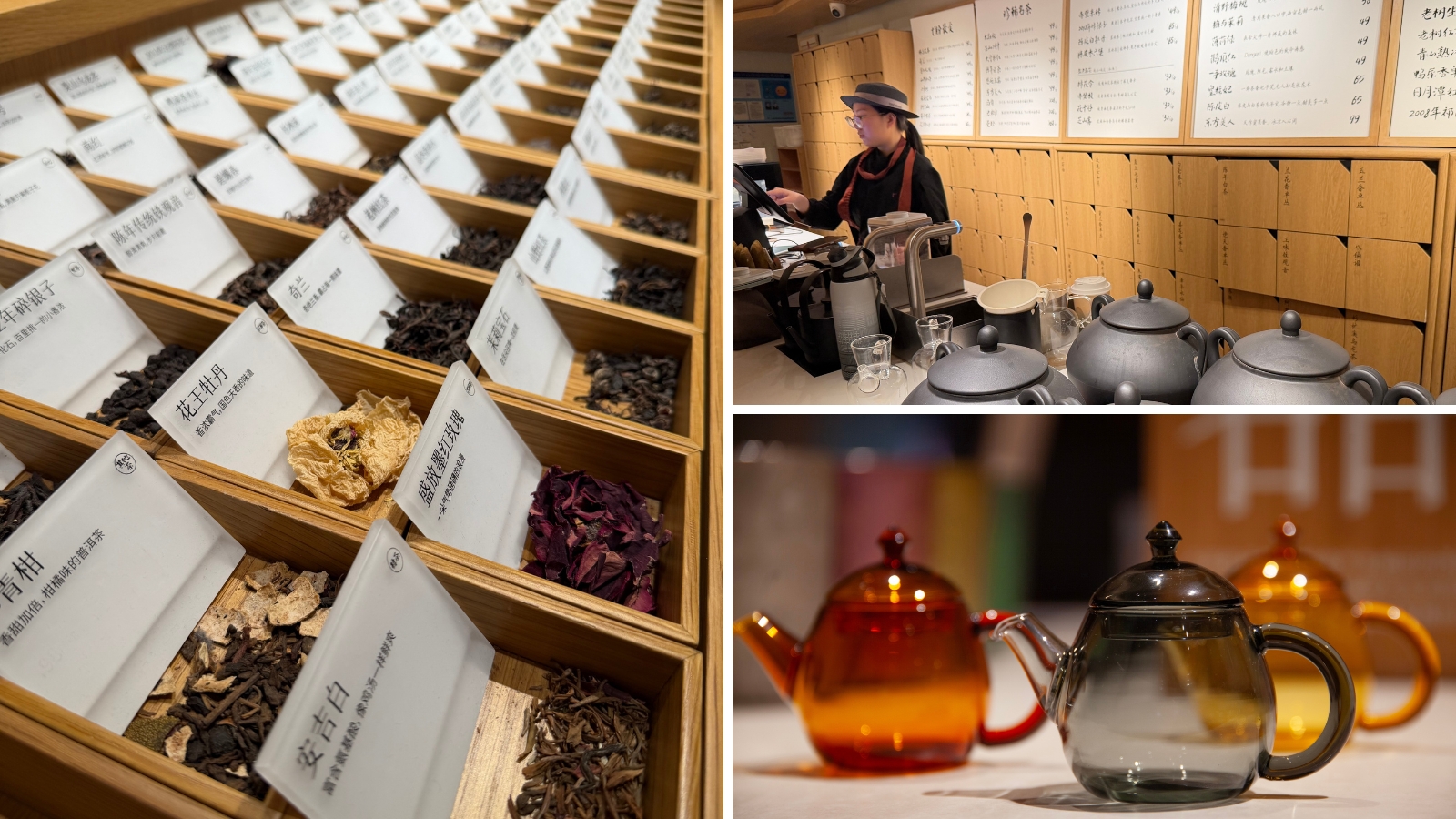
The menu, too, speaks a different language than that of the Longjing tradition. Beverages bear names such as Delicious Poison, Mint Green, Moonlight Rose, and Smiling Imperial Concubine. There is white tea with dried mandarin peel and pu-erh, a fermented tea from Yunnan Province. It is paired with osmanthus, a golden-yellow flower with a sweet aroma reminiscent of apricot or peach. And there is green tea combined with herbs, fruits, or flowers. The descriptions are just as detailed as those for wine: they describe the aroma, mouthfeel, and emotional impact.
At tea’stone, the Chinese tea experience is exclusive and almost museum-like; at CHAGEE, it is accessible and scalable
We order a Delicious Poison. According to the menu, the blend combines jasmine, cinnamon, and sweet fruit. It’s presented on a white tray with a round glass carafe, a heavy ribbed glass, one large scoop of ice cream, and two small treats. The dark, amber-colored tea could just as easily have been served as a digestif in a top-tier restaurant. The aesthetics of the presentation alone seem to slow down the moment and turn drinking tea into a premium experience. We pay 49 yuan: €6.30. By Chinese standards, that’s on the pricey side. Tea’stone doesn’t just sell a product; the concept serves tea with a dash of lifestyle.
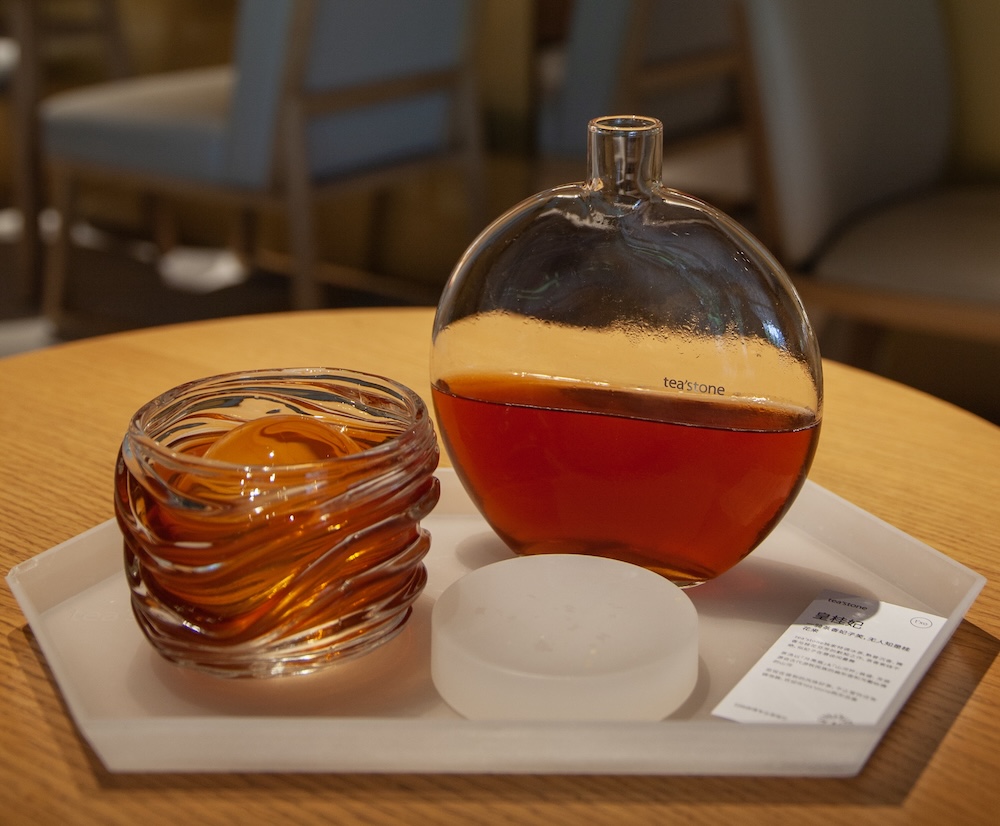
Tea’stone, which originated in Shenzhen, has expanded its presence to seven major regions in China and opened stores in fourteen leading cities, including Shanghai, Chengdu, Chongqing, Xi’an, Changsha, Shenyang, Hangzhou, and Nanjing.
Creating movement in a huge market
In China, tea is much more than a tea bag from the supermarket that you drop into a glass of boiling water. It encompasses agriculture, culture, tourism, health, and industry all at once. First, the economic scale. According to the China Tea Marketing Association, the country produced more than 3.49 million metric tons of dried tea in 2024. The entire tea industry – from traditional tea and new tea beverages to packaging and related activities – was valued at 1.13 trillion yuan. That’s roughly €145 billion. An astronomical sum.
Estimations for the exact number of tea selling outlets varies according to which study or definition is used. The China Tea Marketing Association counts nearly 650,000 outlets in retail and foodservice. Other official Chinese sources cite well over half a million. Behind these impressive figures lies some cause for concern: coffee is gaining ground among young urbanites, and traditional consumption patterns are changing due to the rapid growth of Chinese cities.
Coffee has successfully established itself in China over the past fifteen years. And it has done so in a way that tea has long struggled with: through recognizable brands, appealing concepts, trendy baristas, speedy service, personalization, photogenic presentations, and constantly changing flavors. All the while, tea remained associated with older generations and time-consuming ceremonies. In other words, boring.
But: The Empire Strikes Back. The tea industry is responding with a new generation of products and concepts. Under the banner of ‘new-style tea drinks,’ the younger generation is being enticed. Not only are premium tea bars popping up, but also outlets for milk tea, fruit tea, bubble tea, and freshly brewed iced tea. According to the China Tea Marketing Association, this emerging market is now worth more than 200 billion yuan, which is about €26 billion.
CHAGEE: scalable like a coffee chain
CHAGEE is another brand that ranks among the innovators in the tea market. The concept opened its first location in Yunnan, the cradle of tea, in 2017 and grew into an international chain within just a few years. It even went public on the Nasdaq, underscoring the brand’s international ambitions. CHAGEE now has over 7,000 stores worldwide, with a strong presence in Southeast Asia, including Malaysia and Singapore. The first flagship stores in the United States have also opened.
While tea’stone feels modern and almost museum-like, CHAGEE makes the modern Chinese tea experience accessible and scalable. The menu includes pure tea, freshly brewed iced tea, fruit combinations, and tea with fresh milk. An open bar is central to the teabar concept. The tea is prepared in full view, giving the tea maker the same role as a barista in a coffee shop. The location we visit around noon is bustling with activity.
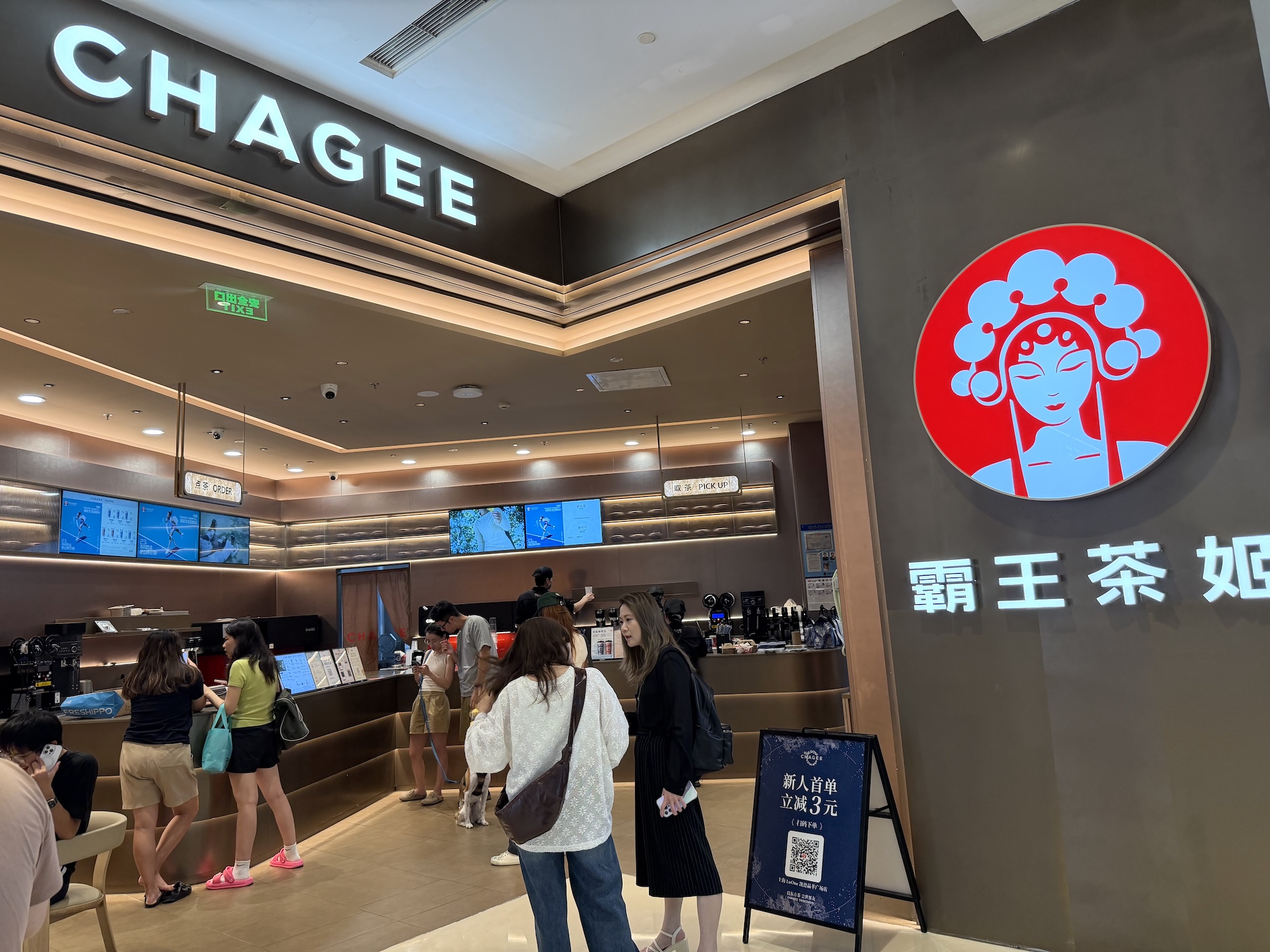
CHAGEE applies many of the principles that have made coffee so successful: a strong brand, recognizable hero items on the menu, attractive packaging, quick preparation, and a formula that can be rolled out on a large scale. While tea’stone elevates tea to a special experience, CHAGEE turns it into a contemporary mass-market product: the Starbucks of tea. CHAGEE’s rise is an example of how China’s strength translates into international expansion: inspiration in the foodservice industry on a global scale no longer flows from the West to China, but from China to the West.
And it is not an isolated example. The Chinese tea concept HEYTEA – founded in 2012 – is another example of successful expansion. The chain has more than 4,000 locations and is growing rapidly in the West. The chain also launched in the United Kingdom a few years ago.
Special thanks to our expert tour guides Jessica Gleeson, Kay Xu, and Nicholas Brown
These articles were previously published in our Shanghai series
Lees ook
Shanghai turns coffee into a lifestyle
Lees ook
A delivery market of unprecedented scale for consumers seeking convenience
Lees ook
How China’s food metropolis makes our focus on innovation shift towards the East