Ron Blaauw (58) doesn’t like bullshit; he says it as it is. In an interview with Food Inspiration, he speaks openly about how he negotiates more sharply with suppliers to reduce costs, how he has increased the average spend per guest by 15% with a different setup, and why convenience is no longer a taboo. According to him fine-dining certainly isn’t dead. “However, there are many establishments that have become complacent.”
The hospitality industry is changing: purchasing prices are rising, staff are demanding a better work-life balance, guests are less predictable, social media determines your visibility, and the fine-dining world must reinvent itself to stay relevant. Blaauw is an entrepreneur who understands that you only remain relevant if you keep adapting on all fronts – and stay ahead of the curve. In challenging times, he feels at his best as an entrepreneur. “When things get hard, I actually enjoy entrepreneurship more.”
he says during a conversation at Ron Gastrobar on Sophialaan in Amsterdam. “That’s when you really have to be creative. I find that much more challenging than when you know you’ll be fully booked every day.” It’s a striking statement in a sector craving stability. But Blaauw believes true innovation only emerges when you are forced to think differently.
"I wanted to get rid of all the fuss, the whispering guests at the table, and the stiff atmosphere that was standard in starred restaurants at the time"
From two Michelin stars to gastrobar
That mindset isn’t new. In fact, it led to one of the most talked-about strategic shifts in Dutch gastronomy twelve years ago. In 2013 closed his successful two-Michelin-starred restaurant, Ron Blaauw. Just a few days later, he reopened at the same location with a simplified concept: Ron Gastrobar, which grew into a highly successful brand. “I wanted to get rid of all the fuss, the whispering guests at the table, and the stiff atmosphere that was standard in starred restaurants at the time.” With the launch of Ron Gastrobar, he returned to basics: a menu with simple, smaller dishes. Although Blaauw gave up his stars when launching the gastrobar, the renewed concept was awarded a Michelin star again in 2014. In 2016, Ron Gastrobar Indonesia followed, a concept centered around the Indonesian rice table. Today, the formula includes three locations, but guests can also have the rice table delivered at home.
Side activities: De Schone Zaak
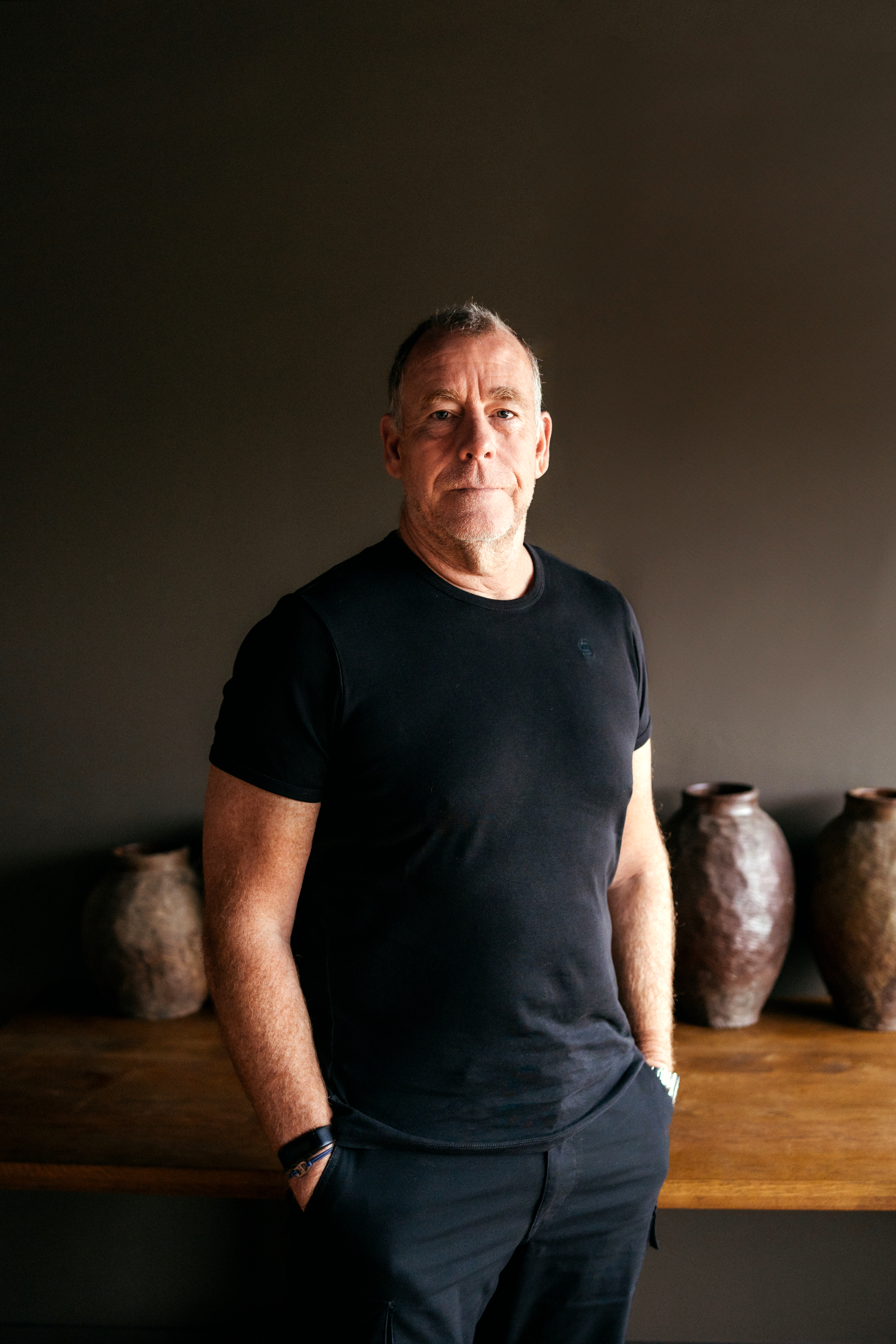
Earlier this year, Blaauw sold his shares in De Schone Zaak, an investment fund that positions itself as ‘by and for the hospitality industry.’ Entrepreneurs who have gone bankrupt or are deeply in debt can restart their business through the fund by leasing it at a fixed percentage of turnover. Blaauw co-founded the company in 2020 with financial advisor Maikel Lindewegen, Richard van Leeuwen (co-owner of Dutch restaurantgroup The Harbour Club), and real estate agent Michael Klaassen. He sold his shares in January 2025, as the growth and restructuring of his own hospitality businesses now require his full attention.
The Ron Gastrobar Group consists of:
- Three Ron Gastrobar Indonesia locations (Ouderkerk, Laren, and Bloemendaal)
- Michelin-starred restaurant Ron Gastrobar in Amsterdam
- Eight Ron Gastrobar Streetfood locations within Mooie Boules—a concept combining food, drinks, and games (Blaauw is responsible for the culinary concept only, not a co-owner)
- The hospitality training branch, Ron Blaauw College, in collaboration with Marco Wins
- Gastrobar at Home (meal delivery boxes)
- Cooking studio Ron Blaauw Central Station in Diemen
- Two Ron Gastrobar TOKO locations at Loogman fuel & wash in Aalsmeer and Laren
Concept control: “The menu is my domain”
Although Blaauw spends less time in the kitchen, he remains closely involved with menu development. “I really enjoy that. It allows me to safeguard the vision behind the concepts. You have to stay on top of that.”To keep that vision sharp, he set up a focus group within Ron Gastrobar with staff from both kitchen and service. “You come up with new ideas when you bring together different generations and backgrounds. We meet once a month to brainstorm – it’s very interesting. You hear the perspectives of very young people. They dine out in different places and look at things differently.”
Social media: weddings and snow discounts
In modern hospitality, your online presence determines whether guests can find you. Anyone who follows Ron Blaauw on Instagram knows his posts regularly go viral– often playful campaigns. He cites the example of offering a 50% discount during a snow storm in January “because I’d rather have a full restaurant than no guests.” Guests could also ‘unofficially’ get married at Ron Gastrobar on Valentine’s Day, with a ceremony led by Soraya de Bakker, known from the Dutch tv-program Married At First Sight.
“Social media might be my biggest challenge”, Blaauw says. He increasingly relies on the younger generation, including his daughter. “She’ll say: ‘that color doesn’t suit you anymore,’ or ‘your Instagram looks messy.’” He recalls the viral post “house, job, scooter”, where new employees could get a business lease on a scooter and get help with finding housing through his network. Online visibility helps – but Blaauw knows: a viral post is one thing, but building a stable team is something else entirely.
Paying all hours and saving for perks
“While that post brought in new staff at the time, we’ve approached HR very differently over the past four years. Instead of attracting new people with bonuses and gimmicks, we now focus on investing in the people we already have.” The Ron Gastrobar Group employs around 270 people, most of them full-time. “Half of our staff have been with us for more than five years. By taking good care of our own people, we see a positive side effect: new employees apply more quickly because they hear the positive stories.”
"We started paying overtime two years ago. That had quite an impact on the numbers"
Blaauw highlights listening, supporting, coaching, and giving freedom as key principles. “I don’t want any shouting in the kitchen.” He notes there are four female chefs on the payroll. “I’m proud of that. Five years ago, that wasn’t the case.” For him, it’s proof of a safe working environment. “We also have quite a few employees who now have children. You have to adapt to that.”
Another key point: all hours worked are paid. “We started paying overtime two years ago. That had quite an impact on the numbers.” The result? “A 6% drop in margin at the bottom line”, he says. Still, he’s convinced it was necessary. “That idea of ‘it’s a starred restaurant, so overtime is just part of the job’ – that’s outdated.” Through a special platform, employees can also choose secondary benefits within a set budget, tailored to their interests – such as gym discounts, groceries, or outings. “It works,” he says, though there are limits. “Three-day workweeks are a no go. Four days is fine. That’s almost become the standard.”
"Because the labor percentage has risen so much in recent years, you have to manage kitchen costs and procurement more sharply"
Procurement: no longer blindly accepting price increases
Blaauw identifies labor costs as the biggest pressure in hospitality. “Because the labor percentage has risen so much in recent years, you have to manage kitchen costs and procurement more sharply.” A striking part of his entrepreneurship now lies in negotiating with suppliers. “We’re much more on top of procurement. We place the ball in the suppliers’ court and no longer blindly accept price increases.” He’s done with cost increases being automatically passed on to hospitality entrepreneurs.
His frustration often lies in the details: a delivery note showing milk has suddenly gone up by twenty cents without notice. “Or loyalty programs that look attractive on paper but mainly benefit the supplier. I'm done with being messed around with. We’ve moved away from prepaid bonus schemes, where we received a certain amount from a supplier in exchange for a purchasing commitment”, he says. “We also don’t want promotions or reward points for outings anymore. I want the sharpest price and fair negotiation with open-book costing. By eliminating all bonuses and loyalty programs, you often find there’s suddenly another 15% to be shaved off the price.” According to him, this works surprisingly well – not just for food and beverages, but also for things like workwear and cleaning supplies.
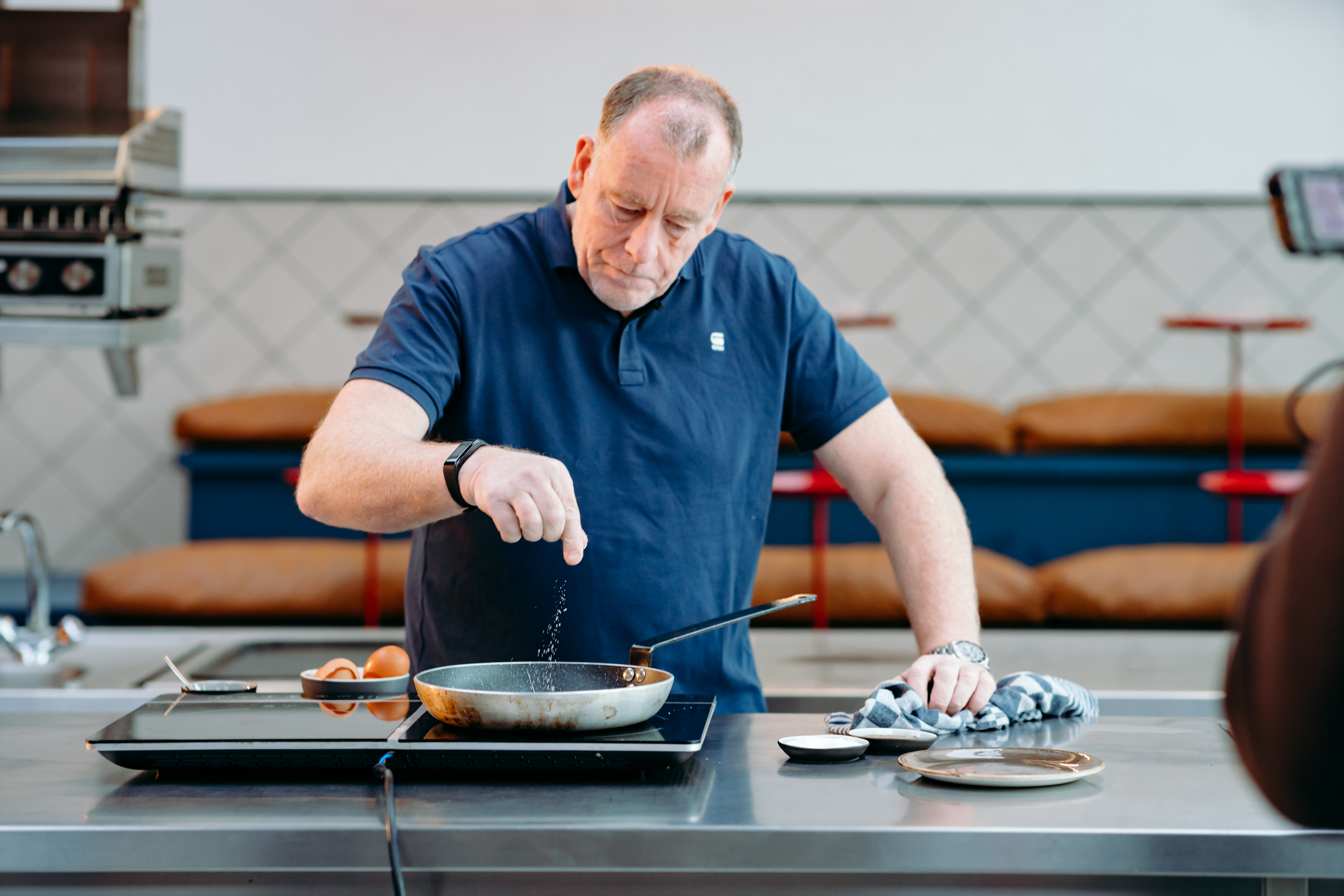
Within his organization, procurement is monitored daily– not through complex software, but via a manually maintained Excel sheet. “Every day, the kitchen team records purchasing, consumption, and daily revenue. That way, from the first day of the month, you know your kitchen percentage.” Why not automate? “Now the chefs have to take the delivery note and enter it themselves. That makes you much more aware of the numbers.” That awareness creates a sense of responsibility. “If I get an email on Sunday evening saying ‘chef, 22% decrease in costs,’ I can feel the team is proud of that.”
Blaauw also no longer wants large inventories in cold storage or wine cellars. “In the past it was order, order, order”, he says. “Then when I’d look in the fridge I would find 16 kilos of spare ribs. Why?” He prefers stock to sit with the supplier. “Same with wine. I don’t want 1,600 bottles in my restaurant if I can just call and have four boxes delivered tomorrow.”
Ronnie and ChatGPT as sparring partners
While he wants to strip procurement back to basics, he fully embraces technology in other areas. “Ronnie”, a digital AI assistant, now handles guest calls – taking reservations, answering questions, and transferring calls when needed. “The idea came from a friend who runs an advertising agency”, he says.
“Three or four years ago, I would have said: what do I need Artificial Intelligence for?” Only in the past year has he started using ChatGPT on his phone. “And I catch myself using it a lot.” Blaauw uses it as a creative sparring partner. “Ask AI how to make a dish more exciting, and you’ll be pleasantly surprised by what comes out.” He compares it to Instagram, which used to be a key source of inspiration. Now AI can partly take over that role. “Sometimes you have a creative block with dishes. With AI, I suddenly get new ideas.”
Concept change: from menu to carts
Blaauw thrives on innovation. That curiosity led to a concept change at Ron Gastrobar. Last year, he initially removed the dinner menu altogether. Instead, staff wheeled carts with small dishes through the restaurant, allowing guests to decide on the spot. The idea was inspired by China, Hong Kong, and the American restaurant State Bird in San Francisco.
“The overload of dishes on a cart didn’t work in our gastrobar. So we reduced the number of interaction moments.” Now, at the start of service, we send out a cart with snacks – like oysters and small bites. Guests then receive a menu, and after the main course, a dessert cart follows. Between courses, guests are guided to a wine corner where they can taste six wines. “A fun moment for guests, but also strategic,” Blaauw says. “Guests rarely choose the most expensive or the cheapest – they almost always go for the middle option.”
The impact on spending is clear: “The average spend per guest increased by 10% to 15%.” According to him, the key success factor is coaching young staff. “They need to develop the confidence to ask guests if they’d like something from the cart. At first that feels uncomfortable, but guests actually enjoy hearing what you have to offer.”
Convenience is no longer taboo
Innovation also means letting go of old dogmas. Take convenience products. “In hospitality, that word still makes people uncomfortable – as if you’re only a good chef if you make everything yourself.” Blaauw takes a pragmatic view.
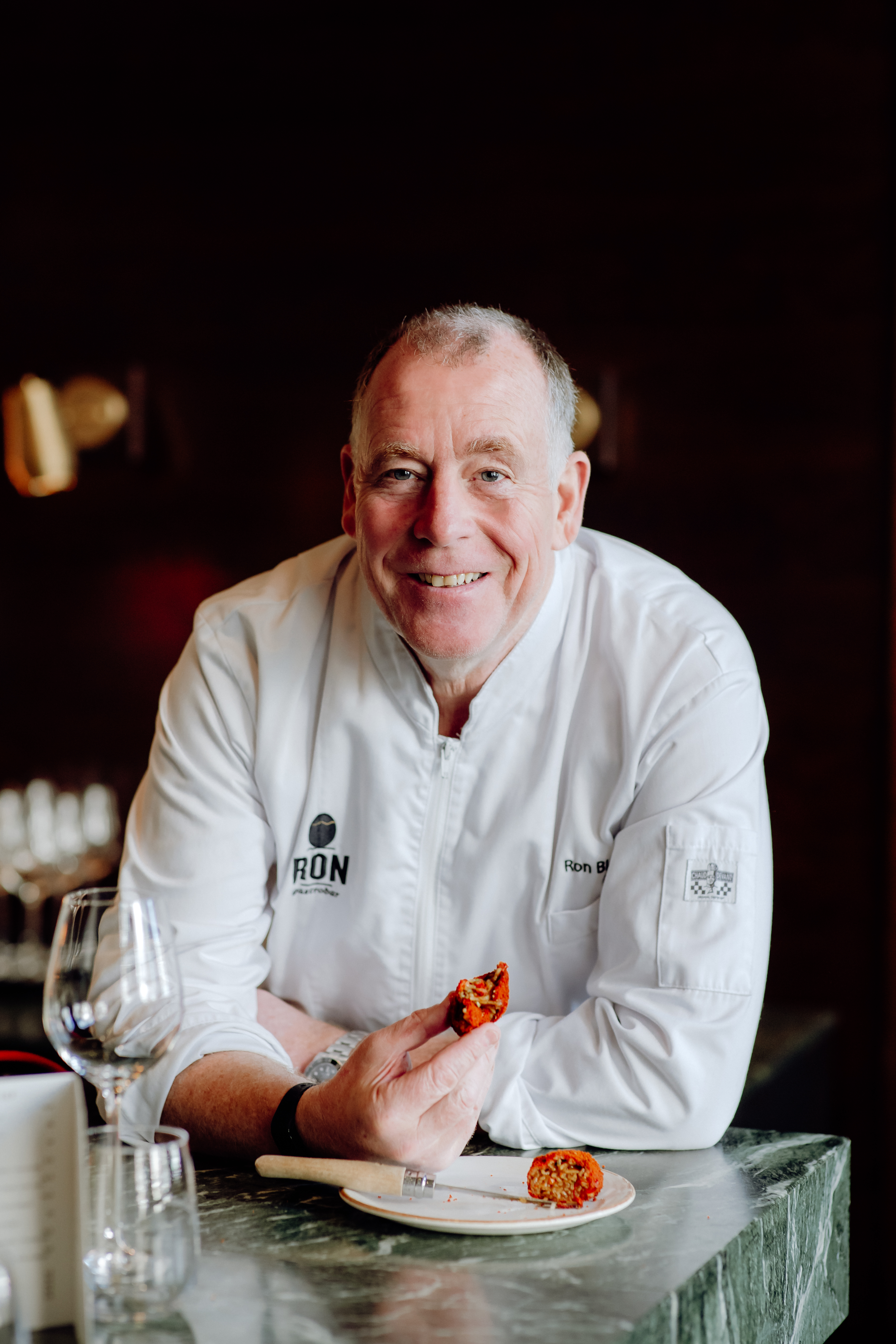
“Even when we had two Michelin stars, we already outsourced certain products.” At the time, mainly patisserie. “I thought it was a waste to have two chefs spending all afternoon making chocolates when there are specialists who do it better. Even in fine dining, convenience is nothing to be ashamed of.”
Within the Ron Gastrobar Indonesia concept, everything revolves around scalability and consistent quality. “We have a production kitchen in Sloterdijk. About 60% to 70% of what the kitchens use comes from there.”
Fine dining isn’t dead – but it has changed
Twelve years ago, Blaauw shifted from haute cuisine to a gastrobar model. Today, more entrepreneurs are following. Renowned restaurants are closing or radically simplifying their concepts to achieve higher margins and more volume.
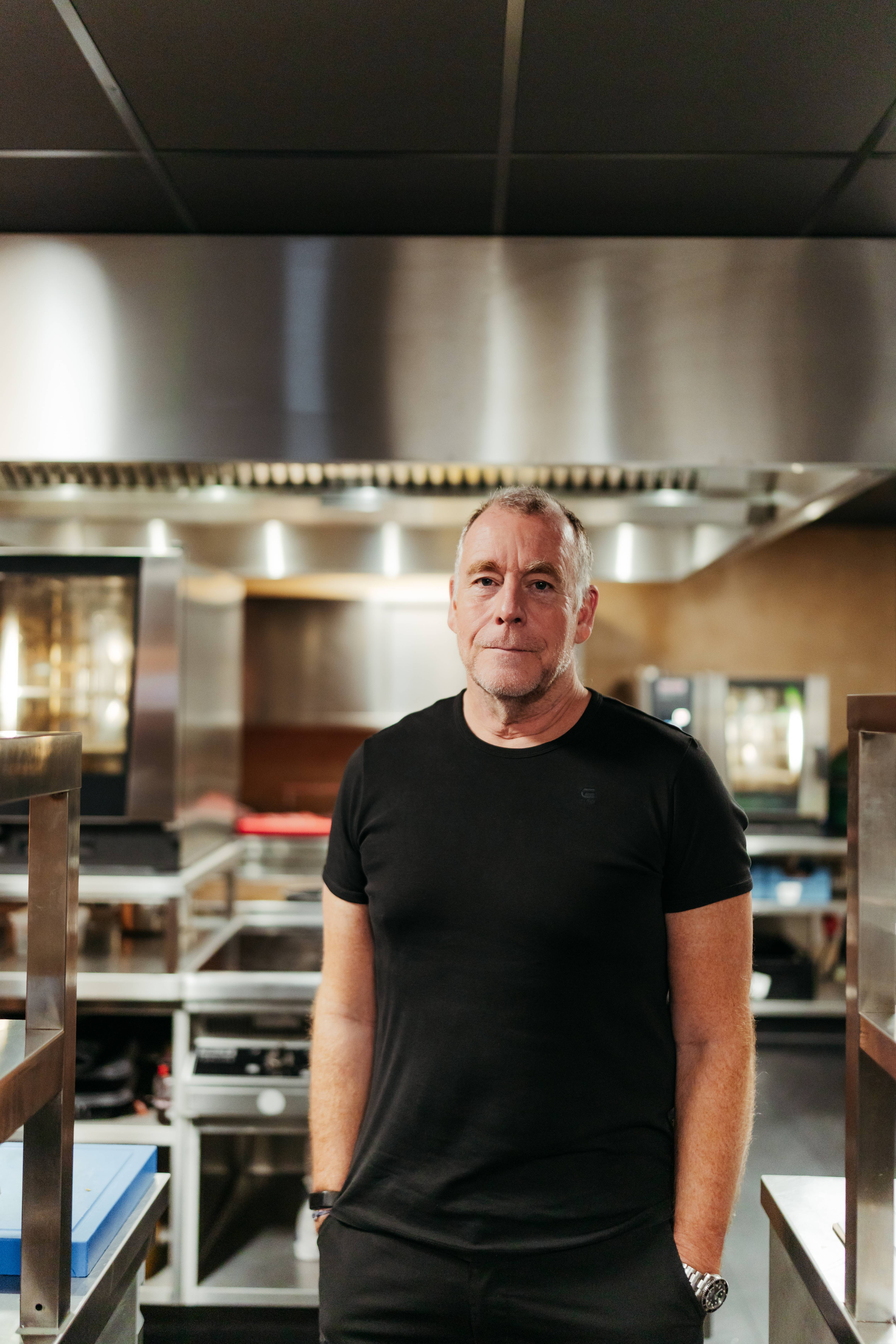
Is fine dining dead? “No, definitely not”, says Blaauw. “But many places have become complacent. Too many restaurants rely on reputation, ritual, and tradition without innovating. The classic model is no longer sustainable – you really have to stand out today. Experience and a strong identity are increasingly important. You have to bring guests into your philosophy.” He cites the Dutch restaurant Brut172** by Hans van Wolde as a strong example. “There, the experience is almost as important as what’s on the plate. That’s what today’s guest is looking for.”
Succession: turning down acquisition offers
With so many concepts and innovations, the question arises: how long can Blaauw maintain this pace? Is he thinking about succession? “I don’t want to do this until I’m seventy. It’s still my passion, but I am gradually slowing down. For example, I want to be home more often in the evenings.” Within the organization, Bas Brouns (executive chef) and Maarten Berns (finance) have become partners. “That’s a good way for them to grow further.”
Blaauw has three children who could follow in his footsteps, though he doesn’t expect it. “We talk about it, and they do have a love for the profession.” External acquisition parties have also approached him. “I’ve always turned them down”, he admits. “They offer a nice payout, but it also means I’d have to show my face every time a new location opens. Then I still wouldn’t have the freedom I want for the future.” The current structure, where Brouns and Berns will eventually take over, feels better to him.
Advice to entrepreneurs: take calculated risks
As Blaauw becomes more focused on the future, he also reflects more broadly on entrepreneurship. His advice to aspiring hospitality entrepreneurs? “Take risks you can afford – risks where you know you can absorb the first setbacks.” He mentions the snowy January period again. “Two weeks of bad weather can destroy your revenue. You have to be able to handle setbacks – and still sleep at night.”
He still considers hospitality a beautiful industry but warns that it requires hard work. He also emphasizes a point often overlooked: your private life must align with your business. “Your home base has to support you – stand behind you and beside you. Otherwise, it won’t work.”