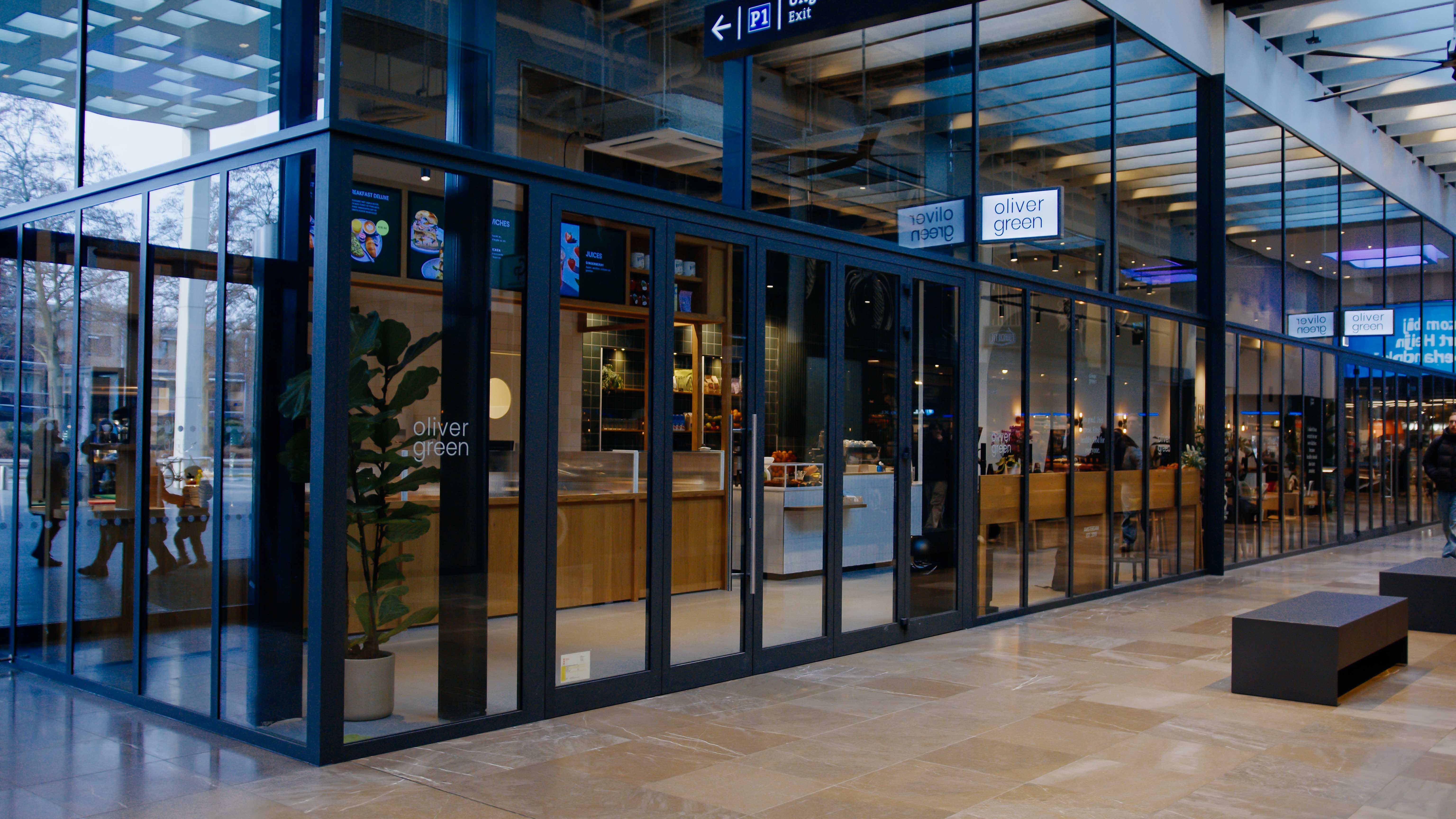
In Amsterdam, the entrepreneurs behind the Oliver Green restaurant chain have quietly built one of the most profitable food concepts in the Dutch food capital. Recently, they’ve been raising funds through a sharefunding campaign for the next phase of growth. What’s the secret behind their success? Co-founder Merel Keizers talks to Food Inspiration about the pragmatic course corrections along the way. “We’ve always kept a low profile and just focused on trying to create something truly good. And that’s resonating.”
Stefan Hoogeveen and Merel Keizers launched their healthy food concept, Oliver Green, in 2019. The concept is built on the belief that healthy eating doesn’t have to be boring, expensive, or elitist. Pure, unprocessed ingredients are central to their menu philosophy. To win over consumers, the food must above all be delicious. “For us, good food isn’t a unique selling point. It’s the baseline.” The chain now has four locations and big growth ambitions.
Oliver Green at a glance
-
Founded: 2019
-
Founders: Stefan Hoogeveen and Merel Keizers
-
Locations: three locations in Amsterdam and one in Utrecht (the Netherlands)
-
Growth goals: by 2030, 15 company-owned locations, 8 franchise locations, and a profitable catering division
-
Store-formats: Oliver Green Express (counter service, takeout and delivery) and Oliver Green Café (focus on in-store experience and dine-in)
-
Profitability: >10% EBITDA margin, 60% gross profit margin, average annual organic growth of 18.6%; valuation approximately €5.4 million
-
Menu philosophy: plant-forward, pure and unprocessed ingredients, free from refined sugars and artificial oils
.jpg)
Funding for growth
The couple opened the first location with their own money, partly borrowed from their family. “I had a mortgage on my house that I was able to increase,” says Keizers. “It was quite a risk for us, but we fully believed in our business plan.”
The chain has since grown to four locations. “We’ve already run two crowdfunding campaigns to finance specific store openings.” The latest funding round is conducted through the Dutch investment platform Broccoli and works somewhat differently. “This is share funding: we now issue certificates so that people become co-owners and can ultimately share in the profits.”
Within two weeks, the entrepreneurs raised the minimum amount of €300,000, mainly from their own network. “A large portion of the investors come from previous crowdfunding rounds and have now converted their loans into shares. They grow with us. That’s a real validation for us: we’re not the only ones who believe in this.”
A gap in the market
Hoogeveen and Keizers opened their first Oliver Green in 2019 at a small location in Amsterdam-Oost. “Stefan worked out a lot. He experimented extensively with his diet to discover how food affected his energy levels and his performance at the gym. A clean, vegan diet worked best for him. As we were living together, I thought: I’ll give it a try too. I felt so good on that diet that I soon followed his example. But we soon experienced that there was a lack of places in Amsterdam where we could eat healthy, nutritious food. Back then, there really weren’t many vegan options available.”
That was the motivation for Hoogeveen and Keizers to start Oliver Green. “We wanted to help many more people experience how much better they could feel by eating healthier. I thought: why do so few people know this? Why don’t we all eat a lot more fresh vegetables and a lot fewer processed and animal products? These days, you can get fatty and sugary food on every street corner that’s hard to resist, but you have to go out of your way to find tasty, healthy food. We thought: we’re going to show that there’s another way.”
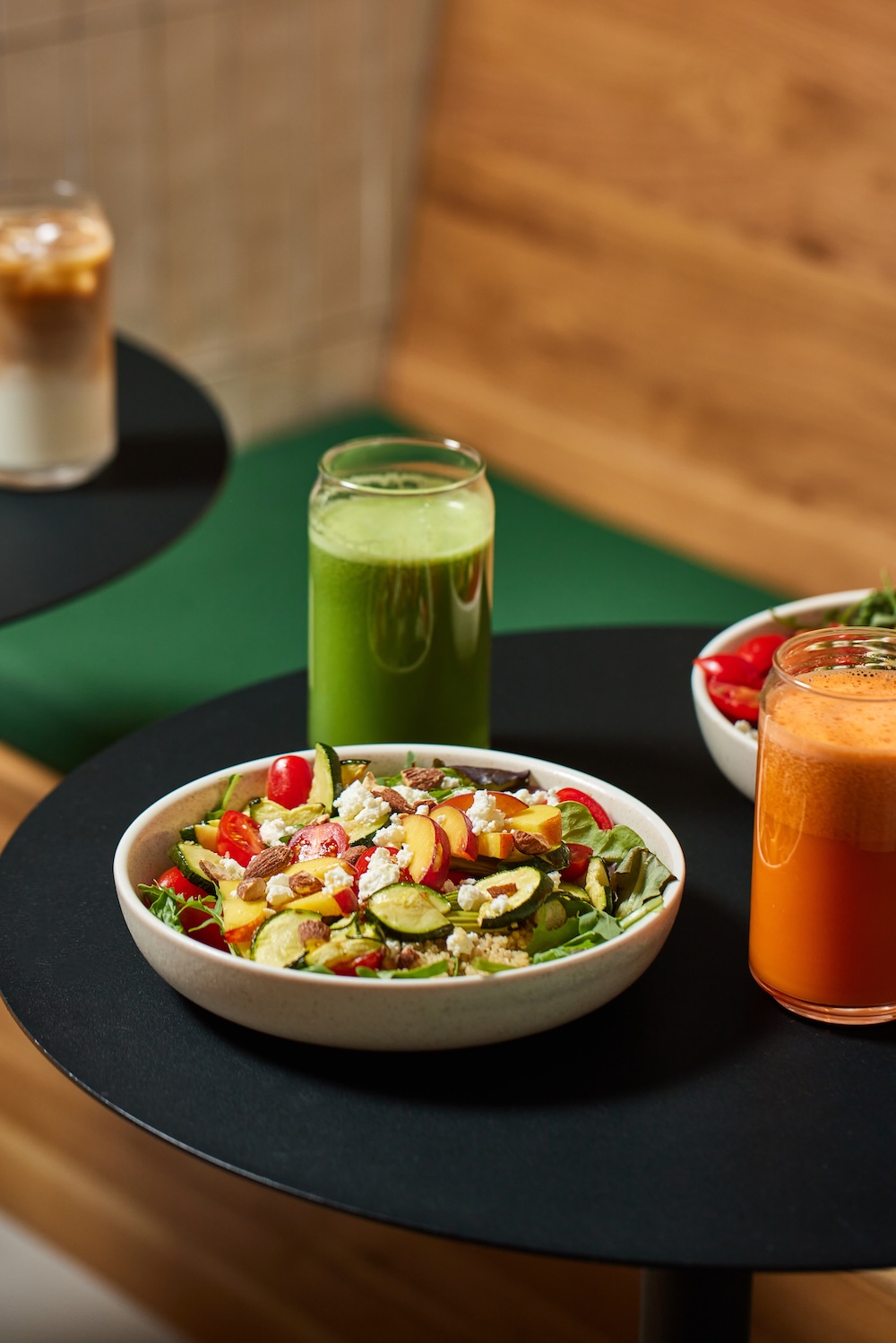
Stefan had just returned from a vacation in South Africa, where he’d come across Kauai, a healthy food concept that perfectly met his needs: accessible, feel-good, healthy, and delicious. “It wasn’t a place for a fancy meal out, but just a very relaxed spot to grab a quick, healthy meal on the go.”
“In the Netherlands at the time, you only had some juice or salad bars, but there was no all-in-one concept for healthy food. We wanted to fill that gap.” Merel quit her office job and first worked at Sla – a Dutch salad bar chain – for six months as a restaurant manager to see if this was really a career for her. “But then we found a small space in Amsterdam-Oost, and we thought, ‘let’s go for it.’”
The duo knew from the start that, if it were up to them, it wouldn’t stop at just one location. “From the very beginning, we had the ambition to open multiple locations. We wanted to establish a concept where people would know: ‘If I want to eat healthy, Oliver Green is the place to go.’”
COVID: focus on takeout and delivery
“Then came the COVID period. We’d only been open for six months, and Stefan had just quit his job. I thought: you can’t seriously mean we have to close our doors now? Fortunately, we didn’t have to. We were closed for just one day when we heard that takeout was still allowed, as long as you maintained social distancing. So we kept going. Our advantage: healthy food was exactly what people craved.”
“During the lockdowns, we shifted focus entirely to takeout and delivery. We immediately took a critical look at how we could improve the ordering process even further. We worked on better photography and a smoother online flow. We also optimized the operational flow in the kitchen, for example by using digital kitchen displays so we could process more orders in a shorter amount of time. Since no one was eating in the restaurant, this period allowed us to make small adjustments very quickly. And our local reputation grew.”
“Once the first lockdown was over, things quickly got very busy. By the summer of 2020, we could barely keep up. That’s when we realized: we’ve hit a sweet spot. In December 2020, we received the keys to our new, bigger location in Amsterdam. We were still in the middle of the COVID-19 pandemic, so we had plenty of time to renovate the space. We opened in early 2021. That was followed by a second location in 2023 and two more in 2025.”
From 100% vegan to a plant-forward menu
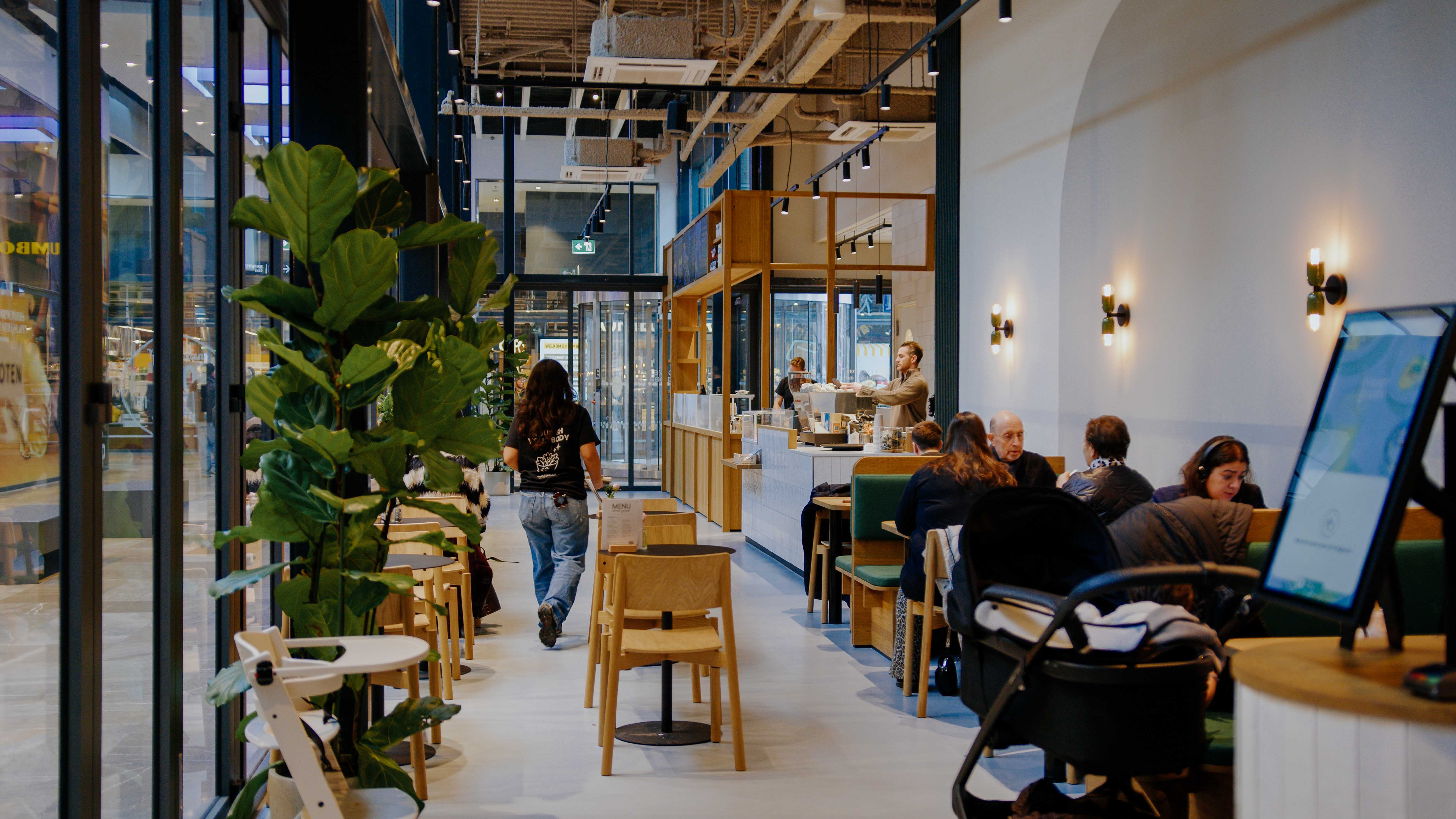
“When we started Oliver Green, our menu was 100% plant-based. We chose tofu and tempeh as vegan protein sources and have always steered clear of meat substitutes. That doesn’t fit with our philosophy of pure and unprocessed. I don’t believe it’s a healthier alternative – if anything, it’s mainly just not meat.”
“But over the years, we saw the momentum around veganism shift. From being forward-thinking and progressive, it became polarizing. That’s when we thought: if we want to reach a larger group of people and help them eat healthier, we need to be more flexible in how we design our menus. Step by step, we started adding some animal protein sources. That started with feta and an egg, and eventually we added chicken and fatty fish as well. Vegetables always play the leading role, but animal protein is a valuable addition.”
“We noticed the difference right away in our customer base. Before, a girl would come to us for a healthy salad with tofu, while her boyfriend would go across the street to get a roast beef sandwich. Now she gets a salad and he goes for a Caesar wrap with chicken. We’re getting very positive feedback from our customers, and it’s effectively expanding our target audience. And to be completely honest, we’re also seeing our sales increase because of this change.”
Pragmatism over idealism
“We try to make the most sustainable choices possible in our purchasing, but we’re also pragmatic about it. Because let’s be honest: if you give people a choice – do you want organic chicken at €8 per 100 grams or free-range chicken at €5 per 100 grams – most consumers aren’t eager to pay that extra cost. They think: just give me chicken. It does matter to us, though, so we still consciously prioritize sustainable and organic purchasing as much as possible, but not at any cost. Our product also has to remain marketable. Otherwise, we have no reason to exist.”
“You see that many companies that strictly adhere to their sustainable principles end up having to close their doors after a few years, because it’s simply unsustainable. Of course, we started with that idea too: we want the best for the whole world – 100% plant-based, no food waste, and preferably everything organic. But as we’ve been working on this, we’ve realized that it’s not always financially viable. So we have to make concessions somewhere. We started Oliver Green because we want people to eat healthier. That’s our top priority.”
A scalable concept
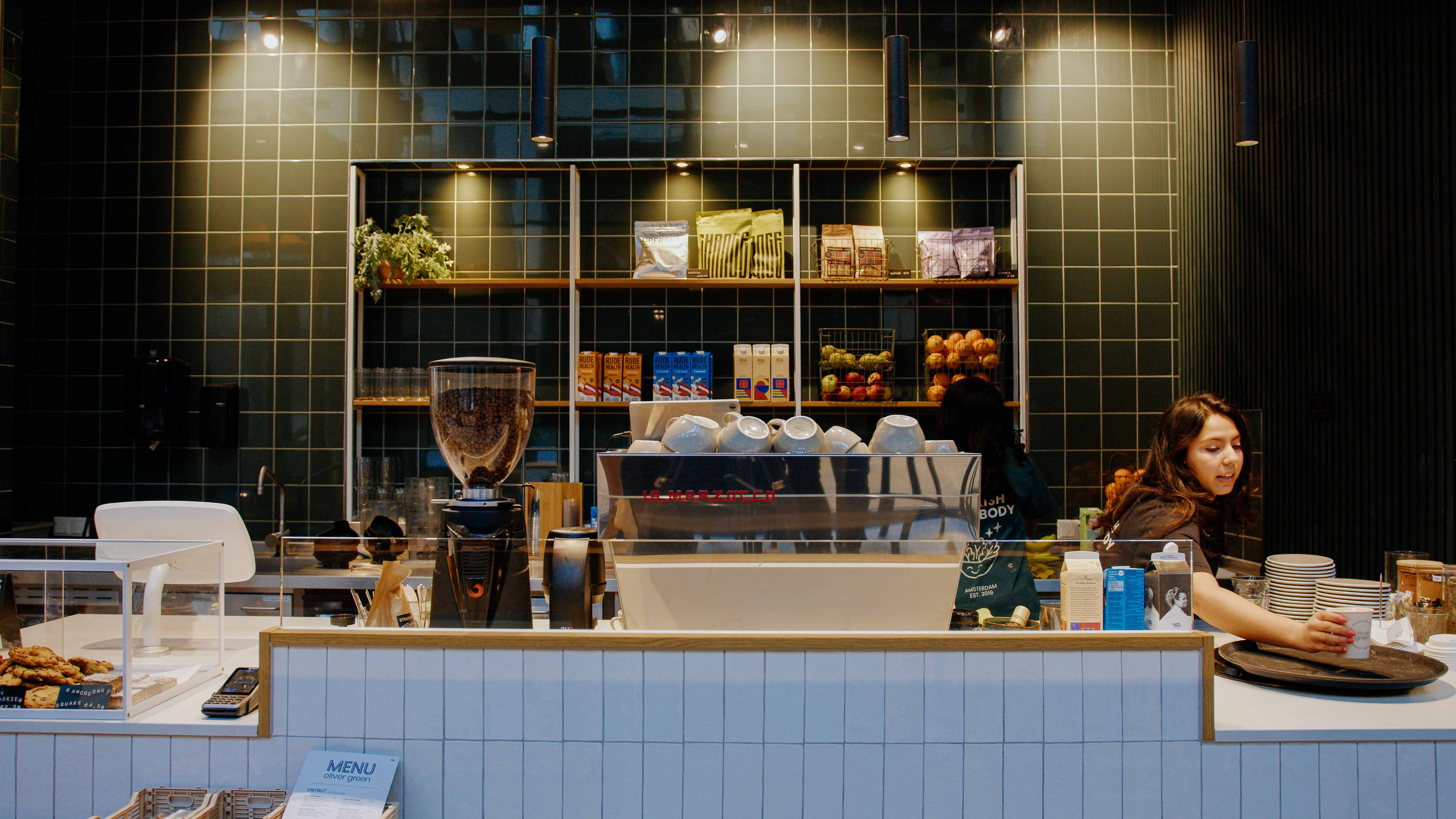
The choices the couple made in developing the concept now make it relatively easy to scale up: high-quality ingredients, no chefs, a fixed menu, data-driven forecasts, and a streamlined back office. “We’ve learned along the way and continuously optimized things.” Keizers cites a few examples:
-
“Operational efficiency plays a major role in the layout of the locations. We’re set up so that takeout, delivery, and dine-in guests can coexist seamlessly.”
-
“Certified chefs aren’t needed in the kitchen. The tasks are highly standardized. We use ovens with preset programs and simple checklists that are completed in the morning, so people know exactly what to make.”
-
“We prepare all dishes and dressings according to standard recipes. The mise-en-place tasks are relatively simple: roasting potatoes and vegetables, slicing cucumbers and tomatoes. Chicken goes into the oven with a temperature probe; it just needs to be marinated according to the standard recipe.”
-
“Over the past five years, we’ve made significant adjustments to our workflow based on feedback from the team. As a result, the preparation time for each dish is under eight minutes.”
-
“Employees receive training on how to use the equipment. We train them so they fully understand the workflow: where to start and how to build speed.”
-
“The most important thing is to have the right equipment everywhere. That’s key. That’s why every location is set up exactly the same. They all have a professional oven and good blenders for making dressings.”
-
“We change the menu, but not every two months. Our flavors are pure, so you don’t need to do much with them. In addition to our unprocessed ingredients, we use very few ingredients for seasoning: oil, a little salt.”
-
“At first, we made our own granola and banana bread, but starting with the second location, we outsourced that to a baker who works according to our recipe.”
Two formats: Express and Café
Oliver Green operates two different store formats:
-
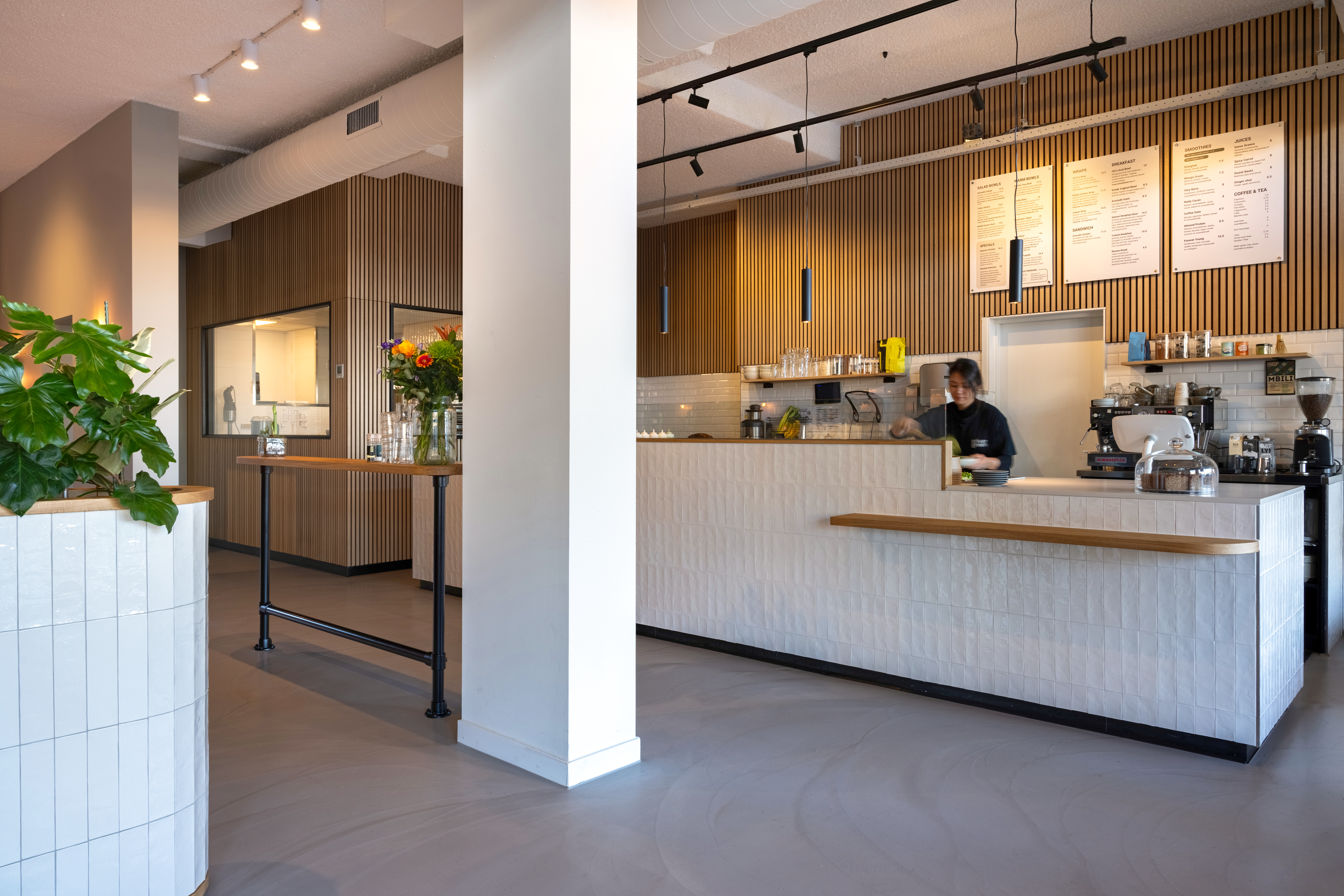
Oliver Green Café offers table service: you walk in, take a seat, and your order is taken and served at your table.
-
In the Oliver Green Express format, guests order at the bar. The focus is much more on takeout and delivery. Dine-in is minimal.
“In our growth strategy, we prefer larger café locations where people can sit and we can offer a more immersive experience. It’s simply more enjoyable and also more profitable from a business perspective. In our location at Gelderlandplein, we have 25 tables, and the revenue potential is much greater, especially in the winter. When it’s busy, revenue is two to three times higher than at an Express location. Of course, we do need a few more people and square meters, but that’s not proportional.”
Loyal fanbase
Oliver Green focuses heavily on repeat customers. “We have a lot of people who come every day, or a few times a week. We have customers who’ve placed over 100 Uber Eats orders with us. They wake up and know: I’m going to order breakfast from Oliver Green.”
“That obviously means our target audience has a fairly good income, because our products aren’t cheap. We prefer to be in neighborhoods where many people live and work. That works well, because you get a nice mix of weekday lunch orders from working people and, on weekends and evenings, locals who live nearby or stop by for a bite after working out. We see that reflected in the sales figures for the locations. The Utrecht location has relatively more passersby and therefore generates less revenue than our store in the Amsterdam city center, which has many regular customers.”
Catering as an additional growth driver
Oliver Green combines multiple business activities: delivery, takeout, catering, and restaurant services, offering both a quick-service format and a dine-in concept. “What we’re seeing is that these activities complement each other well without conflicting. Catering is a good example of this. It grew very organically. We sold sandwiches, wraps, and salads and were increasingly asked by companies: ‘Can we order this for 25 people?’”
“So we looked into how we could do that more efficiently. At first, we used individually packaged salads, just like in the stores. But that wasn’t practical and generated a lot of waste. That’s why we switched to larger platters with salads and sandwiches, which are easy to package in bulk and distribute.”
“We noticed there was a lot of demand. At the same time, we realized: these are good margins, and we can handle it during slow periods. It barely disrupts operations on the floor. That’s exactly why it’s now a great source of extra revenue. We’ve found that we can effectively fill slow days with catering orders. Stefan is very skilled with IT systems and has built an AI tool that allows customers to submit a catering request on our website in a matter of minutes. It auto-generates a proposal that someone from the staff just needs to review.”
Franchise as the next step
In recent years, growth has been gradual, expanding from one to four company-owned locations, but the entrepreneurs explicitly view franchising as an opportunity to accelerate growth. They are aware that this brings a new dynamic. “We have a business consultant for this and feel we are well prepared for it. We view a franchisee as a kind of manager-plus. That could be someone who runs multiple locations, thereby becoming more of a business partner with their own team.”
“What we’ll likely need down the line is someone with franchise experience who can oversee that. Right now, I handle a lot of the catering side, and Stefan focuses mainly on tooling, so we have a very precise understanding of all our locations. We use dashboards that let us see in real time: revenue, labor costs, procurement expenses – where are we losing money and where are we making it? And how can we strategically adjust our planning and procurement to address that? We’re continuously setting things up so that scaling up becomes easier. This includes renovations and interior design. With the tools and insights we now have into how to keep a business profitable, we’re confident it can also be successful in franchising.”
Growing for the sake of growth
By 2030, the chain aims to expand from four to fifteen company-owned locations, along with eight franchise locations and a thriving catering division. Although this goal is very concrete, the entrepreneurs do not consider it unrealistically ambitious. “As an entrepreneur, you have to set a goal. We’ve looked at how we’ve grown over the past few years. The start was slow, but last year we opened two company-owned locations. If we add two franchisees to that, we’ll be able to handle three or four openings a year in the long run.”
“If you look at how much time we spend keeping the operation running, it’s actually not that much anymore. In principle, we no longer work on the floor. With an operations manager in the office, we receive far fewer questions from the teams. Our role has changed. We now focus primarily on where we can still truly add value. This allows us to focus much more on growth. We definitely still see a lot of growth potential in Amsterdam. We’d like to continue growing there under our own management. We’re also looking at other big Dutch cities and high-traffic locations, such as airports, shopping malls, and business districts.”