Microalgae have long been regarded as a promising building block for healthier and more sustainable food. They contain protein, fiber, and micronutrients. Yet they still play hardly any role in our daily diet. The Dutch scale-up Phycom can produce them on an industrial scale at a brand-new factory, Commercial Director Lieneke Hohmann tells Food Inspiration. The biggest challenge lies not in the technology, but in the application: how do we get algae onto consumers’ plates
Lieneke Hohmann worked for years at large corporations, like AkzoNobel, before she opted for a career switch that would allow her to focus on creating sustainable impact instead of increasing shareholder value. She landed at the Dutch startup The Seaweed Company, where she set up the commercial team. After two years, the foundation was in place, and it was time for something new. “And that’s when Phycom came along.” Hohmann joined the team as Chief Commercial Officer in late 2024, with the task of helping create a market for microalgae. The fact that she can also work on two of her personal passions – healthy food and promoting Dutch innovation – makes it feel like it was meant to be.
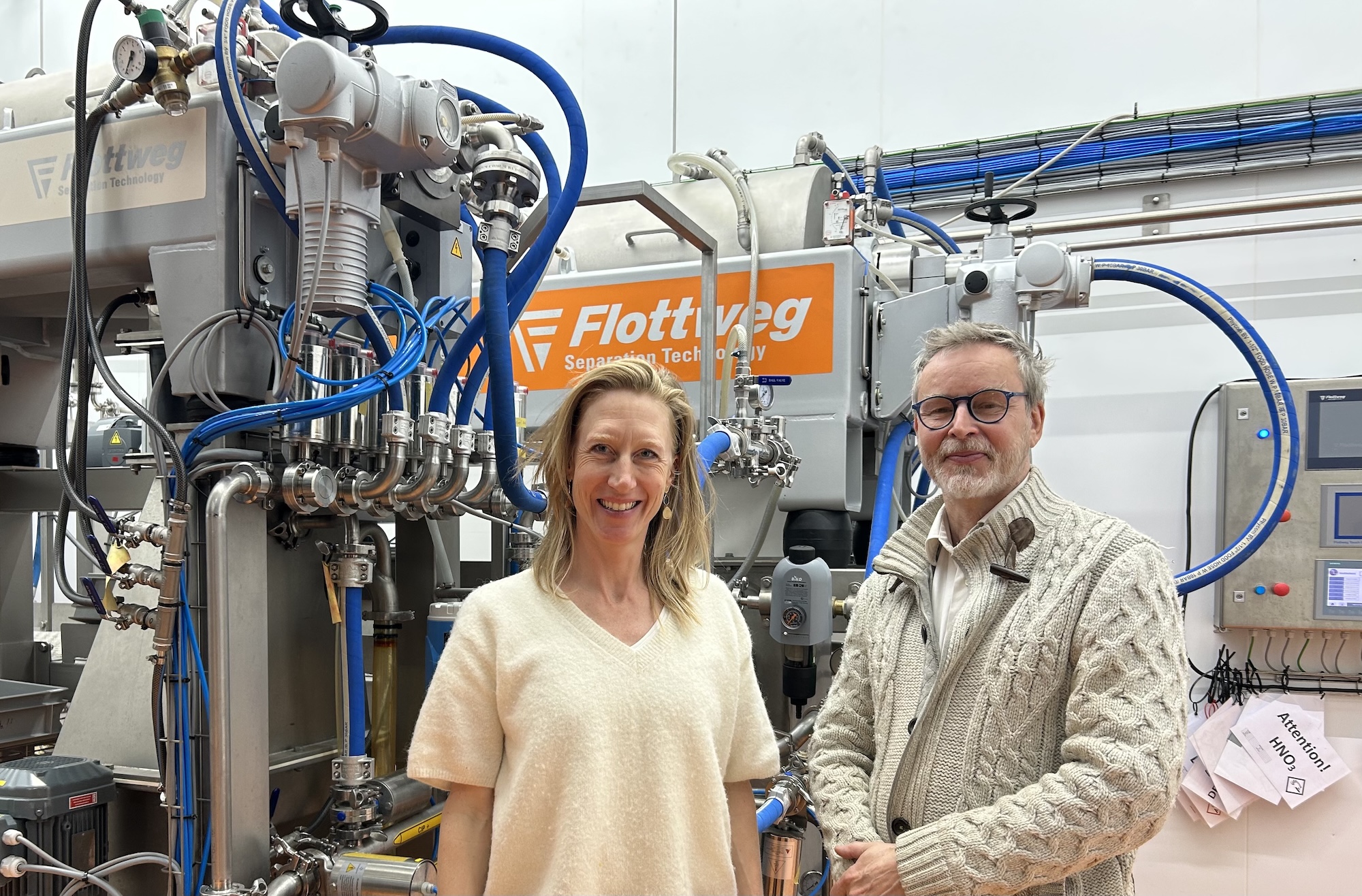
Microalgae as a ‘superfood’
What exactly does Phycom do? Hohmann explains it simply: “We produce microalgae – chlorella, to be precise – on an industrial scale. We develop, cultivate, and dry algae, and then sell them in powder form as an ingredient to the food industry. We use a unique fermentation technology that enables us to produce large volumes very quickly yet in a controlled manner.”
Phycom was founded in 2009 by Erwin Houtzager. Houtzager spent years in the pharmaceutical industry developing drugs to reverse chronic diseases, which, ironically, are often caused by poor nutrition. At a certain point, he decided he’d rather use his expertise in biotechnology to develop healthy food than drugs.
He started with a simple question: what is healthy food? According to Houtzager, it boils down to three things:
-
Plenty of vegetables.
-
A balanced mix of nutrients in the right proportions.
-
Food that is healthy for both people and the planet.
Because only if something can be produced within planetary boundaries does it have the potential to sustainably feed the world’s population. That’s how he came across microalgae. “Microalgae are unique, single-celled organisms that are a lifeform between plants and animals and contain the beneficial nutrients of both,” Hohmann explains. “And they also grow incredibly fast. They’ve been at the base of our food chain for millions of years. Fish eat algae, and they’re essentially the lungs of the ocean. But we hardly use them at all in our daily diet. On a small plot in the Netherlands, in the middle of the Foodvalley area, we can now produce hundreds of tons of algae per year.”

Small dose, big impact
Ultimately, the goal is to make microalgae a standard part of the daily diet. You consume microalgae in relatively small doses, but according to Hohmann, the health benefits come from the combined effect of various beneficial nutrients. “Algae contains proteins with a very complete amino acid profile, fiber, and healthy fatty acids. They’re also a source of vitamin B and other vitamins and antioxidants, such as lutein.”
The potential for applications is vast. “You generally don’t eat algae powder on its own, but rather incorporated into foods. Think of pasta, bread, crackers, or granola. It will never be the main ingredient, but suppose you mix in 10% algae powder – you’ll already be consuming a substantial amount. Especially when it comes to products you eat regularly.”
The algae are dried and do not need to be refrigerated. When stored in an airtight package, they have a shelf life of two years. When used as an ingredient, they are usually listed in the ingredient declaration as chlorella or microalgae. It is not an E-number. It is an approved ingredient in Europe and therefore does not fall under the Novel Food legislation. Hohmann: “We only work with algae that are already approved as food, so we are not subject to those regulations. That association with ‘new’ is widespread, but it is incorrect.”
From grassy to umami
The taste of microalgae varies by species. “Chlorella algae are naturally green and have a slightly grassy taste on their own. But there are also species that taste more nutty, with umami notes. That’s because they naturally contain glutamate, which provides a savory flavor boost. In that sense, microalgae could also be used as a salt reducer. Because the dosage is relatively low, flavor is important, but usually not dominant.”
For Phycom, color is a crucial product characteristic to further develop. “When you use algae in food, it affects the color of the final product. Green algae can be easily incorporated into a supplement or a ‘spinach product,’ but few people want to buy green bread. Yellow algae has much less impact on color. In fact, it can actually give a nice ‘baked’ impression. That opens up many more application possibilities. We’re also working in the lab on an algae that’s virtually white. That’s still in an experimental phase, but if it succeeds, many more markets will open up. So color is almost more important than taste.”
“Since consumers aren’t aware of the product traits of algae, we first have to convince them. They sometimes expect it to taste salty or fishy, but that’s absolutely not the case.” Nutritionists play an important role in the development process, because the application ultimately helps determine the taste. The same algae tastes different in a smoothie than in a dry product. “Actually, you want it to be as unnoticeable as possible. Like adding a kind of hidden vegetable without people realizing it. That’s my dream.”
From supplements to animal feed
Although microalgae have the potential for a wide range of applications – such as biofuel or animal feed – Phycom focuses specifically on human nutrition. Hohmann: “That’s where the future really lies for us. We’ve invested in a high-quality production process within a hermetically sealed system. Algae grow well in relatively warm conditions, but so do bacteria, fungi, and all sorts of other contaminants you don’t want in there. Then you have to add all sorts of things to make it sterile. We don’t want that. With us, absolutely nothing grows other than pure microalgae.”
As long as the market for microalgae in food in the Netherlands remains small, Phycom is actively seeking alternative sales channels. “Our green algae are highly sought after for use in food supplements, which is a massive growth market. The primary focus there is on nutritional value. It’s a niche, but a relatively accessible market for our algae powder. We also selectively supply the animal feed sector. For example, we sell microalgae as a supplement for piglets, which is mixed into their regular feed. Studies have shown that this makes them less prone to illness and thus reduces their need for antibiotics. This makes it financially viable for a farmer to feed algae to the piglets.”
Hybrid and plant-based products
Algae also fit well into a plant-based diet. Hohmann: From a scientific perspective, algae fall somewhere between plant-based and animal-based: they are a different type of organism. But in any case, it is not animal-based, and therefore vegan. As a result, microalgae can also play a significant role in plant-based and hybrid meat and fish products, even if only in small quantities. For example, to add extra nutritional value or make a product a bit “juicier.” Their flavor-enhancing properties can also help with that.”

Foodservice: a logical fit, but not yet a focus
“We haven’t directly targeted foodservice yet, but we definitely see plenty of opportunities there. For example, in catering, to help employees eat healthier lunches at work. Companies and governments are interested in this. But products containing them first need to be developed.”
On a limited scale, Phycom’s microalgae are already available in the hospitality industry and high-end gastronomy through supplier Koppert Cress. Chefs use algae in the kitchen mainly for their aesthetic appeal and flavor. “A subtle hint of yellow or green algae powder can give a dish a special finishing touch. In terms of volume, this is of course a niche market for us, but it’s very important, because this way it’s slowly but surely becoming visible to a wider audience, and guests are discovering that it tastes good too.”
The paradox: a simple organism, complex technology
Phycom was founded back in 2009, but is only now ready to produce on an industrial scale. “It all started in Erwin’s backyard. He started tinkering like a modern-day Gyro Gearloose. But before you’ve really built anything, a couple of years have flown by. Then came a pilot plant, followed by a first small-scale production facility.” A few years ago, new investment was secured to scale the company up to industrial production. “We’re currently in the transition phase. The new plant is being commissioned, and the old one has already been shut down. We expect to restart production within a few weeks.”
“What we’re doing here is technically quite complex. We work with fermentation. The algae grow in sealed tanks, using oxygen, a carbon source like sugar, and possibly other nutrients. The challenge is that you have to keep adding things, but nothing else is allowed to get in. It has to be extremely sterile. That’s not rocket science, but it does require incredible precision.”
“The algae grow in large tanks. If you start from scratch, it takes a few weeks for the tank to fill up completely, but after that, growth is very steady and you can harvest every week. It’s actually just like a sourdough starter. That’s also a fermentation process, where you have to keep feeding the starter.”
Sustainability appeals to businesses, health to consumers
Microalgae can play a role in making our diet more sustainable, as their production has a relatively low environmental footprint, especially compared to animal protein sources. Large volumes can be produced on just a few square meters. According to Hohmann, sustainability is a key motivator for businesses.
“Even though the momentum seems to have slowed down a bit temporarily, sustainability remains a key driver for companies in their purchasing decisions. For consumers, it’s different. There, sustainability is rarely the deciding factor. Our marketing strategy therefore focuses on two tracks: sustainability for businesses, and health and taste for consumers.”
“I think health is a much stronger angle in positioning microalgae for consumers. Healthy food is becoming increasingly important, especially among young people. The challenge is that health is very individual. Everyone has their own ideas about what is healthy, and those aren’t always fact-based. That’s why it’s important to conduct more research into the health effects of microalgae in humans.”
Easy to scale
People often think that microalgae are a type of seaweed. “They’re related – both grow in water – but that’s where the comparison ends,” Hohmann explains. Although seaweed already has more applications in food, that sector is still waiting for consumers to embrace it. Hohmann should know, having worked in the seaweed industry for a while.
“Seaweed is part of a fragile ecosystem: it depends on seasons, weather conditions, and tides. It’s also a cultural thing – here in the Netherlands we’re not used to eating it. Moreover, harvesting seaweed is much more labor-intensive, which makes it harder to turn a profit.”
In that regard, microalgae have a few major advantages:
-
“Microalgae grow extremely quickly and in a controlled manner within a fully closed system. This ultimately makes it much easier to scale up production.”
-
“In a closed system, you can also conduct much more targeted experiments, for example with colors and flavors.”
-
“Algae, just like seaweed, remain a natural product, which makes them attractive to the food industry. If demand from major players picks up, we are capable of producing large volumes and can deliver consistent quality in accordance with fixed specifications and high delivery reliability."
-
“Once the plant is fully operational, the cost per kilogram will also decrease. That, too, is a significant factor in the food industry.”

Circular production & international expansion
The short-term focus is clear. Once the new factory is fully operational, sales must get off the ground as quickly as possible. That means collaborating with the industry to develop products for the retail and foodservice markets. “We can scale up, so we must scale up.”
Once that is achieved, there are still plenty of plans for the future. The development of a “white” alga is high on the list, as is further research to demonstrate the health benefits of microalgae. And while the environmental footprint of algae production is already relatively low compared to other agricultural products – and especially meat – it can be reduced even further.
“That’s on our wish list for the future. Right now, we feed the algae with water and sugar. Those are the main inputs, but they also have an environmental footprint. The next step is to recycle the water, so that you hardly need any fresh water at all. That technology already exists. And in addition, we want to use sugar from waste streams in the food industry. There are many waste streams that can serve as a carbon source. That still requires development time. But if we succeed in creating a system that uses recycled water, waste streams as inputs, and green energy for drying, we’ll be close to a product with a zero footprint. That’s the ultimate dream.”
Until now, there are no comparable factories worldwide, Hohmann explains. “We have a unique technology, so there’s nothing exactly like it. There is a Korean player, Daesang, which is currently the market leader. In Europe, there are a number of small-scale initiatives, but no other party has advanced as far with upscaling as we have. With all the geopolitical turmoil in the world, I think it’s actually very important that we develop this production in Europe. The Netherlands is a good starting point for us: innovative, well-organized, and with Wageningen University as a strong knowledge partner. But it is certainly not the end point. The potential doesn’t stop at the national border. Once this facility is at full capacity and the model is proven, it’s relatively easy to scale up. We can then set up a production facility elsewhere relatively quickly.”