Food Inspiration turns its gaze eastward. Shanghai, one of China’s most modern cities, is a treasure trove of innovations in foodservice. In a series of articles, Food Inspiration takes you on a journey through the metropolis of Shanghai. This time, we’re focusing on the dynamic coffee scene.
When discussing the innovative spirit of Shanghai’s coffee scene, let’s start with the “step-sister” of the more respected coffee varieties: instant coffee. Coffee in powder or granule form that dissolves in hot water. Not particularly popular among coffee connoisseurs – the flavor is generally less full-bodied and aromatic – but in our Dutch supermarkets still regularly purchased for specific occasions, such as a camping trip or during a home renovation. In the foodservice industry, serving instant coffee is mostly a thing of the past.
Saturnbird makes instant coffee classy
Saturnbird’s brand-new concept on Fenggang Road in Shanghai takes a completely different approach to instant coffee. The brand has turned the “step-sister” into a princess. In the spacious flagship store, which consists of a ground floor and a mezzanine, you’ll find an impressive display of brightly colored mini cups of instant coffee
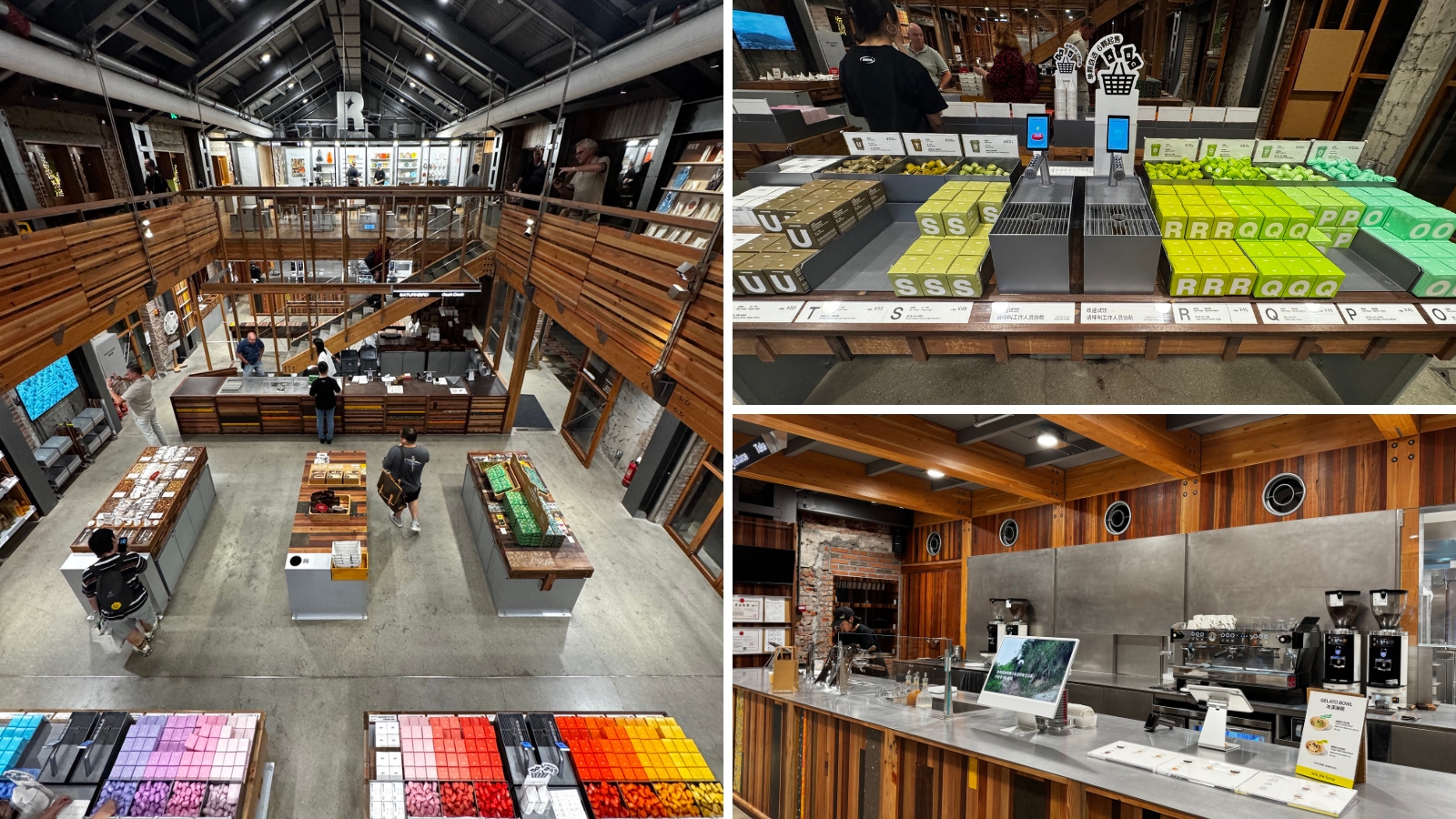
This is a store where a few brilliant marketers have been able to let their creativity run wild. Saturnbird – Sāndùnbàn in Chinese – is a relatively young instant coffee producer. Founder Wu Jun saw a gap in the market: he wanted to combine the flavor of specialty coffee with the convenience of instant coffee. His solution, after years of research, was “super instant coffee”: coffee that is highly concentrated through extraction and drying and dissolves in seconds, even in cold water or milk
The big breakthrough came in 2018, when Saturnbird decided to sell its coffee in colorful mini-cups instead of the usual sachets or glass jars. Wu Jun also developed an accessible system of flavor profiles to make it easier for consumers to choose when shopping online. The cups looked so appealing that customers took photos of them en masse and shared them on their social media
The physical store serves as a showcase for the brand values Saturnbird strives to embody. It is not just a store, but also a coffee bar, bakery, recycling workshop, and exhibition space. A unique feature is the in-house developed tasting system, Airship. It allows visitors to sample the various instant coffees before making a purchase. The store offers no fewer than 26 coffees, labeled with the letters A through Z. They are divided into four flavor groups: light roast, medium roast, dark roast, and experimentally fermented.
Each section features tasting machines with four buttons. You select a coffee, and the machine dispenses a small, consistently prepared portion. This allows you to taste multiple varieties side by side. Next to each letter is information about origin, processing, roasting, and flavor notes
Anyone who looks around this store can see that the mission has been a success. The small cup isn’t a watered-down alternative to real coffee, but a new way for busy city dwellers to experience coffee
10,000 coffee shops
The coffee market in Shanghai has exploded in recent decades. The city, with a population of approximately 25 million, has about 10,000 coffee shops. This makes Shanghai the city with the most coffee shops in the world: about one coffee shop for every 2,500 residents.
You’ll find budget chains like Luckin Coffee and Cotti Coffee, international chains like Peet’s, Starbucks, and Costa, Chinese specialty chains like Seesaw and AOKKA, international specialty brands like Blue Bottle, and countless independent coffee bars.
In other words, the coffee market in Shanghai is highly dynamic and competitive. In addition to price, quality, assortment, and convenience, innovation plays a key role in the battle for the favor of the discerning customer.
Dirty coffee
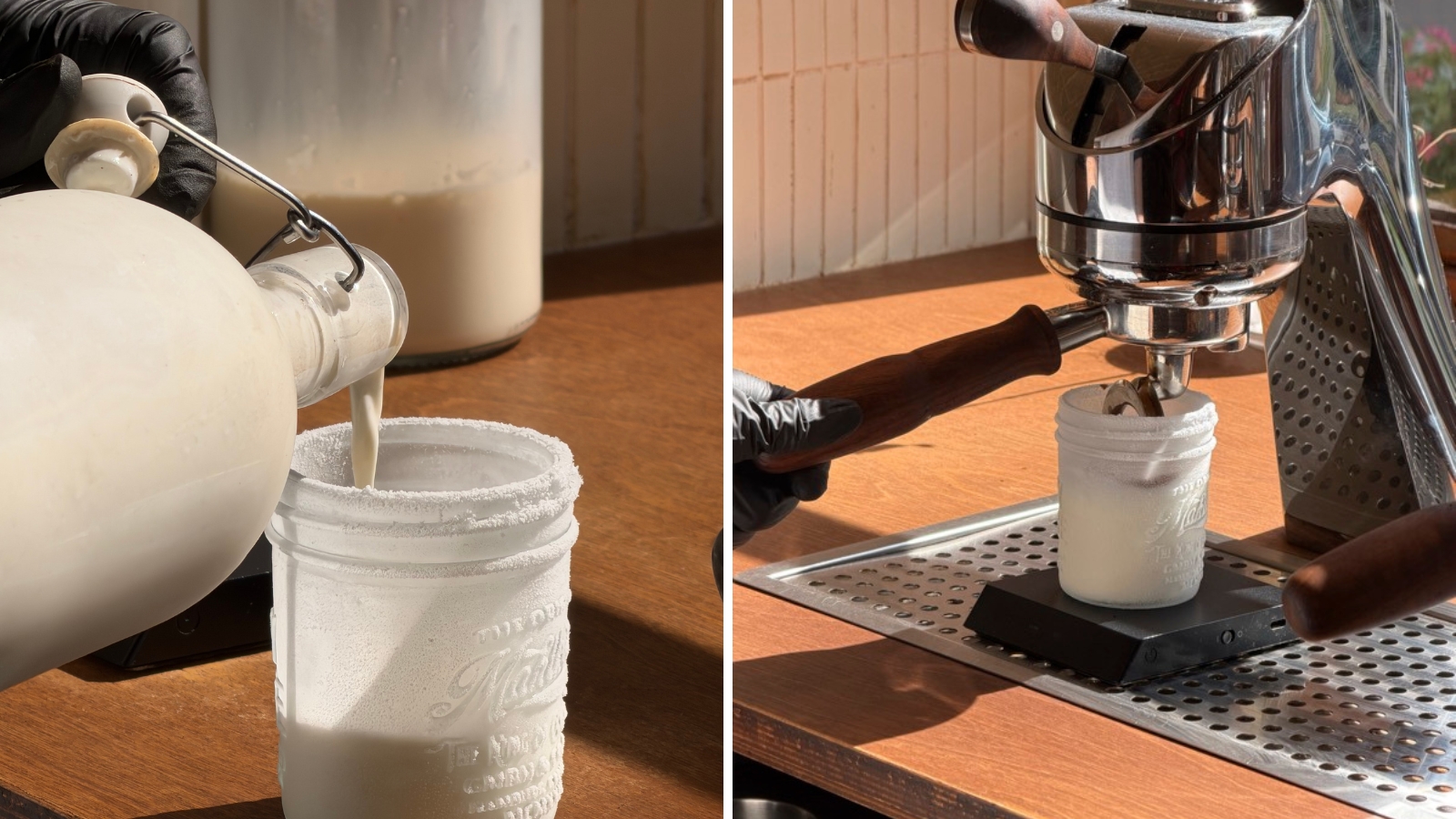
We came across an unexpected innovation at M3 on Yongkang Road. The concept focuses entirely on selling “dirty coffee.” Here’s how it works: cold whole milk is poured into an ice-cold glass mug. A hot espresso is then poured on top. The difference in temperature and density creates a unique drinking experience. The first “sip” is hot, strong, and bitter; after that, the coffee gets progressively colder, creamier, and sweeter. You’re given a small spoon to scoop up the frozen milk.
Dirty coffee has become a sensation on social media. When we visited the shop, young city dwellers were filming and sharing the coffee ritual multiple times. Outside, a TikTok crowd of dirty coffee fans regularly gathers.
Coffee Champagne
Another striking concept is ALOHA Coffee, a small Shanghai-based specialty coffee chain founded in 2021 by Enqi Pan, winner of the 2024 China Barista Championship. At his unique “coffee theater” at 300 Yongjia Road, coffee is approached with the precision and imagination of a gastronomic experience.
The small coffee bar operates on the principle of “coffee omakase.” Omakase is Japanese for “I’ll leave it up to you.” Here, the barista is not only a preparer but also a storyteller and guide. He takes you on a journey of discovery. Different preparations demonstrate how a single coffee bean can express itself in many different ways.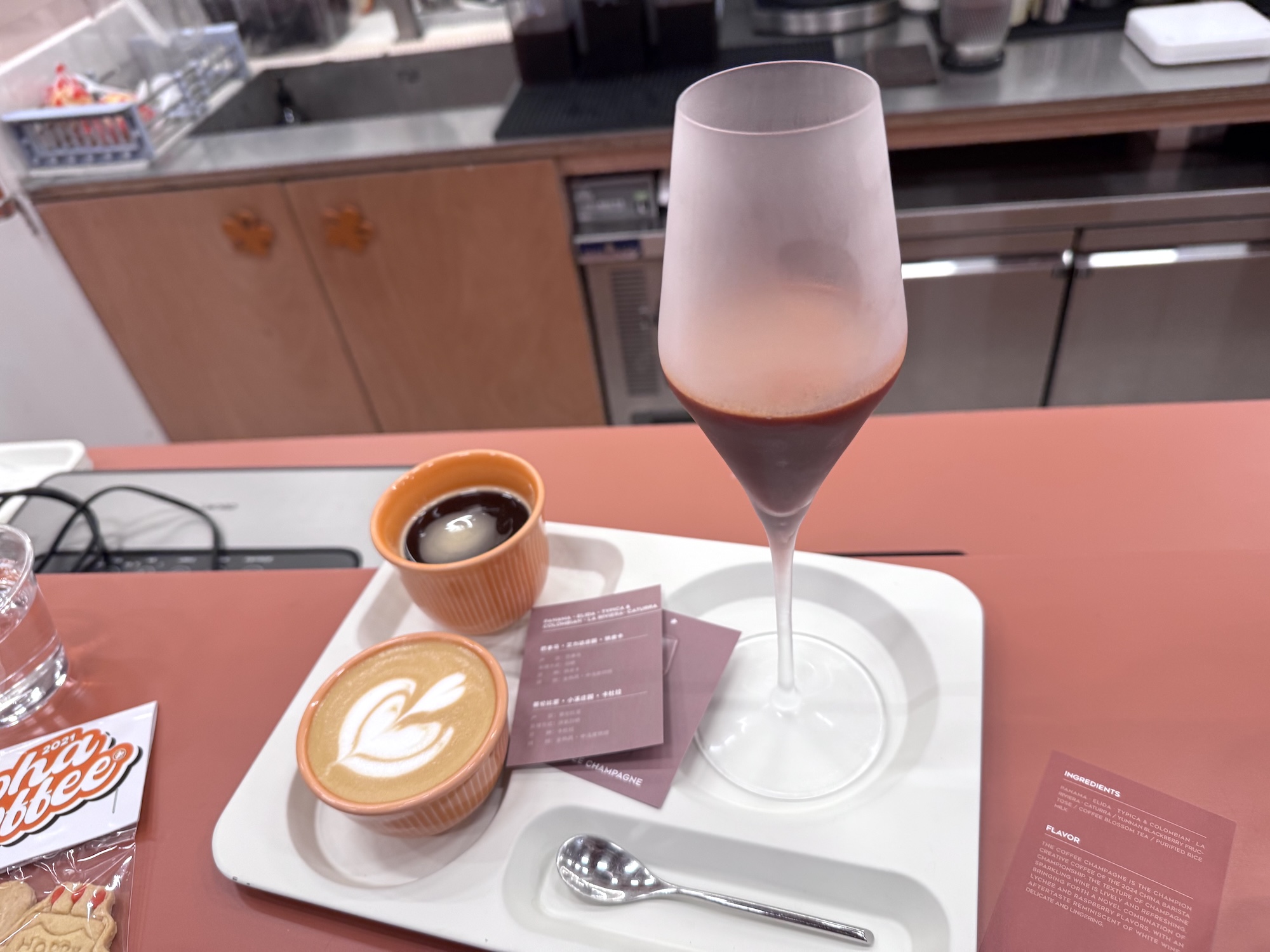
We found the Coffee Champagne to be the most impressive creation. Not just ordinary coffee with a festive label, but a layered creation with the freshness, refined acidity, and elegance of a glass of champagne. Here, coffee is freed from its everyday role as a caffeine fix and elevated to a higher level. The cup of coffee evolves into a culinary composition. It’s truly fascinating to see and taste.
Savory coffee
Across from the Shanghai Museum, at Shiteng Coffee, we discovered yet another form of coffee innovation. The brand draws inspiration from flavors in Asian cuisine. We sampled the Soy Sauce Malt Latte: coffee with a homemade syrup made from soy sauce and malt. That might sound like a culinary insult, but it worked surprisingly well. The soy sauce gave the coffee a slightly salty flavor and tempered the bitterness.
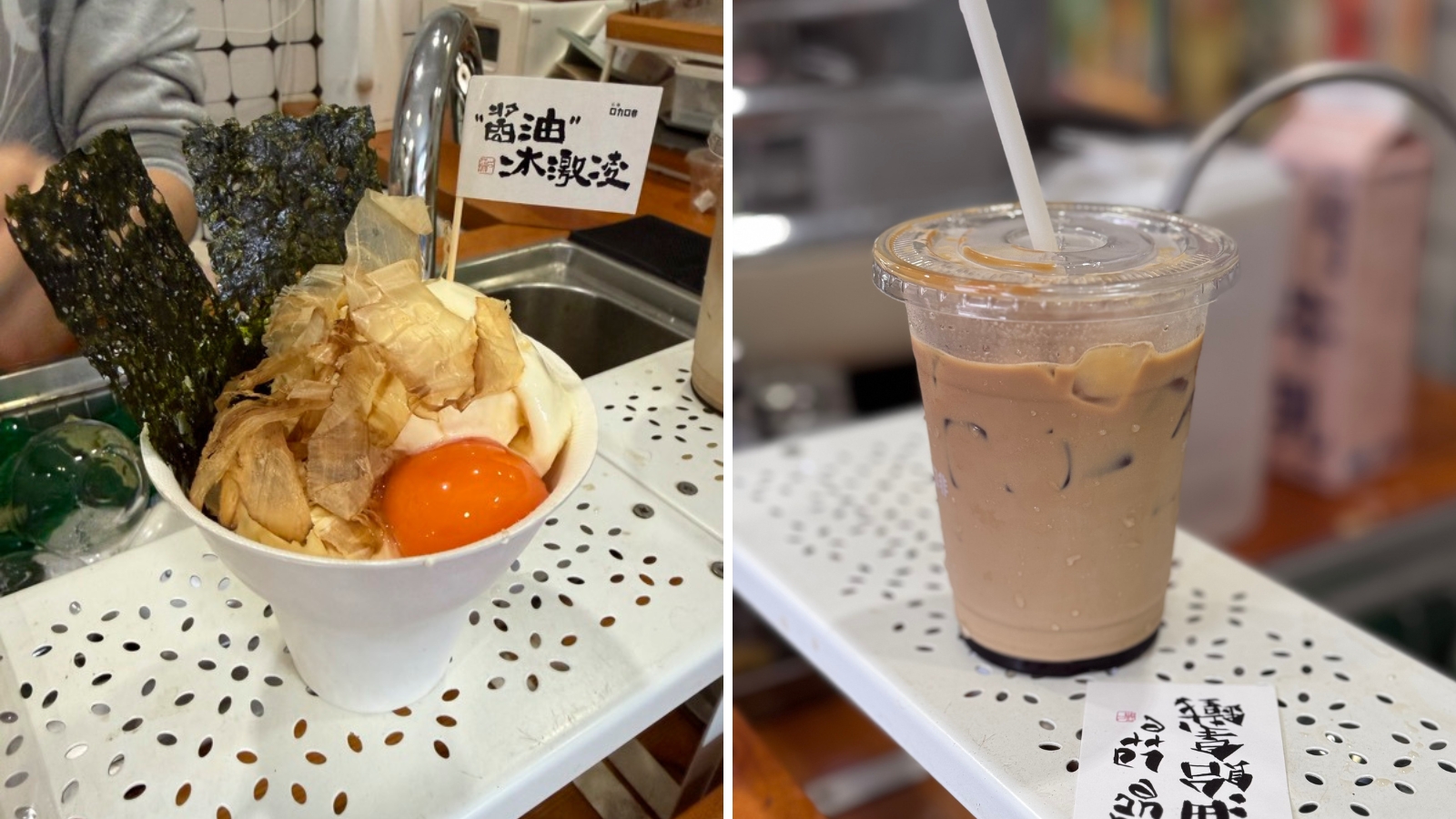
Even more remarkable was the Coffee Rice, inspired by the Japanese dish ochazuke, in which tea or broth is poured over rice. Shiteng translates that idea into an almost edible coffee creation with a creamy coffee component, roasted rice, sesame, and sheets of nori. The result falls somewhere between a drink and a dish, between coffee bar and kitchen. Yet another example of just how far coffee has now moved beyond the classic cup.
Coffee as a luxury gift
Another thing that delighted us was the way coffee has evolved as a gift. It’s following in the footsteps of luxury chocolatiers. At 0566 Coffee Works, the beans are presented by origin and flavor, sometimes in transparent tubes. The retail packaging resembles jewelry boxes or boxes of exclusive chocolate. Individual coffees are given their own color, name, and flavor story. As a result, you’re not buying an anonymous bag of beans, but a curated collection of flavors that you can keep, share, or give away.
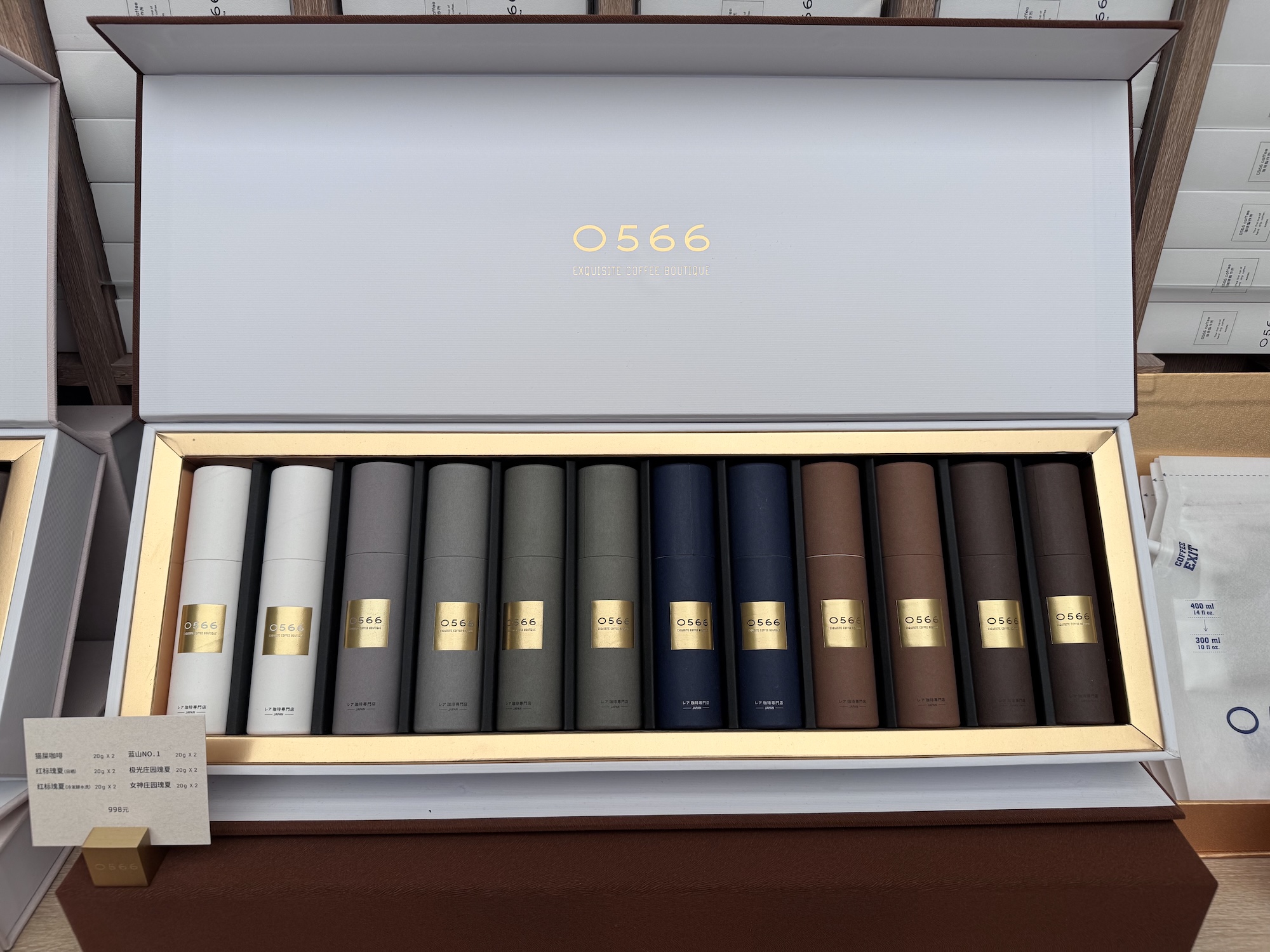
This shifts coffee from an everyday consumer product to a gift with emotional and symbolic value. 0566 is thus part of the same trend we’ve long seen with wine, tea, and chocolate: origin, harvest, processing, and flavor become part of a luxury narrative.
0566 Coffee Works is originally a Japanese specialty roaster. The brand was founded in 2017 and focuses on rare coffee varieties, directly sourced lots, and traditional Japanese roasting methods, including coffee roasted over charcoal. 0566 now has about ten locations in Shanghai.
New rituals
A tour of Shanghai shows that innovation in coffee isn’t just about new flavors or brewing methods. The real innovation lies in the way coffee is selected, presented, experienced, and gifted. The Netherlands has a mature coffee culture, with excellent roasters and specialty coffee shops, but most innovation here remains focused on the quality of the bean and the brewing process.
Shanghai is particularly at the forefront of creating new rituals and brand experiences around coffee. Instant coffee becomes a design product, “dirty coffee” a social media phenomenon, the barista a culinary guide, and coffee beans are packaged like exclusive chocolates. In Shanghai, coffee is no longer just an ordinary beverage, but a daily lifestyle product through which consumers express who they want to be.
Special thanks to our expert tour guides Jessica Gleeson, Kay Xu, and Nicholas Brown.
These articles were previously published in our Shanghai series:
Lees ook
A delivery market of unprecedented scale for consumers seeking convenience
Lees ook
How China’s food metropolis makes our focus on innovation shift towards the East