Food Inspiration turns its gaze eastwards. Shanghai, China’s most modern city, is a treasure trove of innovations in foodservice. From bakery to coffee, from fine dining to plant-based, from experiential retail to delivery everywhere. In a series of articles, Food Inspiration takes you on a journey through the metropolis of Shanghai. This is episode 1: an introduction
Over the course of nine days, together with ten entrepreneurs from the Netherlands and one from the United States, we spoke to more than forty entrepreneurs, managers, creators and pioneers in the food scene. This was led by our well-connected local guides, Jessica Gleeson and Kay Xu.
We visited more than a hundred food concepts. At many we were shown around and got a look behind the scenes. We tasted a great deal, from the most flavorful street food to fine dining, from bakeries to a vegetarian breakfast in a temple; we saw innovations in coffee and tea, met sommeliers specializing in excellent Chinese wines, tasted beers from independent craft brewers and spoke to dozens of highly driven entrepreneurs.
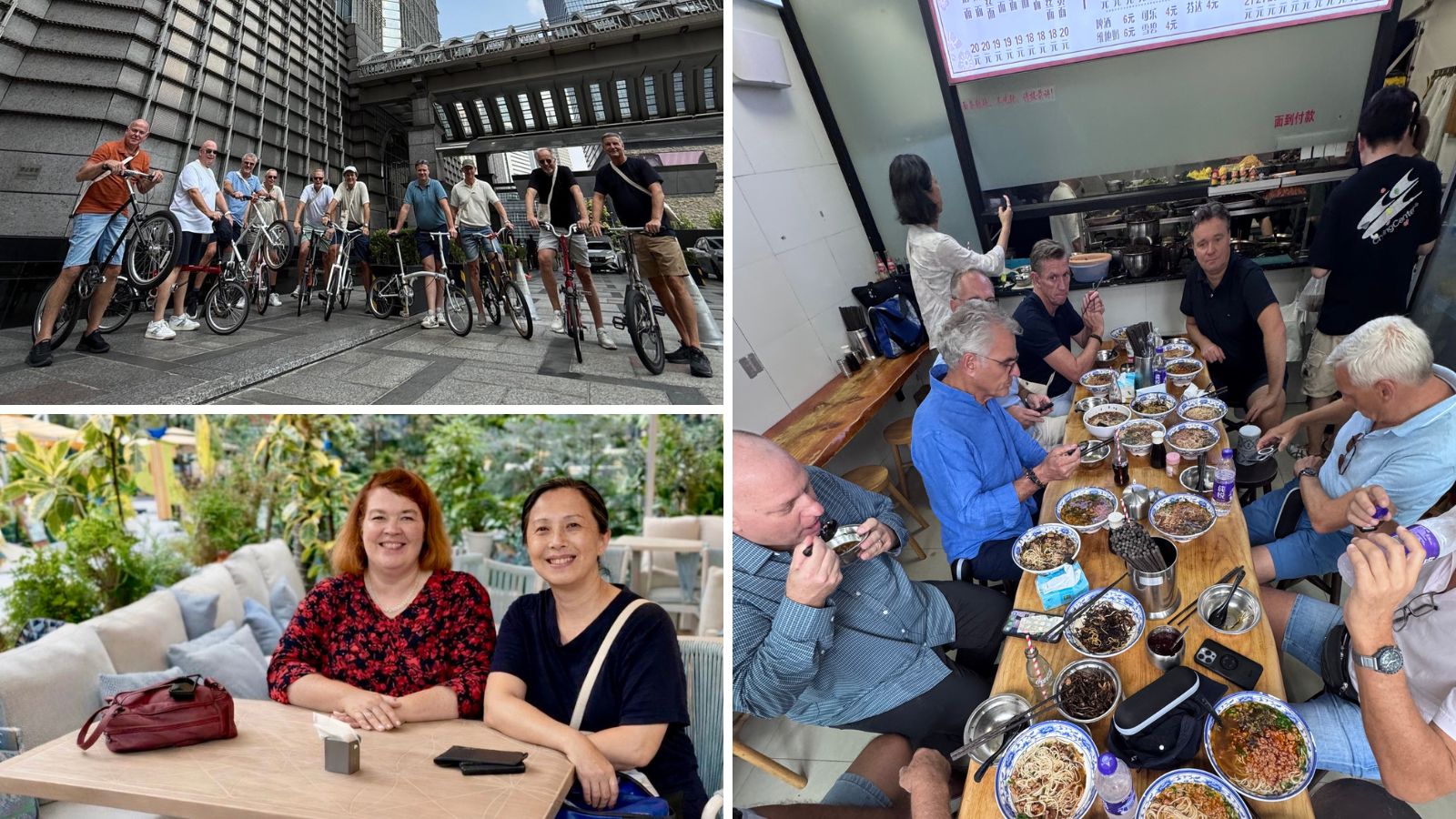
What struck us during our working visit to Shanghai? Above all, we were amazed by Shanghai’s immense power: whilst the metropolis and China may be organised politically differently from Europe – with a single party directing, governing and setting the rules – the market, on the other hand, is hyper-capitalist and innovates many times faster than we see in Europe.
Over the past 15 years, Food Inspiration has visited various Asian cities: we have given trend presentations in Shanghai and Macau, explored Hong Kong’s food scene and spent a month travelling through different regions of China. At the end of 2025, we returned to Shanghai, the metropolis now home to 25 million people, to see just how rapidly things are developing.
Shanghai: a culture shock
For anyone who has never been to China before, a first visit to Shanghai is a real culture shock. The city makes a deep impression with its skyline, the hustle and bustle, the cleanliness, and the quality of its shops and restaurants. It shifts the direction of your innovation compass. Whereas cities like New York, Los Angeles and San Francisco were once places where, as a European, you went to catch a glimpse of the future, a visit to Shanghai puts the American lead into sharp perspective. This applies to the food and hospitality sector, but it also applies to the street scene.
First and foremost, there is safety on the streets of Shanghai. There is hardly any theft or crime. This is due to the constant CCTV surveillance. If you leave a personal item in a taxi, there is a good chance you will get it back. Critics rightly point out that CCTV surveillance in China leads to a surveillance state and a curtailment of personal freedoms; the flip side is that women – 50% of the population – feel safe walking the streets at night. In Shanghai, neither visitors nor residents need to be constantly on their guard.
There are also hardly any homeless people or beggars. Of course, even a global city like Shanghai has homeless people, but thanks to strict enforcement, repatriation and support programmes, you don’t see any vagrants on the streets. How different this is compared to, say, San Francisco, which, with a much smaller population (850,000 versus Shanghai’s 25 million), has more than 8,000 homeless people.
A quiet metropolis
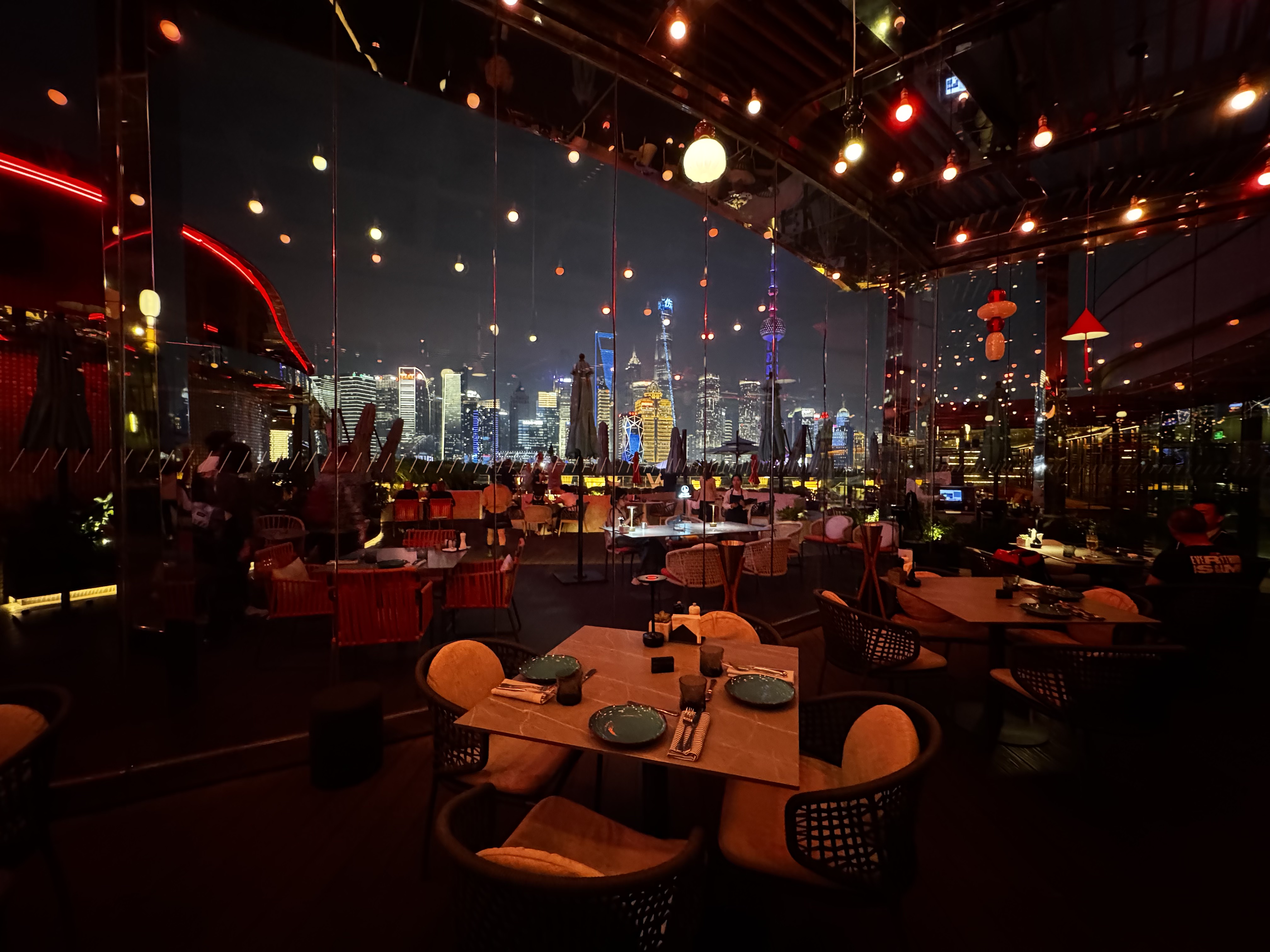
The second thing that strikes you is the silence on the streets. Electric vehicles are the norm. Most cars and all the hundreds of thousands of scooters in Shanghai are electric. If the Chinese Communist Party decides in its five-year plans to replace the combustion engine with batteries, that is exactly what happens. The result is that, despite the heavy traffic, there is a great deal of acoustic tranquillity on the streets and no suffocating exhaust fumes. There is also hardly any honking. This, too, is strictly regulated. There are sensors along the roads that record decibels. The public interest – the benefits for the collective – outweighs corporate interests in China. Social stability is considered more important than individual freedom.
China has become an economic power to be reckoned with. Trend watchers and economists have long maintained that the 19th century belonged to the British, the 20th century to the Americans, and the 21st century to China. Shanghai is the embodiment of that development. When you see the skyline of that metropolis, you realise that the image we have of China here in the Netherlands is limited.
From manufacturing hub to economic superpower
A dominant negative perception of China is widespread: a communist regime, the oppression of minorities and political opponents, and limited individual freedoms. Moral outrage over the country’s social structure – which does not align with European values – stands in the way of a broader view of the country.
But China’s economic achievements over the past few decades are historic. In thirty years, China’s economy has grown more than twentyfold – an expansion that has transformed the country from a low-wage manufacturing hub into an economic superpower with one of the world’s largest consumer markets. The country has lifted hundreds of millions of people out of poverty; the middle class has exploded. What began as the world’s workshop has now grown into a laboratory of the future: China not only produces cheap goods for the world, but is also setting the pace in tech: AI, automotive, e-commerce and a rapidly innovating tech-enabled food culture.
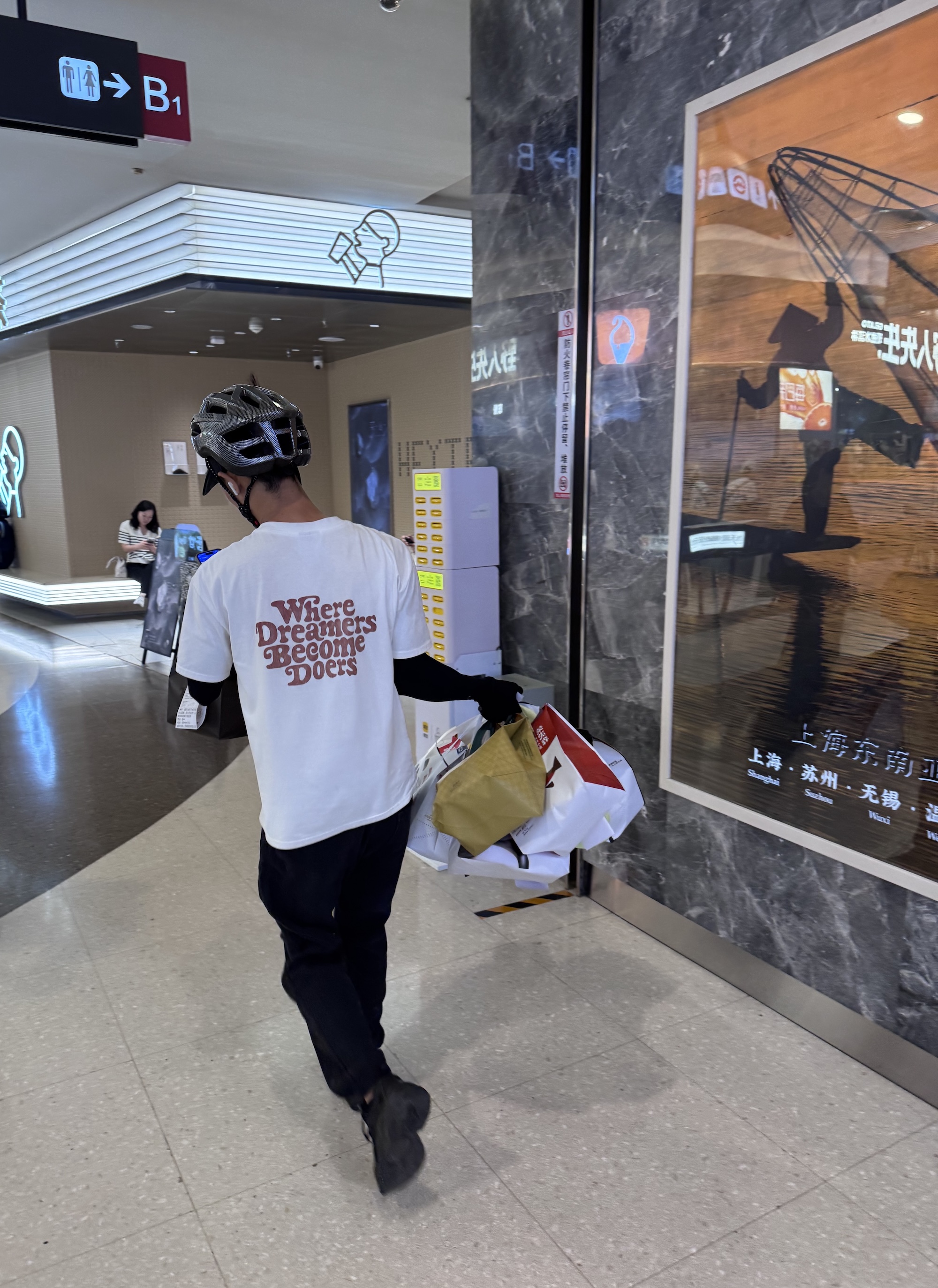
What image best symbolises Shanghai’s strength, entrepreneurial spirit and work ethic? Shall we choose the city’s impressive skyline at night, the Shanghai railway station – which is larger than Schiphol Airport – or the tens of thousands of delivery drivers who, on their scooters, deliver meals to offices that no longer need canteens? Let’s go for the last one.
The city of delivery drivers
China has become the world’s largest delivery economy. It is estimated that there are over ten million delivery drivers who deliver between 60 and 100 million meals a day, as well as handling many more parcel deliveries. In megacities such as Shanghai and Beijing, food delivery is an integral part of the urban rhythm: pre-ordered breakfast at the office, lunch from the delivery locker in the lobby, coffee on the go and hot meals delivered at your doorstep in the evening.
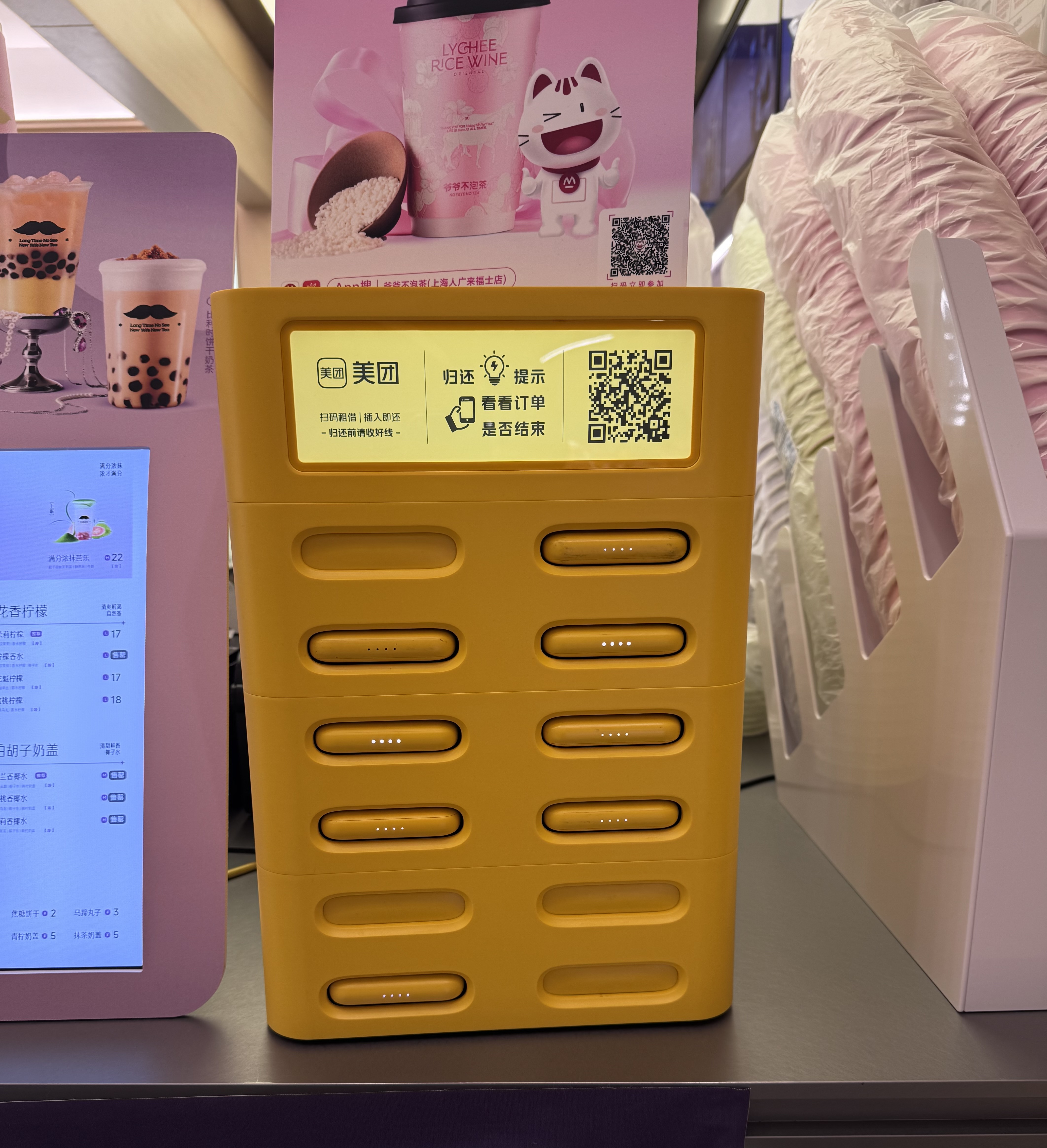
At the heart of this system is the smartphone, that run on payments through Alipay and WeChat apps. Ordering, cashless payment, scanning, tracking, delivery, rating: without a smartphone, you’re nowhere in Shanghai. Every shop has yellow powerbank stations, where you can charge your phone for free. The internet works flawlessly, and everywhere you look you see residents glued to their screens: on the metro, in restaurants, walking down the street.
A simple meal costs between 20 and 40 Chinese yuan (around €2.50 to €5), whilst delivery charges are generally low. Behind the lightning-fast delivery economy are hundreds of thousands of delivery drivers, often migrants from other Chinese provinces. In cities such as Shanghai, they earn between 7,000 and 11,000 yuan per month – €900 to €1,400 per month – an income that can only be achieved through long working days and a high number of orders. Food delivery is a logistical phenomenon that we have not encountered anywhere else in the world on this immense scale. It is the foundation of China’s urban lifestyle and consumption patterns. For just as in Europe and the United States, convenience is key in China too.
Infrastructure as the foundation for growth
The pace of infrastructure development in China is nothing short of impressive. Here are a few figures to illustrate this:
-
The high-speed train took us from Shanghai to Hangzhou in just 45 minutes, a journey of 160 kilometres. China’s high-speed rail network spans over 45,000 kilometres. By way of comparison: in Europe, the high-speed rail network totals between 11,000 and 12,000 kilometres.
-
Whereas Shanghai still had a modest metro network around the year 2000 – some 65 kilometres – the city now has over 800 kilometres of metro lines: that is twice the size of the longest European metro network, the London Underground. Shanghai has thus built the world’s largest urban metro network in a single generation.
-
Over the past fifteen years, more than 80 new airports have opened in China, as part of a national strategy to accelerate mobility and economic growth. By way of comparison: whilst in the Netherlands there has been talk of Lelystad Airport for almost twenty years, during the same period China has been rapidly building new airports, some on a scale that rivals major European airports.
These figures illustrate not only China’s economic clout, but also the country’s ambition to lead the world in logistics, technology and infrastructure.