At Haus Nowhere in Shanghai, visitors line up for a selfie with a giant, moving robot head. Further into the city, a massive ship sits on dry land, where Louis Vuitton displays its luxury products as museum pieces. Art, theater, and hospitality turn new shopping experiences into an adventure. Food Inspiration went on a journey of discovery, from a surreal eyewear store to a cocktail menu that lights up like a treasure chest. The finale of our series Discoveries in Shanghai.
A lifelike woman’s face, many times larger than the faces of the visitors surrounding it. It moves. Visitors are lining up in droves to take selfies with it. Phones up, strike a pose, one more shot. I’m at Haus Nowhere in Shanghai, where – if you look closely – you’ll find glasses and perfume for sale. But what I notice more than anything else, are visitors making their way through the unique art installations while filming.
Of all the unique stores our group of food professionals is visiting in Shanghai, Haus Nowhere makes the biggest impression on me. Why? Because Haus Nowhere breaks all the rules of a typical store. Art installations take up more space than the product displays. Visitors first come to look, then take photos, and maybe – just maybe – buy something. The images they share on social media extend the store’s reach far beyond the physical location itself. In this way, the store becomes a destination in its own right
Haus Nowhere breaks all the rules of a typical store

It begins right on the ground floor. The floor is littered with black trash bags that swell and shrink. In the middle of that black sea stands a lifelike elderly man holding a gold-colored bag in his hand. His eyes move and seem to be scanning the surroundings. Elsewhere, a figure is diving into the trash. The artwork is called ‘More Is More’ and is a collaboration between artist Max Siedentopf and Haus Nowhere. According to the description of the work, it depicts a living landscape in which – if you look closely – you can find something of value.
The installation wouldn’t look out of place in a museum, but here it serves as the backdrop for a commercial setting. That blend is fascinating: you walk into a store and start behaving like you are visiting an art gallery.
Pastries, eyewear, and perfume at Haus Nowhere
Haus Nowhere is a concept by the eyewear brand Gentle Monster. In addition to Gentle Monster glasses, you can find Tamburins perfumes and luxury pastries from Nudake there.
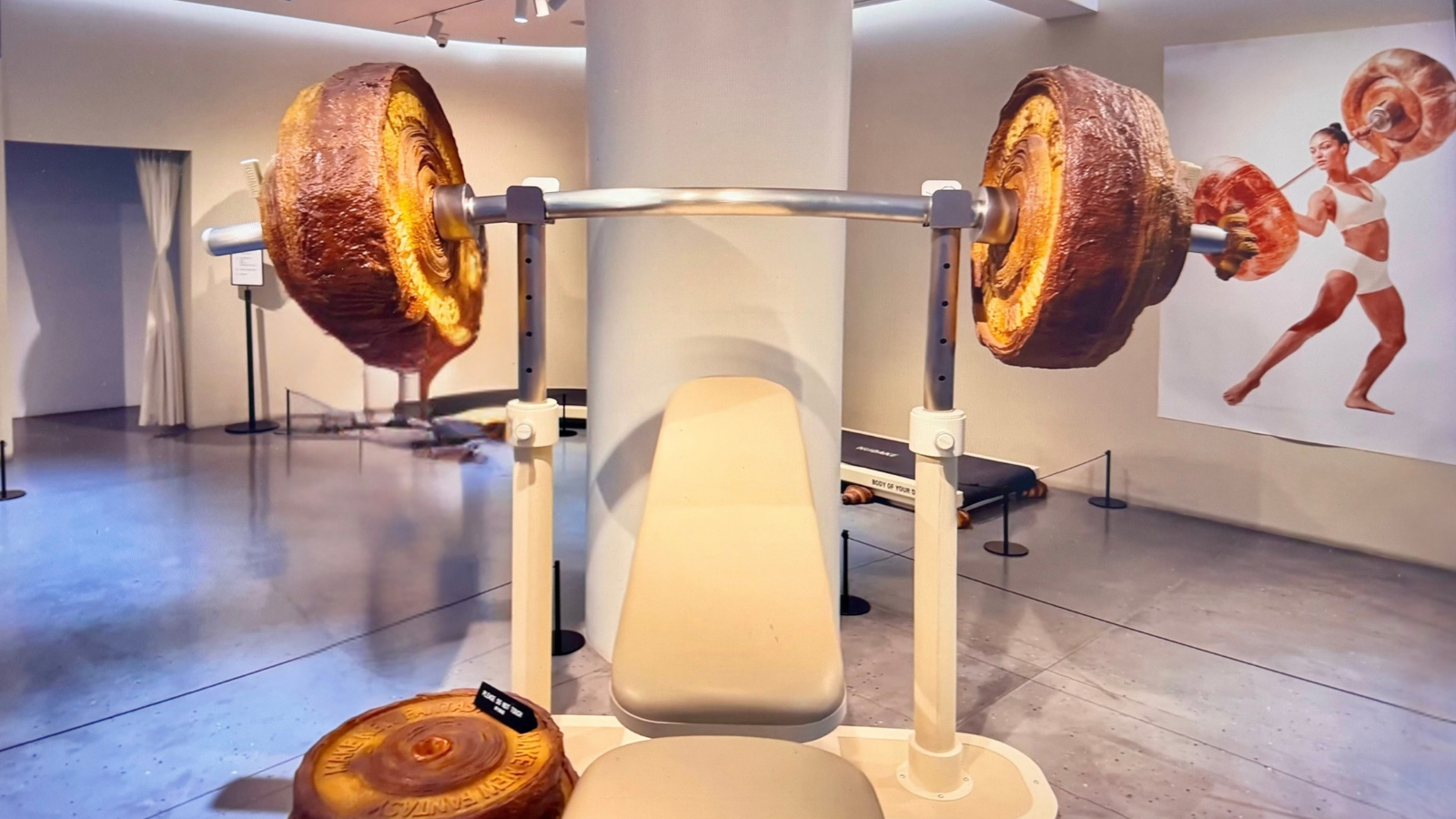
Even the pastries take on a theatrical form here. At Nudake, boxing gloves hang on the walls that look as if they’re made of croissant dough. On shelves sit weights, kettlebells, and trophies with the same golden-brown, layered texture. It’s as if you’re stepping into a croissant gym. The combination of sports and pastries is absurd and witty at the same time.
Future retail
Gentle Monster itself refers to this concept as an example of “Future Retail”: brick-and-mortar stores must offer more and more to actually draw consumers to a location.
“People want a different shopping experience,” says Siu Teng, co-founder and Executive Creative Director of The Orangeblowfish. His work revolves around experiential retail: combining shopping with an experience. During a presentation, he explains how his agency translates brand stories into physical experiences for stores, restaurants, and hotels, among others. This can range from a complete installation to signage or a menu.

According to Teng, brands are looking for new ways to capture the hearts and minds of consumers. Unlike online retail, a brand can take on multiple dimensions in the physical world: you can touch materials, move through a space, smell, taste, or try something out. The Orangeblowfish views the store as a place where people discover a brand and interact with it. According to him, the purchase doesn’t necessarily have to happen there – it can also take place online afterward. The in-person experience should build brand loyalty that extends beyond the store.
Brands create space for wonder and joy
At Haus Nowhere, I can at least see that first step in action: capturing attention. Visitors point their cameras at the installations and at themselves. It’s hard to estimate how many of them will go on to buy a pair of glasses, some perfume, or a pastry. What I do see, though, is how the brands create space for wonder and enjoyment.
Louis Vuitton’s Luxury Ship
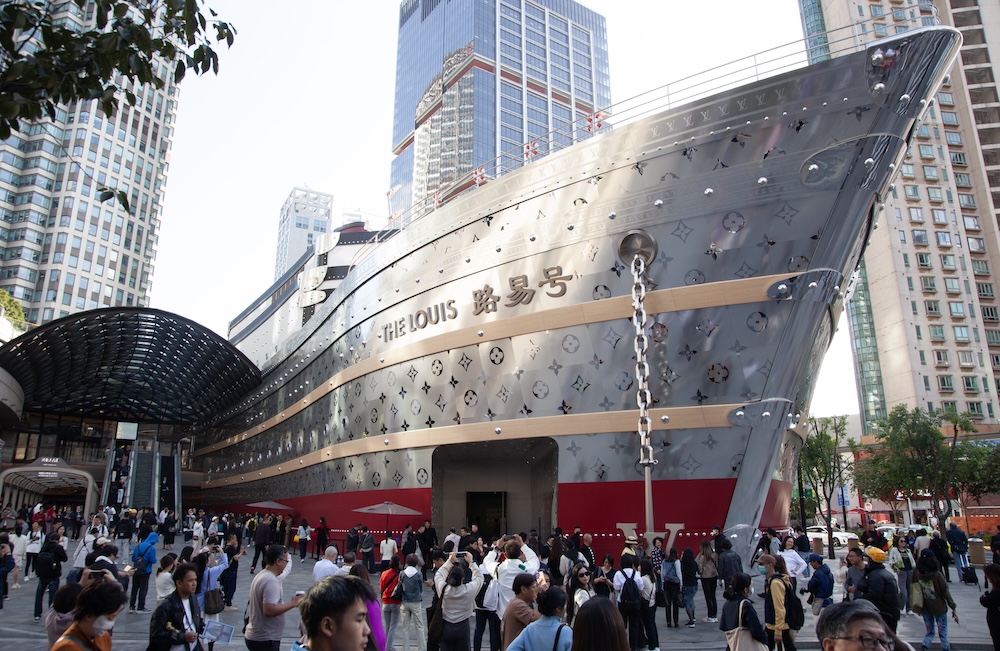
At Louis Vuitton, the experience begins outside. In the middle of Jing’an’s bustling shopping and business district, nestled among the high-rises, lies a gigantic ship on dry land. The gleaming hull bears the luxury brand’s recognizable monogram; the ship’s superstructure resembles stacked suitcases. The building is called “The Louis” and houses an exhibition space, a store, and a café – Le Café Louis Vuitton. The ship references the brand’s history as a maker of suitcases and Shanghai’s status as a port city.
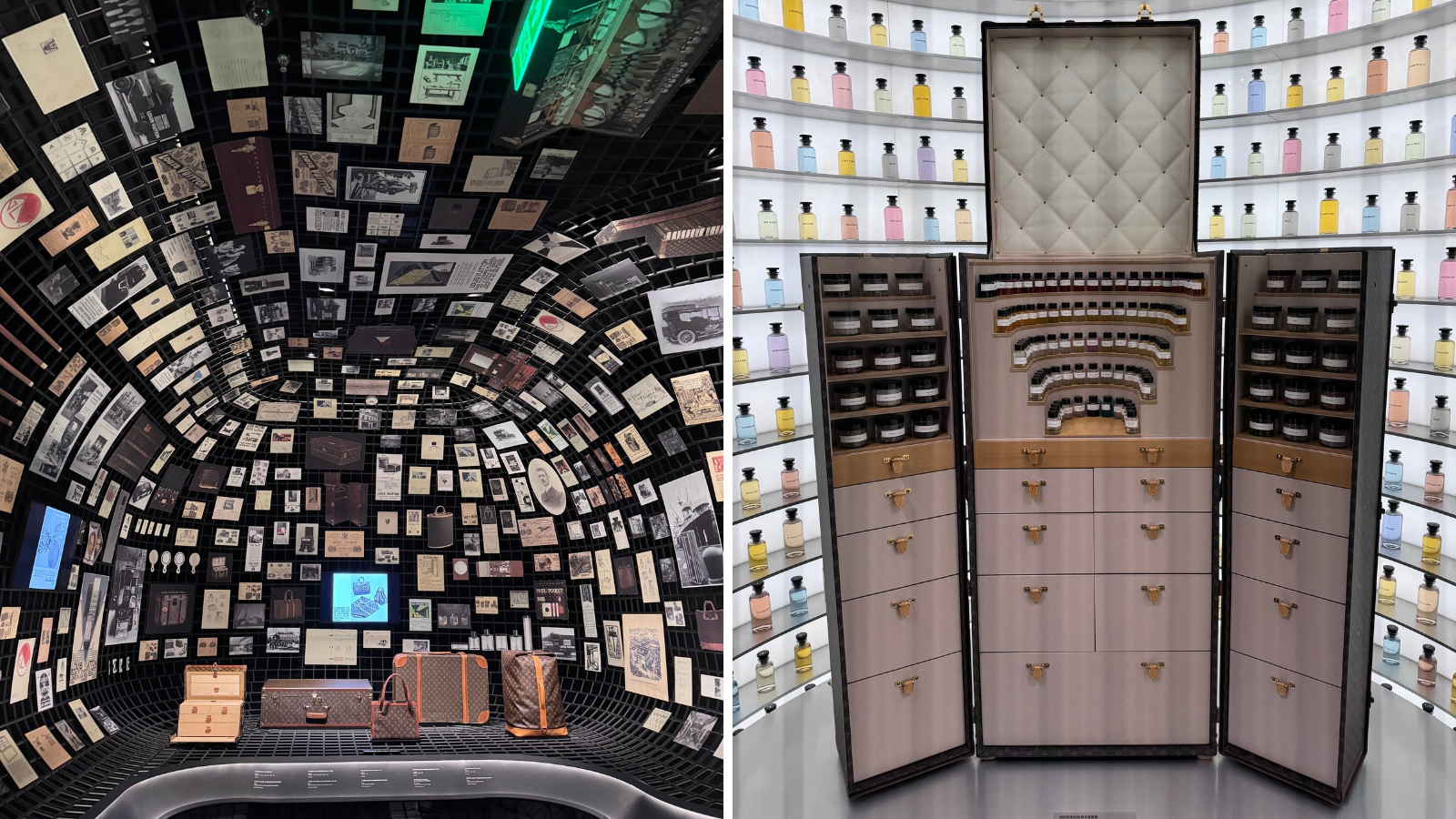
Admission to the “Visionary Journeys” exhibition is free, but you must make a reservation in advance. Inside, the brand’s story is told in a contemporary way. Suitcases and bags are displayed in a vaulted space, surrounded by historical images and documents. Further on, an open suitcase full of small bottles stands against a wall of illuminated perfume bottles.
Handles, locks, corner pieces, and tools are laid out prominently on a workbench. A staff member demonstrates how the products are made. Here, the craft takes center stage. A bag thus becomes part of a larger story about craftsmanship, the history of travel, and the French luxury brand’s attention to detail.
This is also where the commercial purpose of *The Louis* becomes apparent. By linking a product to history, creativity, and craftsmanship, it gains greater value in the eyes of the visitor. You’re not just buying the bag, but also the status and exclusivity that the brand associates with it. And that status comes with a price tag. In this way, the exhibition contributes to the exclusivity the brand seeks to project.
After spending just under an hour walking through the ship, visitors can head to the third deck to Le Café Louis Vuitton. There, the cappuccino is served with the Vuitton emblem as latte art in the milk foam. Talk about attention to detail.
Coffee at Ralph Lauren
In Shanghai, Ralph Lauren has chosen a different approach to bringing his brand world to life. In the flagship store, the food and beverage experience also takes center stage with Ralph’s Coffee. Right in the middle of a shopping mall, a recognizable café setting has been created – though it seems rather modest if you’ve just visited The Louis.
The coffee corner features dark green partitions, dark wood chairs, white tabletops, gold-colored accents, and small vases with flowers. A neon sign shaped like a coffee cup hangs in the window.
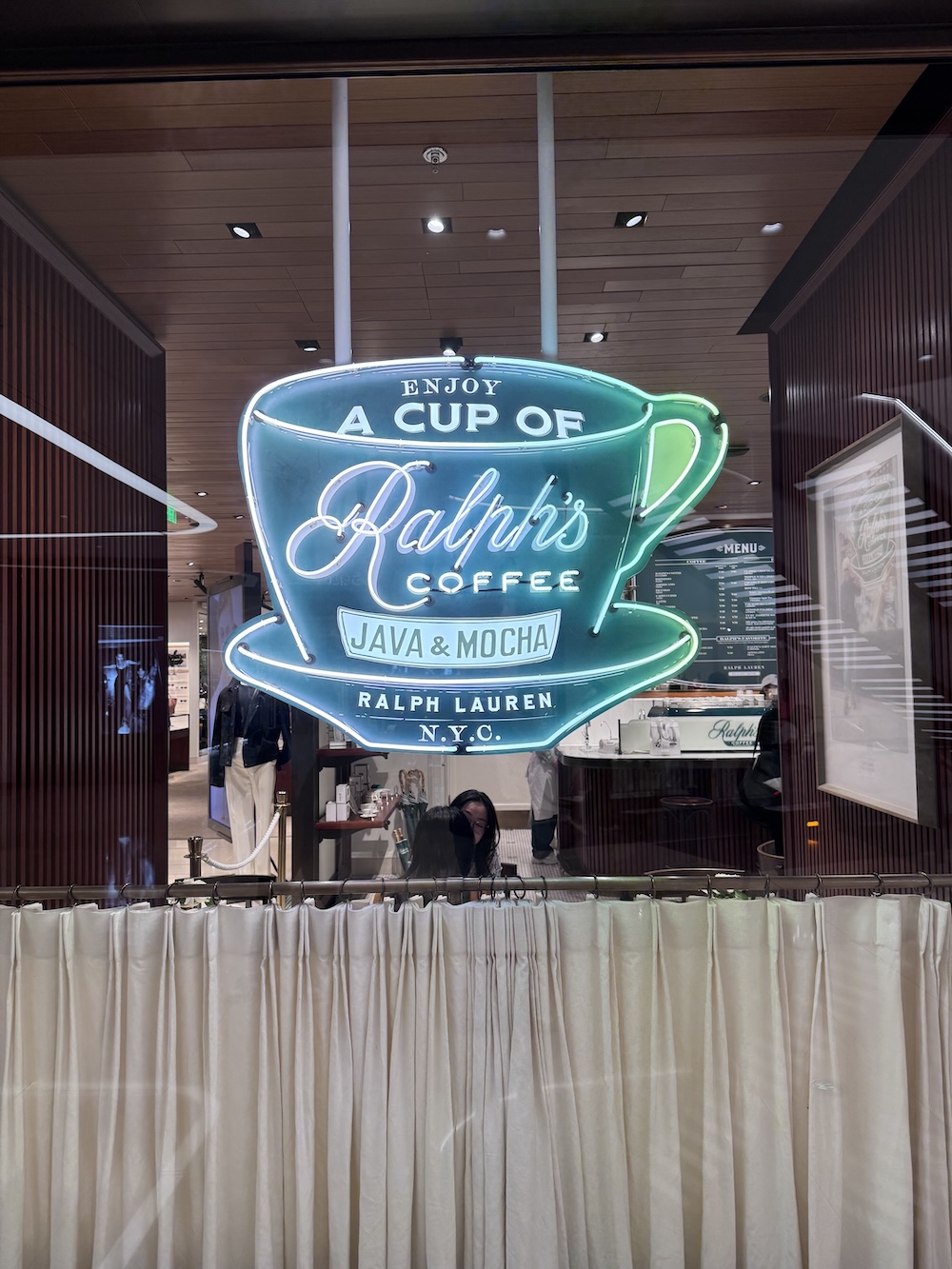
Here – while enjoying a cup of coffee – you can take a moment to immerse yourself in the world of Ralph Lauren without having to buy an expensive piece of clothing right away. The combination of retail and hospitality isn’t new, but it’s still interesting.
The coffee itself is also part of the brand’s proposition: Ralph’s Roast, Espresso, and Decaf are roasted exclusively for Ralph Lauren by the American specialty coffee roaster La Colombe. The organically grown beans are also available for purchase to enjoy at home. The concept doesn’t stop at coffee. Ralph’s Coffee also sells mugs, clothing, caps, bags, and other branded merchandise.
Cocktail menu in a treasure chest
Experience design can be grand, but it can also be applied on a much smaller scale. For the Long Bar at the Waldorf Astoria Shanghai on the Bund, Siu Teng and his agency, The Orangeblowfish, designed a unique box containing individual recipe cards.
When you open the box, a light turns on, making it feel as if you’re opening a treasure chest. According to Teng, the mysterious, light-up suitcase from the classic film *Pulp Fiction* was the inspiration for the concept.
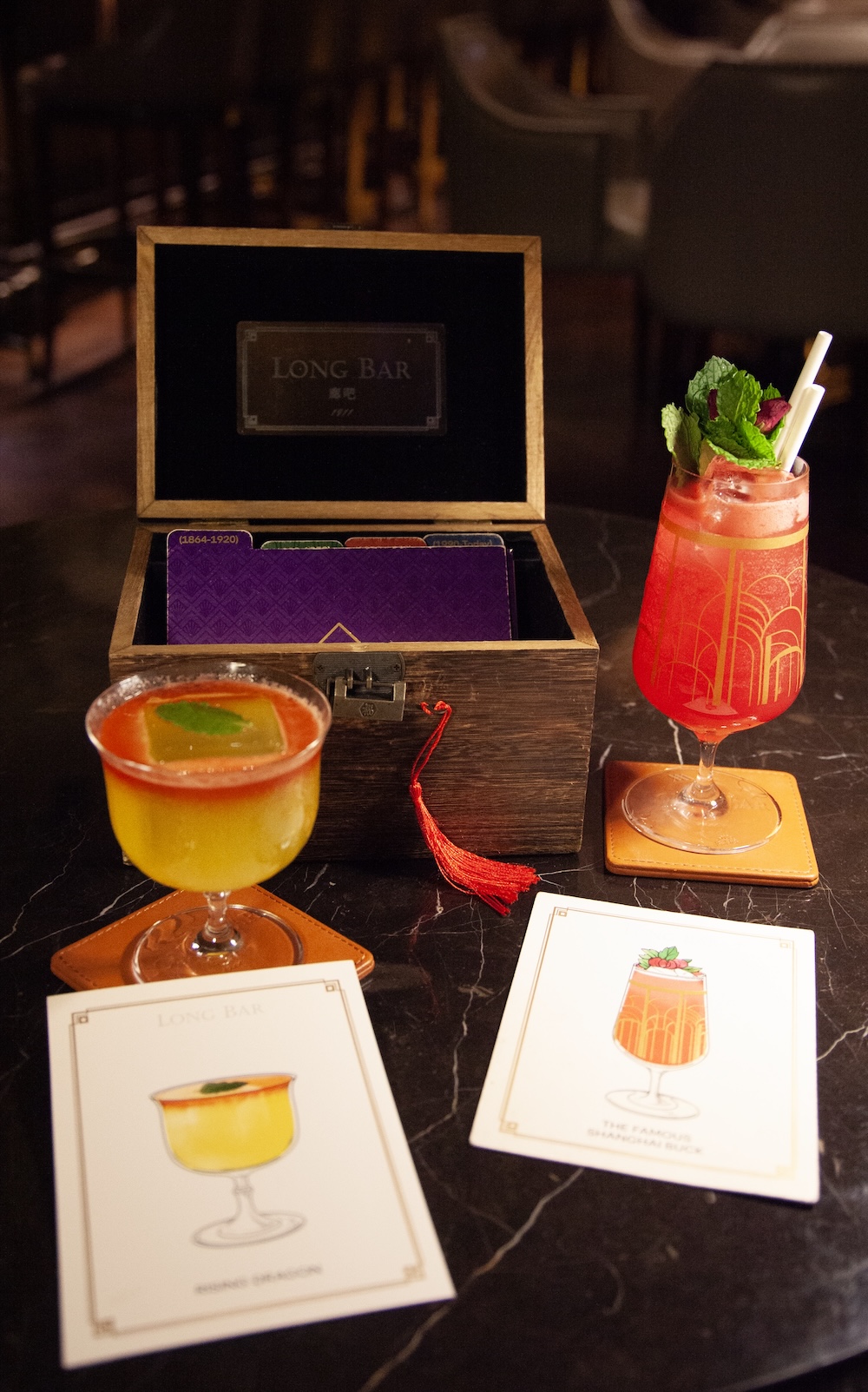
The cocktail menus draw inspiration from various periods in Shanghai’s history. The types of paper used, the embossing, the gold accents, and the unique illustrations give the individual pages the character of exclusive collectibles.
And so, even the simple act of choosing a cocktail begins as a special experience: opening, looking, feeling, and discovering a story. The experience thus begins right with the menu.
Shanghai offers a glimpse into the future
We saw similar examples of enhanced experiences in several places across China. At 0566, coffee became a luxury gift; at tea’stone, tea tasting took on a contemporary form with an emphasis on presentation and ritual. The way something is presented helps determine the attention it receives. This applies to a cup of tea, a cocktail, and a bag.
That is precisely why Haus Nowhere offers a glimpse into an exciting future in retail and hospitality. Pioneers are creating space for art and museum-like experiences. Visitors are lining up for it. They want to be part of the experience – and part of the scene. And so the eyewear store itself becomes the destination, even if you don’t need glasses at all.
For the hospitality industry, this presents a familiar challenge: what do you give someone, besides what they ordered? What kind of memory will make them line up at your place?
Special thanks to our expert tour guides Jessica Gleeson, Kay Xu, and Nicholas Brown.
These articles were previously published in our Shanghai series
Lees ook
Serving tea as whiskey, tasting tea like wine
Lees ook
Shanghai turns coffee into a lifestyle
Lees ook
A delivery market of unprecedented scale for consumers seeking convenience
Lees ook
How China’s food metropolis makes our focus on innovation shift towards the East