What began in 2013 as a meal kit company using local, nutritious ingredients has grown into a group of four companies with about 150 employees and €30 million in revenue. With Boerschappen, No Waste Army, Waste Warriors, and Wonky Box, founder Stijn Markusse aims to create more value for everything a farmer harvests from the land. After some financially challenging years, this year the group is profitable for the first time. Food Inspiration spoke with him.
From meal kit to business group
“It all interacts,” says founder Stijn Markusse as he explains how Boerschappen’s various companies and activities relate to one another. “Together, it forms a functioning ecosystem. Outsiders often accuse me of lacking focus. That’s only partly true. Ultimately, we’ve always chosen to grow in the direction where revenue was available at that moment. We did what was needed to keep the company afloat in each phase of our entrepreneurial journey.”
In 2013, Markusse and his girlfriend Stéphanie Vellekoop started a meal kit business from home, using local, wholesome ingredients, with the goal of bypassing the supermarket for their own needs. Boerschappen focuses on “food that nourishes, from a supply chain that’s fair and sound.’ “We did that without any money and without a long-term plan.” Boerschappen has since grown into a group comprising four companies and a total of about 150 employees.
Four companies, one goal: more value for farmers
This group consists of Boerschappen (2013), No Waste Army (2023), Waste Warriors (2025), and, as of this summer, Wonky Box (2026). Boerschappen is the parent company. The meal kit company forms the foundation, supplemented by a division that provides meal solutions to large foodservice operators, including corporate catering, healthcare facilities, leisure companies, and prisons. Building on those foodservice activities, Boerschappen also launched its own wholesale operation three years ago, sourcing locally for its launch customer, caterer Vitam, and delivering to some 200 catering locations.
From the very beginning, Boerschappen regularly stepped in when farmers were left with surplus produce. “It all started with a batch of undersized plums from plum grower Kees Hamelink.” Markusse initially initiated these rescue operations himself, but noticed that they were becoming increasingly time-consuming and entailed financial risk. “If there were suddenly too many pears, I’d make sure we could produce a certain number of liters of pear juice in no time, but then I still had to figure out how to sell it.”
.jpg)
From isolated rescue operations to
That’s why he came up with a different model. Together with Thibaud van der Steen, Jacco Grinwis, and Frank Haagen, he founded No Waste Army in 2023. The idea: to build a base of committed customers in advance, so that there would be an immediate market and funding whenever a surplus arose somewhere.
No Waste Army now operates independently, and all rescue operations are handled through it. “Internally, people had their reservations: why would we give away all that revenue? But precisely because we set it up as a separate company, it has grown much larger and faster than we had initially anticipated.”
Belgium followed in 2025. No Waste Army acquired a stake in Waste Warriors, the company founded by former Swapfiets general manager Thomas Schiltz, who had launched a similar model there. Waste Warriors also operates independently, under Schiltz’s leadership.
In 2026, the group expects total revenue of over €30 million, with nearly one-third of that coming from No Waste Army and Waste Warriors. For 2027, the revenue forecast for the entire group is €40 to €45 million.
Wonky: the gap between premium and waste streams
The latest addition to the group of companies is Wonky Box, a joint venture between Boerschappen and No Waste Army. Markusse had already claimed the name back in 2017. “I already knew back then that we wanted to do something with it someday, but the time wasn’t right yet.” For now, he’s running the show himself, with the intention of appointing a dedicated business partner for Wonky who will take over in due course.
Wonky aims to fill a gap in the revenue model of organic farmers. On the one hand, this involves the approximately 20% of rejected fruits and vegetables that fall outside standard specifications in terms of size or shape – and therefore yield much less revenue – even though they are perfectly fine. On the other hand, the company is looking to add value to rotation crops that farmers need for a healthy soil and viable cultivation plan but which yield little financial return. According to Markusse, these, too, are “wonkies” in the food system.
As a result, each of these companies plays its own distinct role. Boerschappen focuses on regular, predictable (organic) sales at a premium price for the farmer. Wonky aims to ensure that we still value odd-shaped or odd-sized products coming from the land as A-grade quality food. No Waste Army only comes into play when there are actual surpluses and unsellable waste streams. “They’re different approaches that ultimately serve the same goal: better utilization and monetization of what comes from the land.”
.jpg)
According to Markusse, that distinction is important. No Waste Army now has nearly 30,000 subscribers, but you can’t systematically dispose of all the produce through occasional rescue operations. With Wonky, he aims to sell larger quantities, preferably without first processing the products into, for example, juice, soup, or sauce. “If you have a tomato, ultimately we need to make sure that tomato simply ends up in someone’s stomach. Processing adds costs and reduces nutritional value.”
The fact that the three companies sometimes source from the same farmer also leads to internal discussions. Markusse cites organic pumpkins as an example. Boerschappen pays a premium for an entire season, which is consistently higher than industry prices. Wonky and No Waste Army step in later in the process or later in the season to lend a hand where needed. Those prices are determined more on an ad hoc basis, but are also always higher than the industry price that would otherwise be paid.
For the farmer, this ideally means that every pumpkin harvested from his field has a worthy and suitable destination. “We’re fully committed to that ‘full-value’ approach . In foodservice we’re already getting used to that type of ‘nose-to-tail-thinkling’ when it comes to meat, but we need to move in that direction for fruits and vegetables as well.”
“Of course, internally, that’s going to get uncomfortable at some point,” says Markusse. “But what we need to ensure – as a group – is that we create as much value as possible for that farmer across the board.” The majority of the harvest must be sold through Boerschappen at a premium price and as predictable production. Wonky operates on perfectly imperfect produce directly under that premium category, for all products that fall outside the standard specifications. No Waste Army handles the inevitable surpluses.
“With all these different propositions, we’re constantly choosing a different approach to the same problem. Ultimately, my goal is always the same: how can we be a partner to that farmer, and what do we need to make that happen?”
“With different propositions, we take a different approach to the same problem.”
Shift in focus: from local to organic
With Wonky, Markusse wants to focus primarily on organic farmers. “That’s where the biggest challenge lies. And that’s precisely why it’s interesting to move toward foodservice, because larger volumes allow you to moderate prices somewhat, that are typically higher for organic produce.” This focus on organic fits into a broader shift in direction that Boerschappen has made in recent years.
When Markusse and Vellekoop started in 2013, “local” meant a 30-kilometer radius around their hometown, the city of Breda. “That felt like a logical boundary. At the time, most of our customers were in the region.” Today, Boerschappen has customers and suppliers throughout the Netherlands.
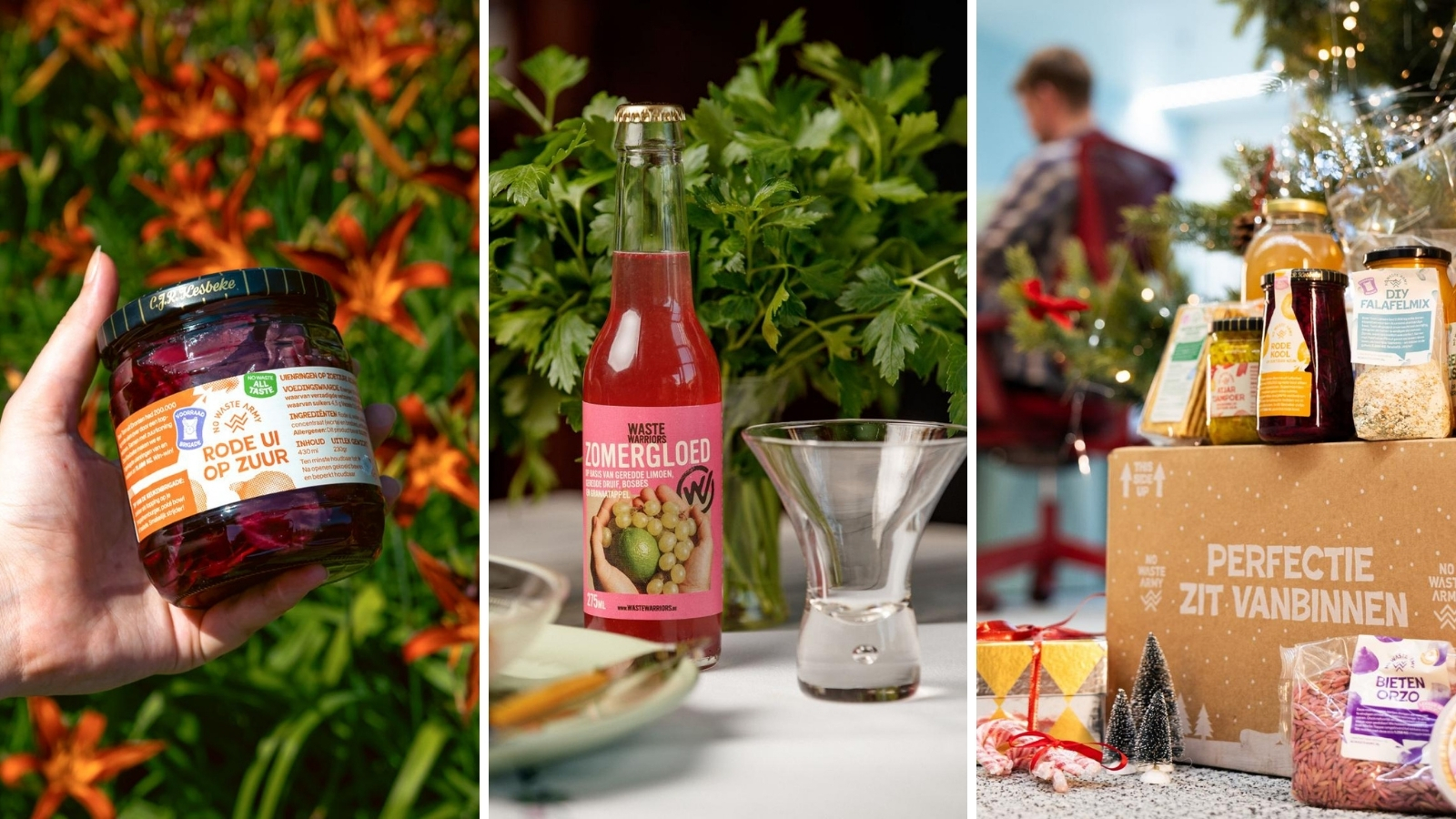
The romance of buying local
These days, Markusse takes a less rigid view of distance. “At first, I wasn’t hindered by any prior knowledge. We thought: close by is good.” Now, he approaches the issue more from the perspective of the food system. Rationally speaking, he believes a “local” system could even extend to a radius of 600 kilometers around the Netherlands. Within that boundary, you can grow all the necessary raw materials for a balanced food supply.
That pragmatic approach was necessary when Boerschappen began supplying meals to prisons. To be able to offer sufficient variety, seven days a week, the company established an organic supply chain with about thirty local farmers in Italy, which is more than 1,200 kilometers away. “About 3% of our produce purchases now come from that region.”
“As an entrepreneur, you sometimes have to let go of a bit of your naivety to make the right choices,” says Markusse. Drees Peter van den Bosch (formerly of Hutten and Willem&Drees), whom he brought on board in 2024 as his intended successor as CEO, also helped him, in his own words, to take a more fact-based approach to sustainability. “Drees Peter understands the impact in terms of scopes and emissions much better than I do. He made me realize that transportation accounts for only 4% to 5% of food-related CO₂ emissions on average. If I want to make an impact, I’m better off focusing on other issues.”
Pragmatism over dogma
hat doesn’t mean that eating locally has lost all its value. “The romance of local food helps make healthy and sustainable eating more enjoyable for people. If you drive past a farmer every day and then find his strawberries in your produce box, it makes you feel good. We’ll continue to embrace that romance, but the rationale behind local food is different.”
Boerschappen therefore shifted its focus from distance to farming methods. “We’ve moved from conventional, local, and farmers we know to organic or biodynamic.” All new farmers that Boerschappen brings on board are organic or biodynamic, and Wonky also focuses explicitly on organic farming. At the same time, the company remains pragmatic and sometimes purchases conventional produce, because not everything is available in sufficient quantities year-round from organic sources.
Boerschappen pays special attention to farmers who want to transition to organic farming. “We invest quite a bit in that, too.” According to Markusse, this approach also works well with consumers. “Customers enjoy being part of the progress.” Boerschappen is actively working to get the farmers with whom they began this journey in 2013 to make the transition. “We want to continue working alongside them. We’ve adjusted the principles of our business along the way by focusing more on organic farming. But we do invite them to make that transition together with us.”
Scale is not a luxury
Markusse says he has always known that Boerschappen was ultimately destined to become a large company. “It makes no sense to set up this entire supply chain for €5 million in revenue. You can’t really help anyone with that. You’ll just remain a likable small-to-medium-sized business.”
For a long time, Boerschappen grew without significant financial buffers, investors, or debt. According to Markusse, it was precisely because of this that the company sometimes made choices that seemed illogical from the perspective of a traditional growth strategy. “We would never have gotten to where we are today if we’d taken venture capital funding at an early stage.”
In hindsight, he sees the diversity of his business activities as a strength. “We had to sail against the wind for a long time. But that’s what ultimately allowed us to build a resilient system: highly diverse, yet all driven by the same mission.”
“If things had gone just a little differently, we might not be here right now.”
Navigating past the Valley of Death
Markusse isn’t surprised that many other short-chain initiatives in his country have disappeared in recent years. According to him, a vulnerable phase arises around a revenue of €2 to €3 million. “You’ve struggled for years to get there, you still don’t have any fat on the bones, and you have to start investing again – in IT, for example. Some entrepreneurs are simply worn out by then.”
During the pandemic, Boerschappen experienced an unanticipated growth spurt, with revenue jumping from about €2 million to €7 million, as more people began ordering their meal kits. “As a result, we kind of skipped the Valley of Death.” But that didn’t mean the challenges were over. According to Markusse, 2022 and 2023 were particularly nerve-wracking. “The line between winning and losing was really very thin. If a few coins had landed the other way, we might not have been sitting here today.” The entrepreneur attributes Boerschappen’s success in weathering the storm primarily to the ability to change course quickly, partly to luck, and to the people around him. “I think I brought the right people on board at the right time.”
As the company grew and its activities diversified, the financial situation became any less clear. “You’d be profitable in one area, only to see the money flow out just as quickly in another.” That period also revealed just how strong the relationship with some farmers had become. When Markusse couldn’t pay salaries at the end of a month, a farmer friend transferred €100,000 just before the weekend. “Without an agreement, just based on trust. At another time, I had money and was able to help someone else. That’s how we helped each other move forward.”
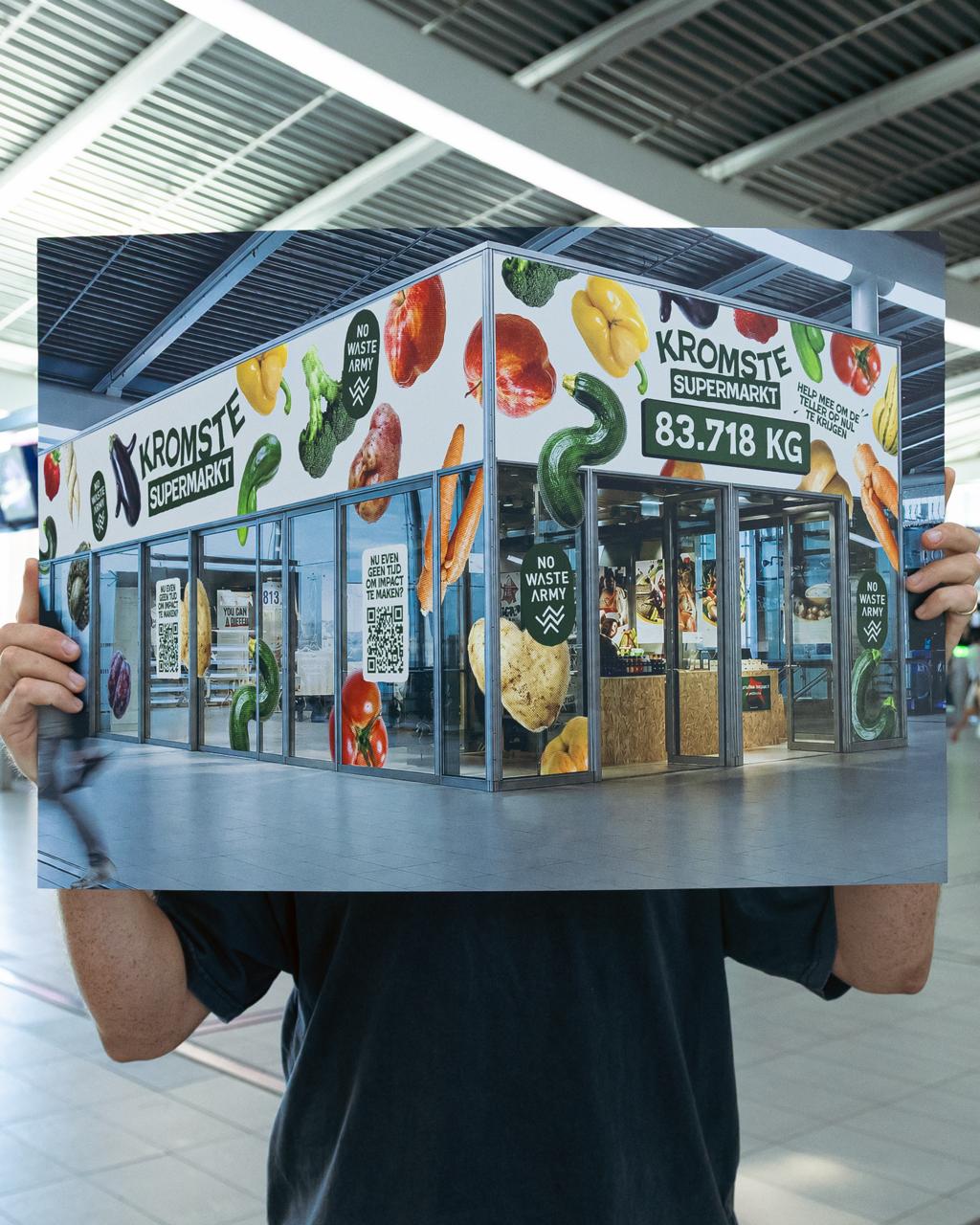
Getting the numbers sorted
During that difficult period, Markusse brought in Machiel Resink as CFO. Resink, who came from De Vegetarische Slager, was tasked with getting the company’s finances in order; Markusse would focus on sales. “So I started crunching numbers and drawing up plans. Where were our revenue dips? During school vacations. Where were our customers then? At Center Parcs, the country's largest holiday home business.” He approached Albron, Center Parcs’ caterer, and, in his own words, quickly sealed a deal. At the same time, internal processes were streamlined, and Boerschappen parted ways with a number of employees.
A major breakthrough came through the catering company Vitam. The contract for the prisons secured through them not only provided Boerschappen with much-needed revenue, but also credibility. “People thought: there’s a European tender behind this, so they must have been thoroughly vetted.” According to Markusse, Vitam was a dream client for Boerschappen, while Vitam found in Boerschappen a supplier willing to be flexible.
Later, Vitam asked if Boerschappen could set up its own wholesale operation to supply all 200 catering locations with local and fresh food. Markusse initially held off on that request for three months—the risk was high—but ultimately decided to take a chance. That meant another substantial investment and required expertise that Boerschappen did not yet have in-house. For the job, he brought on board seasoned veterans Drees Peter van den Bosch (Hutten, Willem&Drees) and Piet Hein Zijtveld (Udea and Ceva). As of January 1, 2025, Van den Bosch took over the role of CEO from Markusse.
According to Markusse, the financially vulnerable phase is now over. “In 2025, we were still operating at a loss, but this year the group’s results are positive. No Waste Army is profitable, and Waste Warriors is profitable.” The meal kit company has also been profitable since this year.
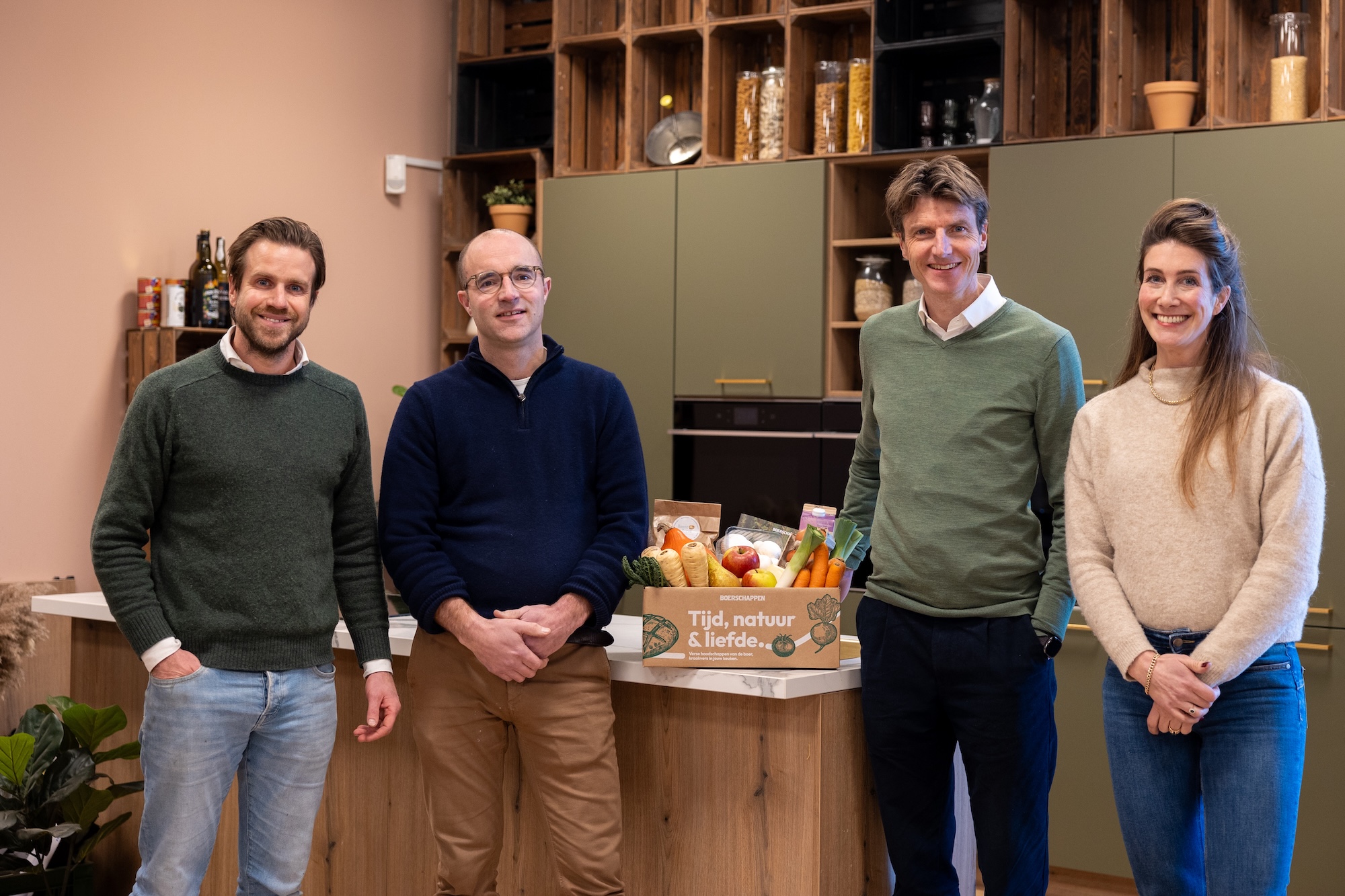
Foodservice enables scale
The wholesale operation that emerged from the partnership with Vitam became a new driver of scale for Boerschappen. The company now supplies virtually its entire fresh product range – from fruit & vegetables and meat to dairy and deli items – to some 200 Vitam locations, two to three times a week.
“Actually, we operate just like any other wholesaler,” says Markusse. Vitam also continues to source the remaining product categories from Sligro. “We position our product range alongside theirs. Everything we can supply, Vitam has stopped sourcing from Sligro.” According to Markusse, that exclusivity is necessary to guarantee sufficient volume. The companies entered into an eight-year partnership. It was precisely that commitment that was essential. The long-term agreement gives Boerschappen the certainty to invest in the necessary operations and systems.
Scaling up: the bottleneck is not supply, but proof
According to Markusse, the availability of organic produce is not a constraint on further growth. “In The Netherlands we need to increase organic farmland from 4% to 15% by 2030. Many farmers are willing to make the switch, but they do need a reliable customer.” A much greater challenge regarding scaling up is making sustainability data accessible. Large food service providers not only want to source more sustainably, but these days they also need to be able to account for the impact of those choices. For example, they report to their clients on the proportion of credited sustainability labels (topkeurmerken), CO₂ emissions, and water usage.
This creates a paradox. A large wholesaler can easily provide sustainability data for many products. If you buy directly from a small farmer in the process of transitioning to organic farming, the actual impact may be better, yet the necessary data is missing. “In that case, you’re demonstrably making a better choice, but your sustainability report actually shows a worse result.”
That’s why Boerschappen has invested heavily in recent years in systems that can provide insight into that impact. “That cheerful farmer with his little crate with fresh local produce just isn’t enough in a bid anymore. You have to be able to prove what you’re doing.” According to Markusse, the long-standing partnership with Vitam made necessary tech investments possible. Boerschappen can now provide information on impact on CO₂, water use, soil, and biodiversity, among other things. “Doing the right thing only really pays off if you can prove it. That’s when the playing field changes.”
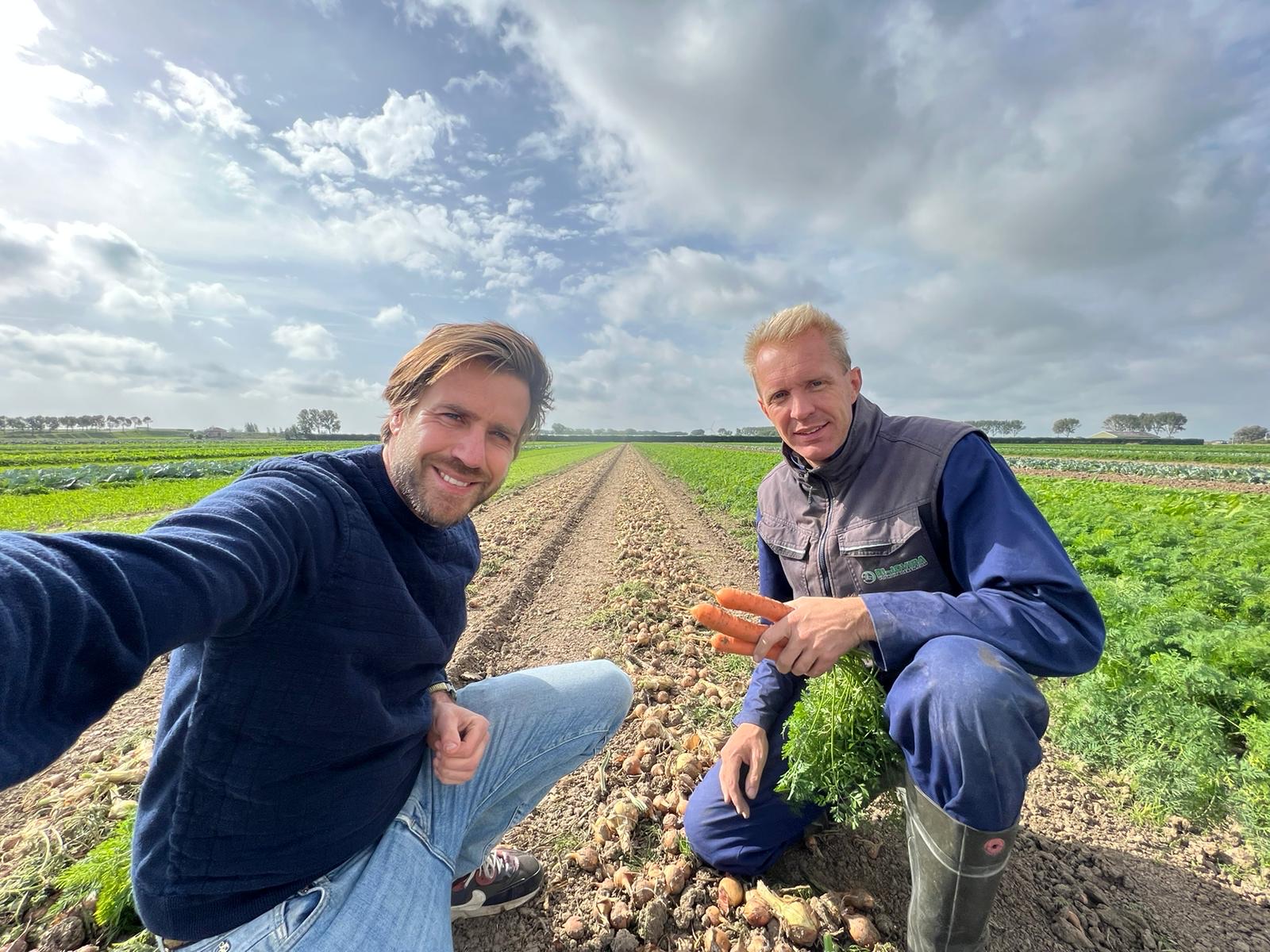
Making way for leadership transition
After handing the reins of the company over to Drees Peter, Markusse moved with his family to the French Alps for a year in mid-2025. “That was a long-cherished dream, and I very consciously wanted to physically step aside to make way for the leadership transition. I lived and breathed this company.” He believed the next phase of Boerschappen required more execution power. “My enthusiasm gets me through the first three months just fine. But after that, the inefficiencies start to bite you in the butt.” In his view, Drees Peter, Piet Hein, and Machiel have precisely the discipline needed to structurally improve processes.
He returned in early August. “Often, the problem with succession isn’t the new people, but the founder who can’t let go. That went very well here. The company is running smoothly, and I have my hands free again.” In his new role, Markusse focuses primarily on the beginning and end of projects. “I’m good at the first 10% and the last 10%.” Right now, he’s working on a number of large potential new clients, the launch of Wonky Box, and refining the contents of the Boerschappen meal kits.”
National Potato Week
No Waste Army’s Nationale Aardappelweek – National Potato Week – illustrates perfectly how Markusse prefers to work. The founders consult on a daily basis in a shared WhatsApp group. When a large potato surplus arose, Thibaud van der Steen (No Waste Army) suggested in the group: “Should we organize a potato week?”
“I immediately said, ‘Then let’s make it National Potato Week.’ An hour later, we had a logo.” Markusse then called Albert Heijn and Jumbo, the country’s largest national retailers, who agreed to join right away. Within four days, the campaign was up and running – so quickly that not everyone within the organization realized what was happening. Markusse: “A colleague asked, ‘Has National Potato Week been around for a long time?’ I said, ‘No, since Tuesday.’”
.jpg)
“I truly believe that we need to move towards a European short-chain collective.”
Europa as the next playing field
The group of companies now generates approximately €30 million in revenue. The goal is to increase that to €100 million in the coming years. But that immediately raises the next question: “What is the logical next scale?” If Markusse has his way, that next phase won’t be limited to the Netherlands. He sees opportunities for strategic alliances that would allow organic supply chains to be better organized at the European level. “I truly believe we need to move toward a European short-chain collective, organized by a number of larger companies.”
According to him, Boerschappen could, for example, partner with organic retailers and grower organizations in other European countries. According to Markusse, many of the larger European organic retailers were founded by passionate pioneers who excel at brick-and-mortar retail but are less advanced in e-commerce. That’s precisely where Boerschappen might play a role. Or you could build a European growers’ alliance to jointly create a market for organic products and for farmers in transition. That would significantly expand the level playing field on which you can offer solutions.”
He sees Wonky Box as one of the concepts that can be rolled out internationally with relative ease. The first step is the Netherlands; after that, Boerschappen wants to work with Waste Warriors to investigate whether the concept can also work in Belgium. “That will serve as the proof of concept that we can roll out such a model across borders as well.”
A player to be reckoned with
For Markusse, further expanding the business has another goal: exerting influence on existing market players. “It’s only once you exceed a certain revenue threshold that potential customers and competitors will take you seriously.” Boerschappen has now noticed this. When the company launched its own wholesale division, three years ago, it held talks with all major wholesalers in the Netherlands. “Of course, they weren’t happy with us, but they probably also thought: it won’t be that big of a deal.” According to Markusse, things are different now. Boerschappen is demonstrating that it can deliver on its promises in foodservice, Caterer Vitam is winning bids with the model, and as a result, the company is sitting at the table with more and more key players in the market.
“Other big foodservice companies mainly spring into action when they’re afraid of losing something,” says Markusse. “Contraction isn’t in those companies’ vocabulary. When we show what is possible, it creates a need for them to take a step themselves.” Ultimately, that’s more important than our revenue goal itself. “We used to say: we want to be a thorn in the side of the food establishment. For a long time, no one paid us any mind. Now we’re taken seriously and can positively influence the market.” Markusse jokes: “Maybe I should have started a lobbying firm instead. But then I probably would have burned out after two years.”